c.curionodeThe Nobel Archive

1967 · Literature

Myth and inventive language confront injustice

Asturias transformed Latin American traditions through imaginative prose while confronting dictatorship, exploitation and social fear.

Myth and narrativeDictatorshipSocial injustice
1967Literature

Visual guide

The prize, pictured

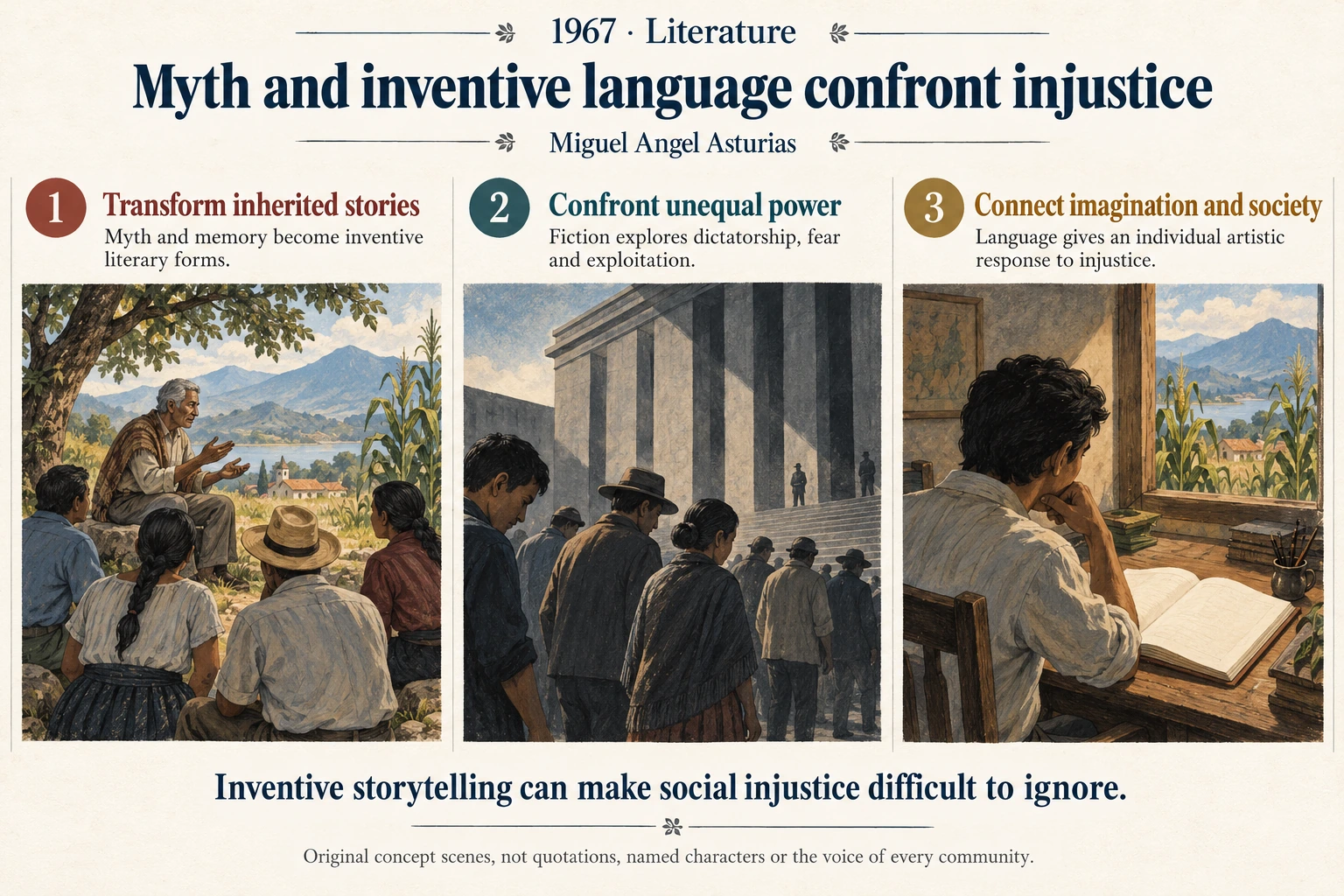
Infographic explaining Myth and inventive language confront injustice
Original AI-generated infographic. A conceptual overview; the explanations and sources below provide context.
Read the poster text

Inventive storytelling can make social injustice difficult to ignore.

  1. Transform inherited stories

    Myth and memory become inventive literary forms.

  2. Confront unequal power

    Fiction explores dictatorship, fear and exploitation.

  3. Connect imagination and society

    Language gives an individual artistic response to injustice.

Original concept scenes, not quotations, named characters or the voice of every community.

01 · The contribution

The idea, in everyday language

Legends of Guatemala draws on Indigenous traditions in a literary transformation. Men of Maize brings myth, land and human conflict into an inventive narrative. The works combine imaginative language with an individual artistic response to Guatemala’s cultural and social life.

The President depicts the fear and corruption of dictatorship. The banana trilogy addresses corporate domination and its political and economic effects. Asturias’s narrative invention, influenced also by European literary encounters, gives social criticism an intense imaginative form.

Why it matters

The Academy recognised a powerful individual literary achievement rooted in Latin American traditions. The work broadened international attention to the region’s inventive literature and used artistic form to confront unequal power.
02 · The people

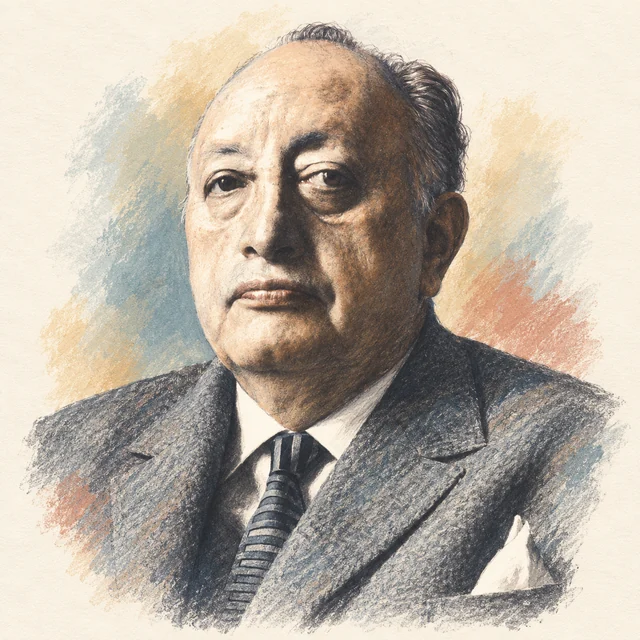
Who brought the idea to life?

03 · Years in the making

The path here

  1. 1923

    His law thesis is published; he leaves for Europe.

  2. 1930

    Legends of Guatemala appears.

  3. 1946

    The President is published after earlier writing and delay.

  4. 1949

    Men of Maize appears.

  5. 1950–1960

    The three banana novels are published.

  6. 1966

    He becomes ambassador to France.

  7. 1967

    He receives the Literature Prize.

04 · Read further

From the original sources

Original explanations by Curionode, based on the official records below. Biographical details and affiliations refer to the award year.

  1. Official award summary nobelprize.org
  2. Award ceremony speech nobelprize.org
  3. Official biography: Miguel Angel Asturias nobelprize.org

More in Literature

Browse this subject ↗