c.curionodeThe Nobel Archive

1975 · Literature

Concrete images, an unillusioned outlook

Montale’s poetry turns landscapes, objects and remembered encounters into questions about human experience. Precise language carries uncertainty without promising an easy resolution.

Italian poetryConcrete imageryCritical outlook
1975Literature

Visual guide

The prize, pictured

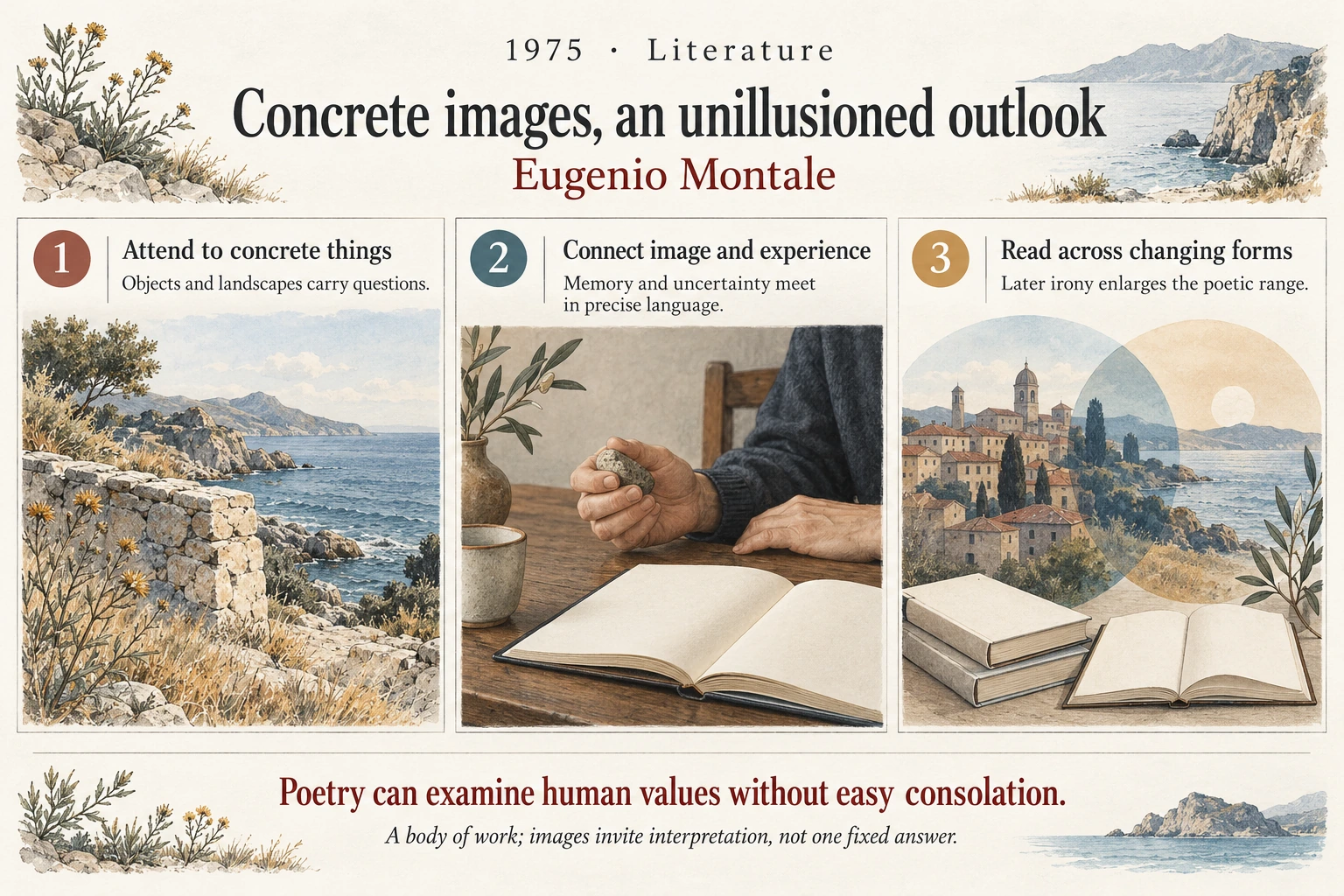
Infographic explaining Concrete images, an unillusioned outlook
Original AI-generated infographic. A conceptual overview; the explanations and sources below provide context.
Read the poster text

Poetry can examine human values without easy consolation.

  1. Attend to concrete things

    Objects and landscapes carry questions.

  2. Connect image and experience

    Memory and uncertainty meet in precise language.

  3. Read across changing forms

    Later irony enlarges the poetic range.

A body of work; images invite interpretation, not one fixed answer.

01 · The contribution

The idea, in everyday language

In Ossi di seppia, the Mediterranean landscape is more than attractive scenery. Dryness, stone, the sea and boundaries become ways to explore the difficulty of finding meaning. Concrete things can bear a pressure that abstract declarations would not. The poems invite interpretation without making every image a code with one fixed solution. Later work in Le occasioni and La bufera e altro continues and changes this relation between experience, memory and historical unease.

The full Satura collection of 1971 brings a more conversational register, irony and reflection on a changing world. Diario del ’71 e del ’72 followed in 1973. These developments matter because the award recognised a body of work, not a single landscape poem or one unchanging style. The committee’s judgement emphasised artistic sensitivity and an outlook without comforting illusions. That does not mean the poems simply deny every human value; they examine what can endure when reassuring certainties fail.

Why it matters

Montale became an influential voice in modern Italian poetry through disciplined language, concentrated imagery and changing forms of reflection. His work offers ways to read uncertainty, personal memory and historical pressure together, while leaving room for disagreement among readers.

02 · The people

Who brought the idea to life?

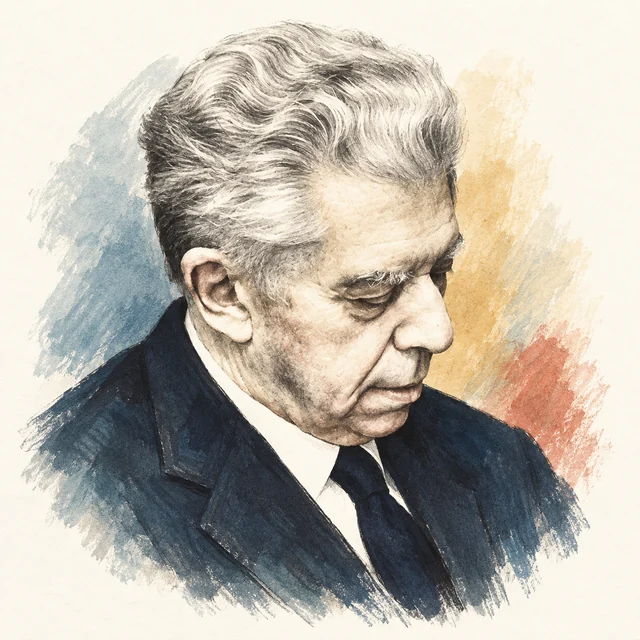
Illustrated portrait of Eugenio Montale

Eugenio Montale

Prize share · 1

Montale received the full Literature Prize for a distinctive poetic body of work that examines human values without comforting illusions. The recognition was not confined to one collection.

Read the biography ↗

03 · Years in the making

The path here

  1. 1925

    Ossi di seppia appears.

  2. 1938

    Montale loses his library directorship after refusing to join the Fascist party.

  3. 1939

    Le occasioni develops his poetic language.

  4. 1956

    La bufera e altro is published.

  5. 1971

    The fuller Satura collection brings irony and conversational reflection.

  6. 1973

    Diario del ’71 e del ’72 appears.

  7. 1975

    The Literature Prize recognises the body of work.

04 · Read further

From the original sources

Original explanations by Curionode, based on the official records below. Biographical details and affiliations refer to the award year.

  1. Official announcement nobelprize.org
  2. Official original-work bibliography nobelprize.org

More in Literature

Browse this subject ↗