01 · The contribution
The idea, in everyday language
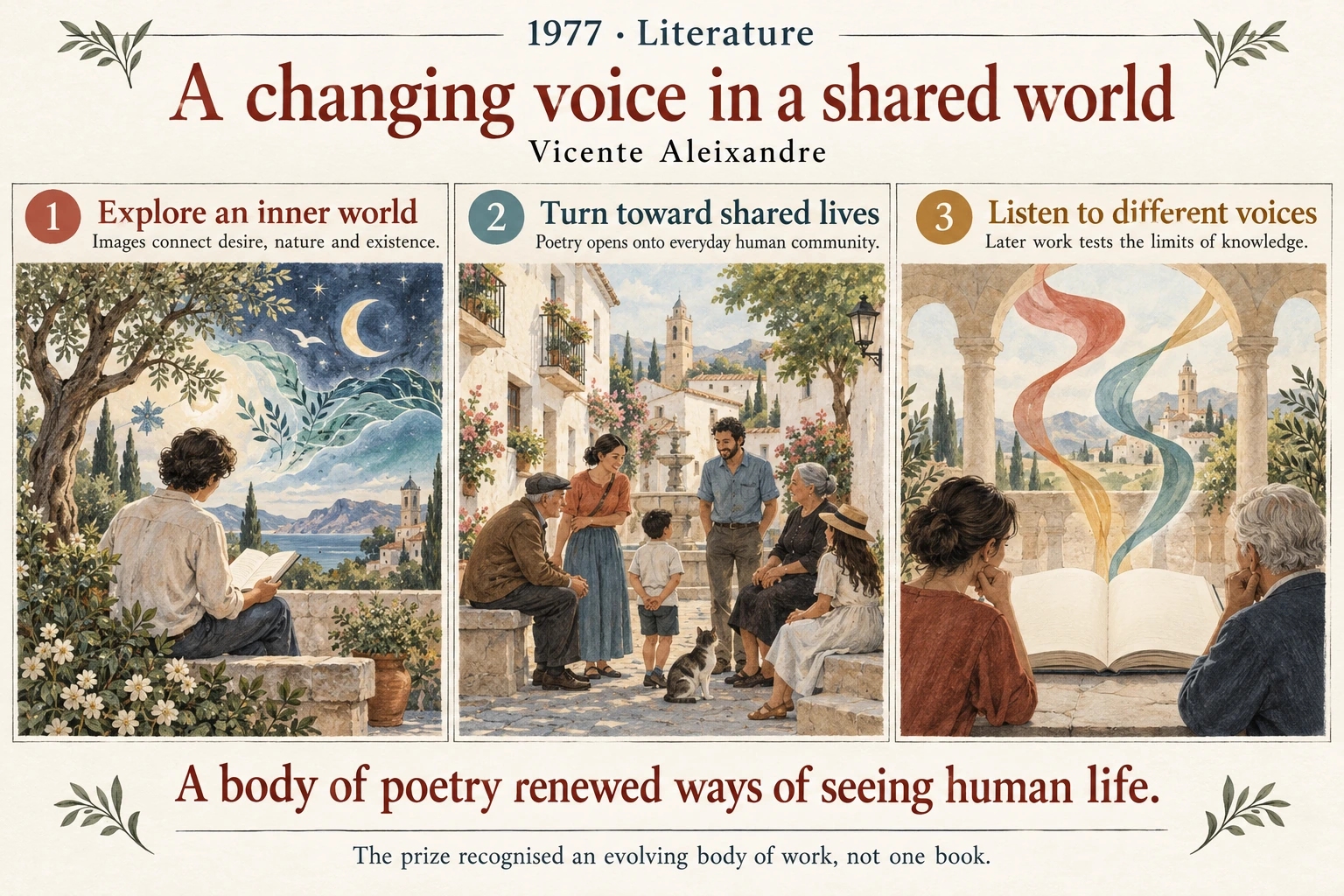
Early books use striking, sometimes surreal images to explore desire, destruction and the relationship between the individual and a larger universe. Ámbito appeared in 1928; Espadas como labios followed in 1932 and La destrucción o el amor in 1935. These works belong to the poetic renewal associated with the Generation of ’27, but that group did not have one uniform style.
After civil war and years of official silence, Sombra del paraíso appeared in 1944. Subsequent work gave more attention to ordinary human encounters and solidarity. Historia del corazón and En un vasto dominio widened the field of experience; later Poemas de la consumación and Diálogos del conocimiento explored ageing, knowledge and competing voices. The Nobel concerned this evolving achievement, not a scientific model of the cosmos or an award for one famous volume.
Why it matters
The work renewed Spanish poetic language while addressing human vulnerability, desire and shared existence. Its formal and imaginative changes connect the innovations between the wars with later reflections on community and the limits of understanding.