A life in context
The person behind the prize
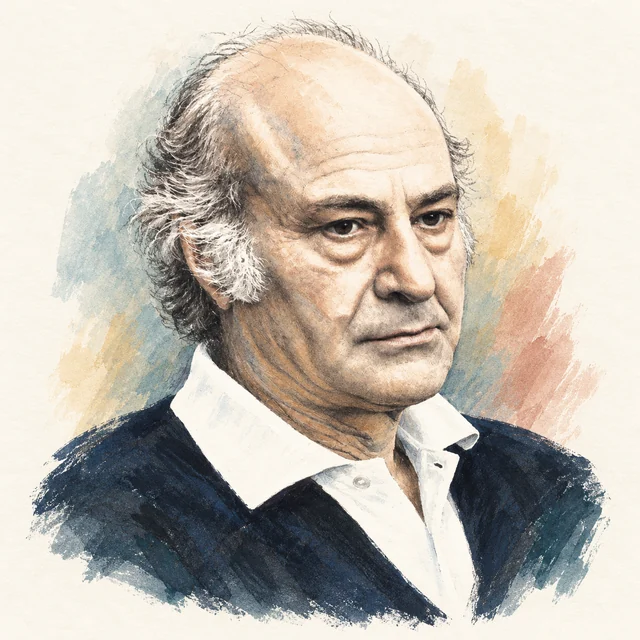
Born on Crete to a family with roots in Lesbos, Elytis grew up in Athens and attended law school. His poems appeared in Nea Grammata in 1935, bringing surrealist experiment into contemporary Greek writing. He served on the Albanian front during the war and later worked in cultural institutions, including national radio. Paris brought contact with writers and artists; collage and translation accompanied his poetry. The Axion Esti, published in Greek in 1959, combined an intricate architecture of voices with landscape, suffering and renewal. Its musical setting by Mikis Theodorakis reached a wide audience. Maria Nefeli, published in 1978, explored another dialogue of voices and modern experience.
The contribution
Elytis received the full Literature Prize for poetry joining sensory force and Greek cultural traditions with struggles for freedom and creation. Light and landscape are active elements in his writing; the recognition concerns a body of work rather than a single book or political slogan.
The idea in plain language
A landscape in Elytis is more than a setting. Sensory images can reshape the relation between a person and the world: brightness, colour and bodily experience carry intellectual and ethical questions. Surrealist experiment opened unusual connections, while Greek language and cultural memory gave those connections a particular texture.
Read the full award story ↗

