c.curionodeThe Nobel Archive

1979 · Literature

Light becomes a language of freedom

Elytis made sea, stone, sunlight and the human voice part of an inventive poetic world. Greek traditions and modern experimentation meet in writing about suffering, freedom and creation.

Modern Greek poetrySensory imaginationCreative freedom
1979Literature

Visual guide

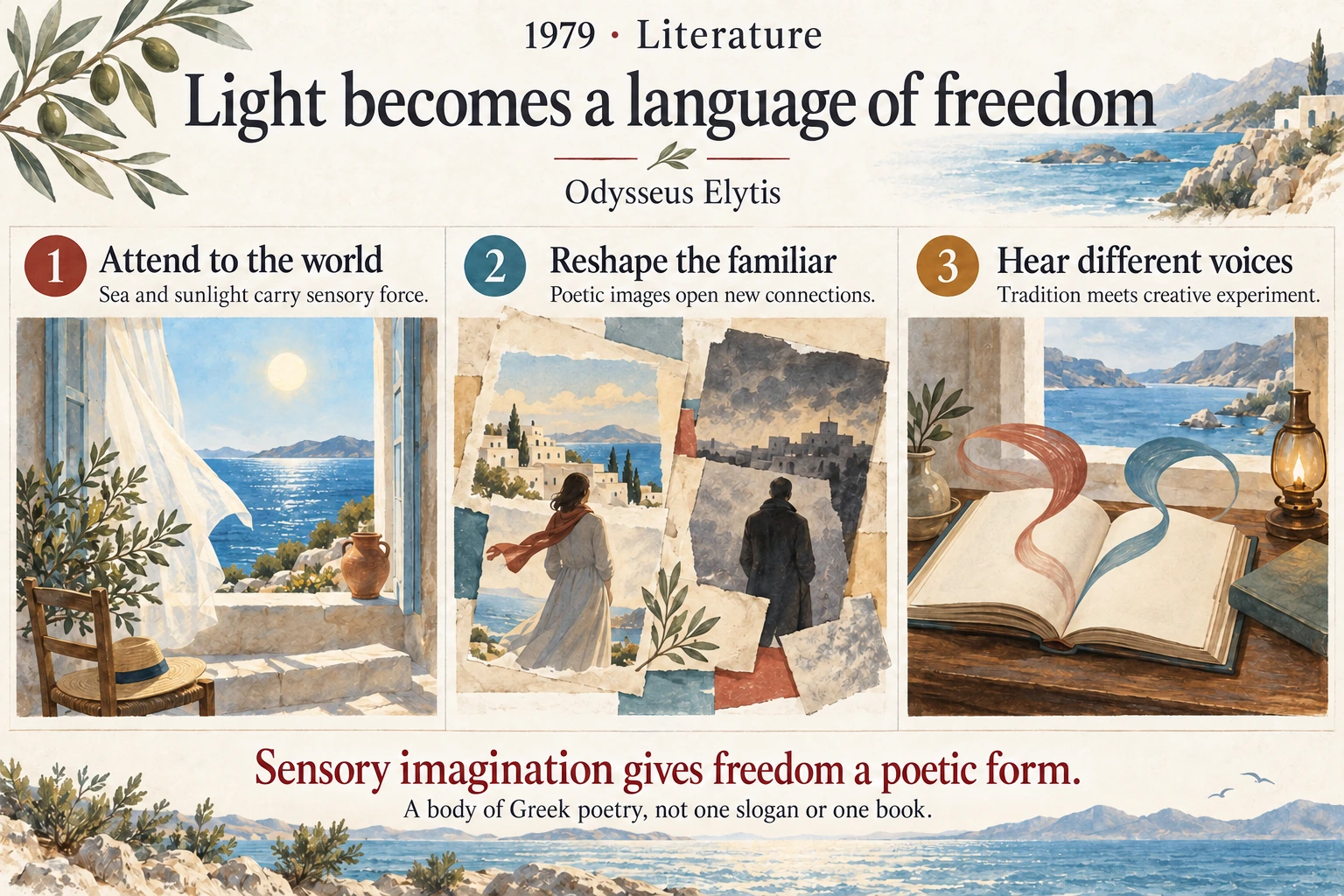
The prize, pictured

Infographic explaining Light becomes a language of freedom
Original AI-generated infographic. A conceptual overview; the explanations and sources below provide context.
Read the poster text

Sensory imagination gives freedom a poetic form.

  1. Attend to the world

    Sea and sunlight carry sensory force.

  2. Reshape the familiar

    Poetic images open new connections.

  3. Hear different voices

    Tradition meets creative experiment.

A body of Greek poetry, not one slogan or one book.

01 · The contribution

The idea, in everyday language

A landscape in Elytis is more than a setting. Sensory images can reshape the relation between a person and the world: brightness, colour and bodily experience carry intellectual and ethical questions. Surrealist experiment opened unusual connections, while Greek language and cultural memory gave those connections a particular texture.

The Axion Esti, published in 1959, combines different voices and forms in a carefully organised work involving creation, suffering and renewal. Its resonance with religious forms is part of a modern poetic structure, rather than a claim that the book is scripture. Maria Nefeli, published in 1978, uses a different dialogue of voices. The prize recognised the range of the poetry, not one repeated landscape motif.

Why it matters

Elytis helped extend modern Greek poetry and brought its language and concerns to international readers. Musical settings, translations and his own collage work created further encounters with the poems. He received the full Literature Prize. Sensory pleasure, historical violence and creative freedom can coexist in this writing without reducing it to a political slogan.

02 · The people

Who brought the idea to life?

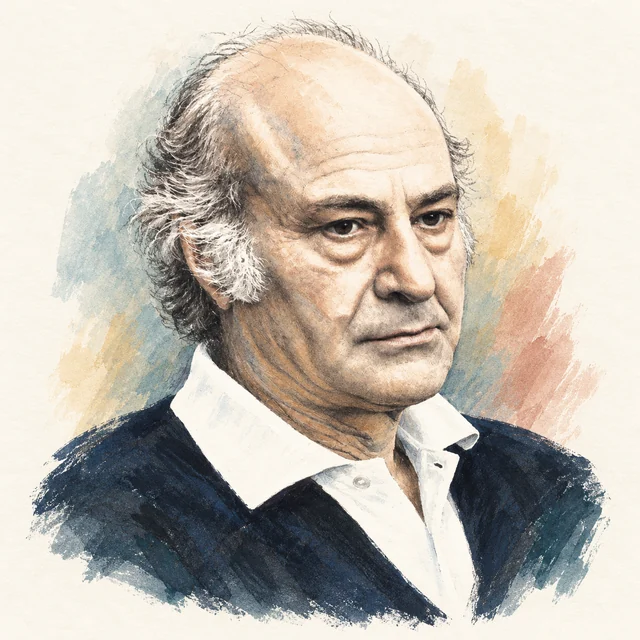
Illustrated portrait of Odysseus Elytis

Odysseus Elytis

Prize share · 1/1

Elytis received the full Literature Prize for poetry joining sensory force and Greek cultural traditions with struggles for freedom and creation. Light and landscape are active elements in his writing; the recognition concerns a body of work rather than a single book or political slogan.

Read the biography ↗

03 · Years in the making

The path here

  1. 1935

    Poems appear in Nea Grammata.

  2. 1940s

    War and its aftermath enter his experience and writing.

  3. 1959

    The Axion Esti appears in Greek.

  4. 1974

    The English translation of The Axion Esti appears.

  5. 1978

    Maria Nefeli is published.

  6. 1979

    The full Literature Prize recognises his poetry.

04 · Read further

From the original sources

Original explanations by Curionode, based on the official records below. Biographical details and affiliations refer to the award year.

  1. Official announcement nobelprize.org
  2. Official biography nobelprize.org
  3. Official bibliography nobelprize.org

More in Literature

Browse this subject ↗