c.curionodeThe Nobel Archive

1978 · Literature

A vanished world, living voices

Singer’s Yiddish fiction makes a culturally particular world vivid through families, storytellers and unsettled moral choices. The prize recognised narrative art rooted in Polish-Jewish traditions that reaches broadly human questions.

Yiddish literatureFolkloreMoral choices
1978Literature

Visual guide

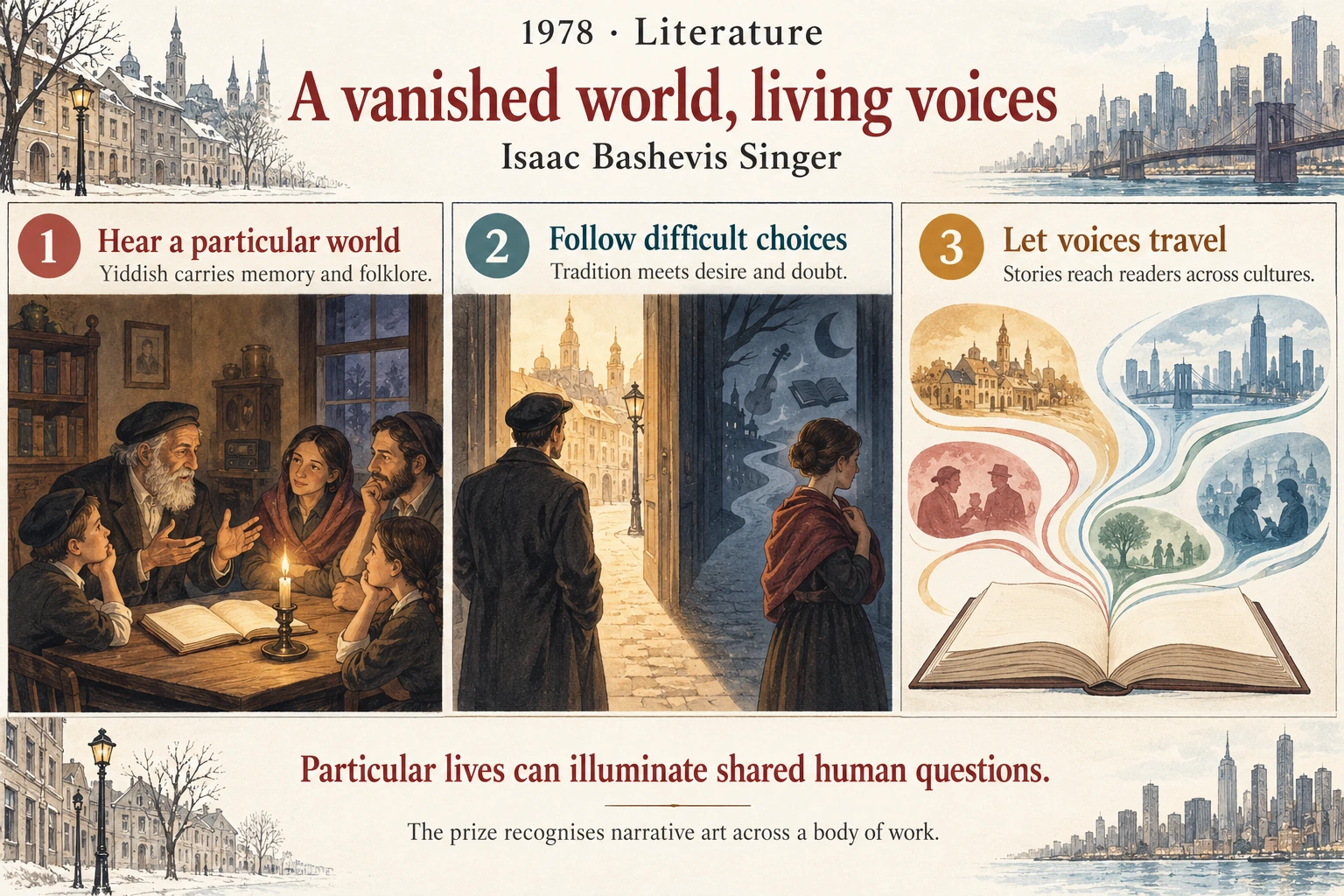
The prize, pictured

Infographic explaining A vanished world, living voices
Original AI-generated infographic. A conceptual overview; the explanations and sources below provide context.
Read the poster text

Particular lives can illuminate shared human questions.

  1. Hear a particular world

    Yiddish carries memory and folklore.

  2. Follow difficult choices

    Tradition meets desire and doubt.

  3. Let voices travel

    Stories reach readers across cultures.

The prize recognises narrative art across a body of work.

01 · The contribution

The idea, in everyday language

Singer drew on the language, folklore and religious life of East European Jewish communities. Family chronicles show lives pulled apart by social change, while short stories make ordinary encounters surprising through humour, desire, doubt and the supernatural. These are inventive narratives, not a neutral catalogue of a culture.

The tension between inherited beliefs and new ways of living does not have one easy answer. Characters can be sympathetic and fallible at once. Writing in Yiddish and reaching readers through translation, Singer joined local voices to questions of loyalty, freedom, temptation and responsibility that travel across cultures.

Why it matters

The stories preserved and transformed literary possibilities of Yiddish, brought Polish-Jewish experience to wider audiences and enlarged the ways fiction could combine everyday detail with folklore. The recognition concerns novels, stories and a sustained narrative practice.
02 · The people

Who brought the idea to life?

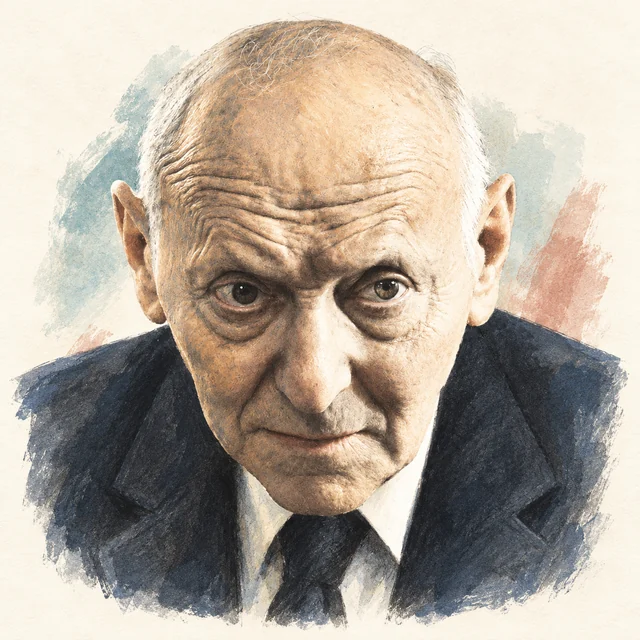
Illustrated portrait of Isaac Bashevis Singer

Isaac Bashevis Singer

Prize share · 1

Singer received the full Literature Prize for narrative art rooted in Polish-Jewish culture that makes broadly human experiences vivid. His original literary language was Yiddish; translation and collaboration helped the stories circulate beyond that readership.

Read the biography ↗

03 · Years in the making

The path here

  1. 1925

    Singer’s early fiction appears in Yiddish.

  2. 1935

    Satan in Goray appears; Singer emigrates to the USA.

  3. 1950

    The Family Moskat is published.

  4. 1953

    An English translation of the Gimpel story broadens its readership.

  5. 1978

    The full Literature Prize recognises his narrative art.

04 · Read further

From the original sources

Original explanations by Curionode, based on the official records below. Biographical details and affiliations refer to the award year.

  1. Official award summary nobelprize.org
  2. Official award presentation speech nobelprize.org
  3. Singer’s bibliography: originals and translations nobelprize.org

More in Literature

Browse this subject ↗