c.curionodeThe Nobel Archive

1982 · Literature

A town where memory and history meet

García Márquez made the fantastic part of an intensely observed social world. His novels and stories connect private lives with a continent’s conflicts.

MacondoMagical realismMemory and history
1982Literature

Visual guide

The prize, pictured

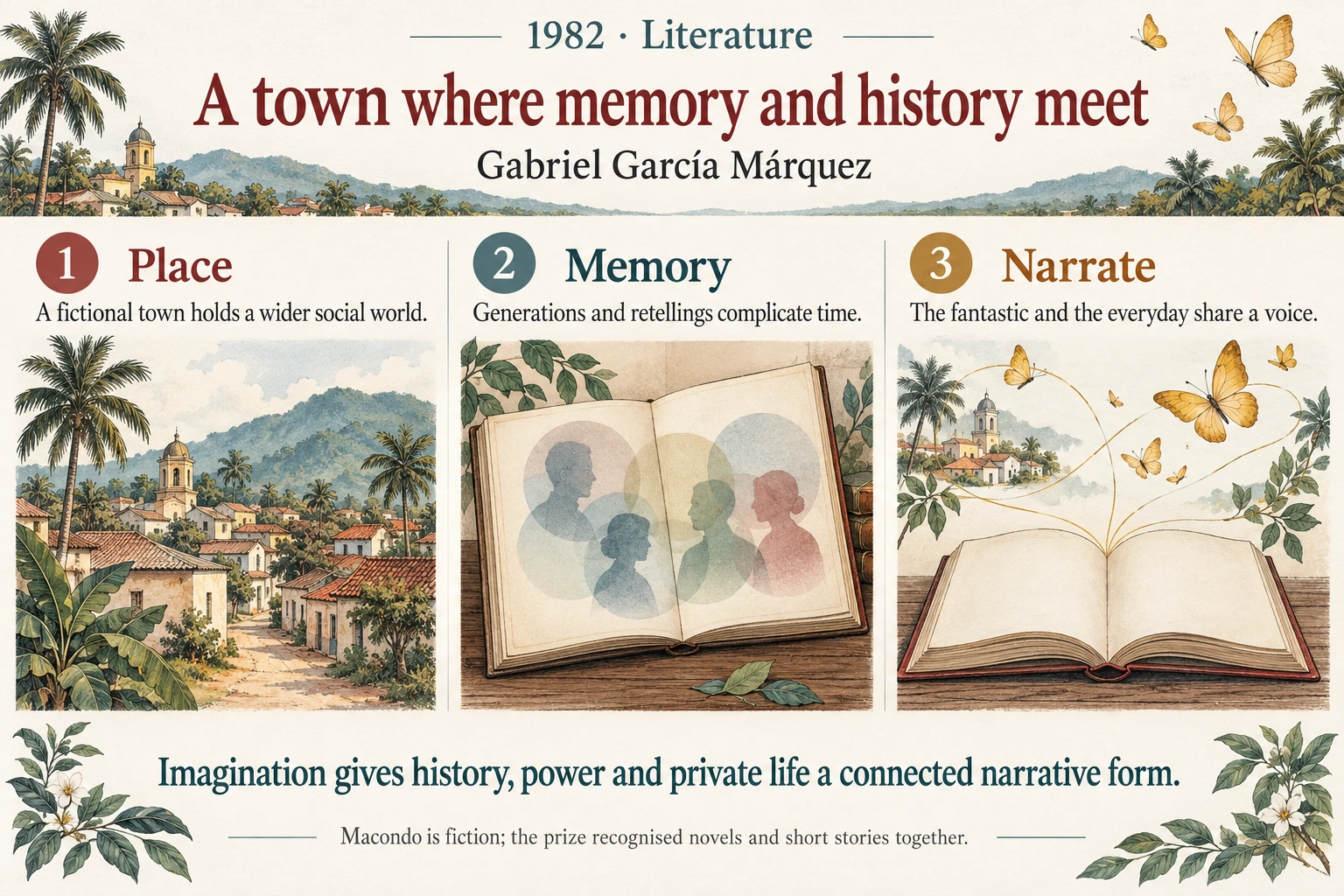
Infographic explaining A town where memory and history meet
Original AI-generated infographic. A conceptual overview; the explanations and sources below provide context.
Read the poster text

Imagination gives history, power and private life a connected narrative form.

  1. Place

    A fictional town holds a wider social world.

  2. Memory

    Generations and retellings complicate time.

  3. Narrate

    The fantastic and the everyday share a voice.

Macondo is fiction; the prize recognised novels and short stories together.

01 · The contribution

The idea, in everyday language

In One Hundred Years of Solitude, the fictional town of Macondo and successive generations create a world where ordinary events and extraordinary occurrences share a narrative voice. Family stories, repetitions and uncertain memory shape the reader’s sense of time. The fantastic does not remove politics or material conditions: war, power and economic change remain part of the world.

His range extends beyond Macondo. The Autumn of the Patriarch explores power through an expansive narrative; Chronicle of a Death Foretold reorganises an announced death through testimony, memory and communal knowledge. Journalism’s attention to detail and oral storytelling’s imaginative resources meet in prose that can be comic, tragic and unsettling.

Why it matters

His international readership helped carry Latin American storytelling across languages, while his particular narrative methods gave readers ways to think about memory, authority and collective life. The Nobel award recognised novels and short stories together. It neither invented Latin American literature nor reduced the region’s diverse writers to a single style.
02 · The people

Who brought the idea to life?

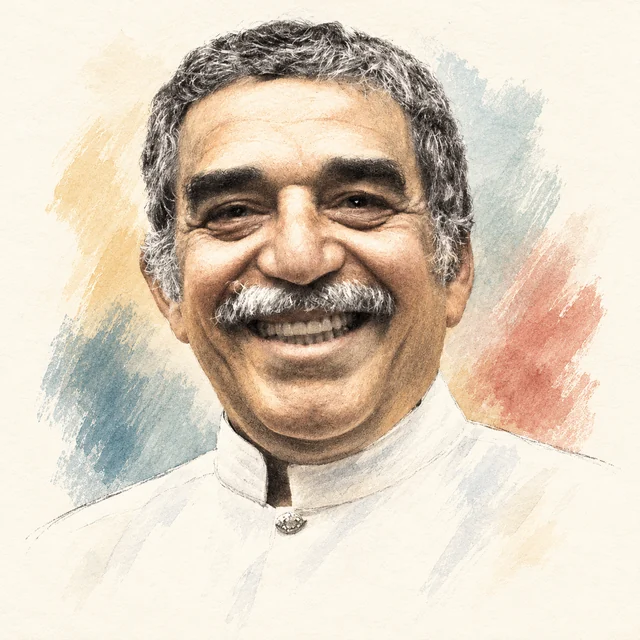
Illustrated portrait of Gabriel García Márquez

Gabriel García Márquez

Prize share · 1/1

García Márquez combined fantastic events with closely observed social worlds, giving memory, family, violence and power an expansive narrative form. The Literature Prize recognised his novels and short stories as a body of work. Macondo is a fictional setting, not a documentary location, and the award was broader than the success of one novel.

Read the biography ↗

03 · Years in the making

The path here

  1. 1955

    Leaf Storm appears in Spanish.

  2. 1967

    One Hundred Years of Solitude introduces Macondo to a wide readership.

  3. 1975

    The Autumn of the Patriarch explores the world of power.

  4. 1981

    Chronicle of a Death Foretold appears.

  5. 1982

    The Literature Prize recognises a richly imagined body of fiction.

04 · Read further

From the original sources

Original explanations by Curionode, based on the official records below. Biographical details and affiliations refer to the award year.

  1. Official announcement nobelprize.org

More in Literature

Browse this subject ↗