c.curionodeThe Nobel Archive

1983 · Literature

Stories that test our moral confidence

Golding put recognisable people into unsettling imagined worlds. His fiction joins realistic narrative with myth to question how we understand human conduct.

Moral imaginationMythNarrative viewpoint
1983Literature

Visual guide

The prize, pictured

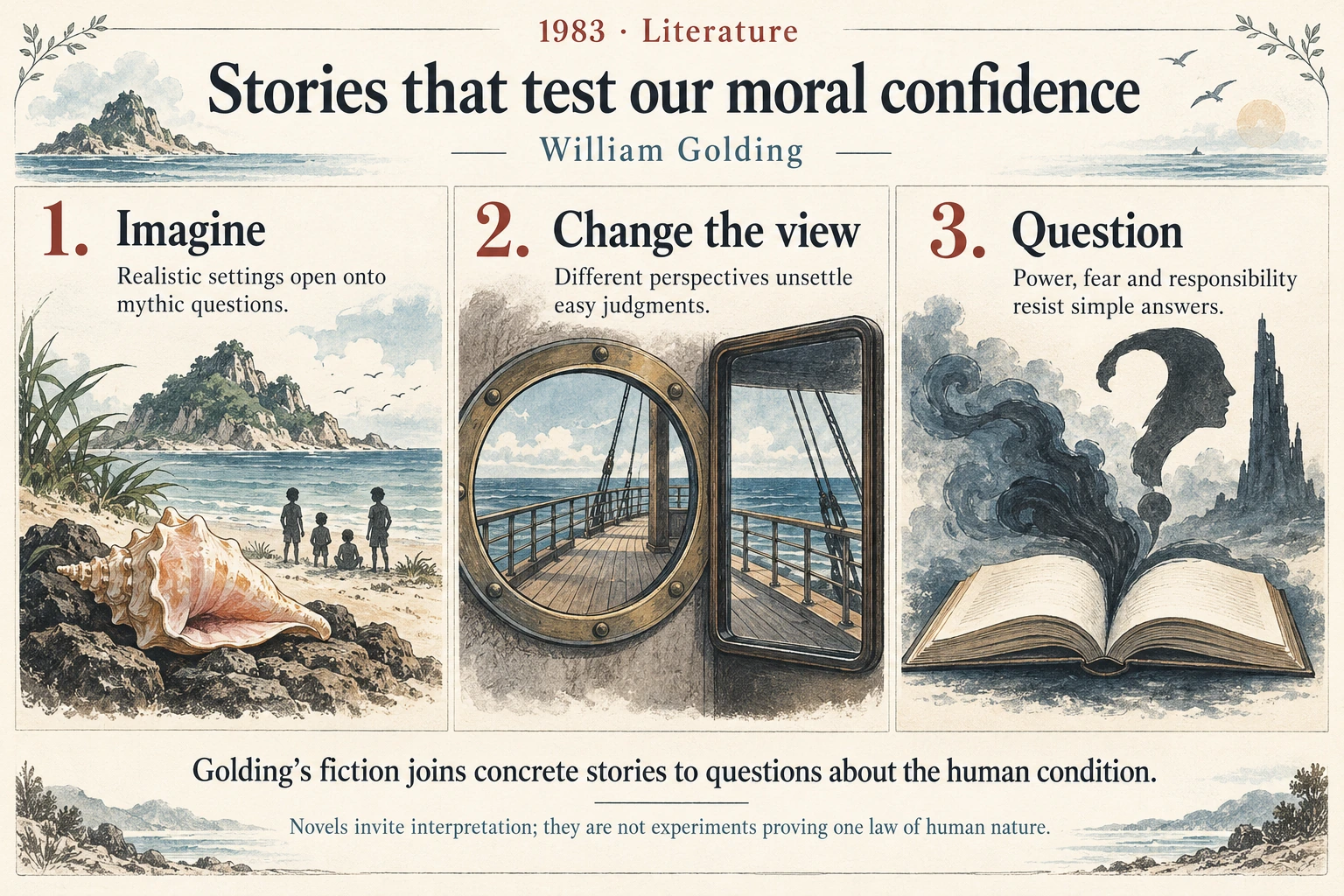
Infographic explaining Stories that test our moral confidence
Original AI-generated infographic. A conceptual overview; the explanations and sources below provide context.
Read the poster text

Golding’s fiction joins concrete stories to questions about the human condition.

  1. Imagine

    Realistic settings open onto mythic questions.

  2. Change the view

    Different perspectives unsettle easy judgments.

  3. Question

    Power, fear and responsibility resist simple answers.

Novels invite interpretation; they are not experiments proving one law of human nature.

01 · The contribution

The idea, in everyday language

In Lord of the Flies, schoolboys stranded on an island struggle with authority, fear and violence. The novel unsettles easy confidence that order and civilisation automatically protect people from cruelty. The Inheritors shifts perspective toward a Neanderthal group encountering another human population, making the reader’s own assumptions part of the encounter.

Other settings change the question: The Spire follows an obsessive building project; Darkness Visible places moral uncertainty in a modern world; Rites of Passage exposes status and humiliation aboard a ship. The 1983 award recognised this range of novels and their mythic force. Golding’s war experience and teaching provide context, while the fiction leaves room for ambiguity and competing readings.

Why it matters

His work makes responsibility, power and self-knowledge difficult questions rather than comfortable declarations. Concrete settings carry wider concerns about the human condition. Its importance lies in literary imagination and the reader’s encounter with uncertainty, rather than a scientific law of behaviour.
02 · The people

Who brought the idea to life?

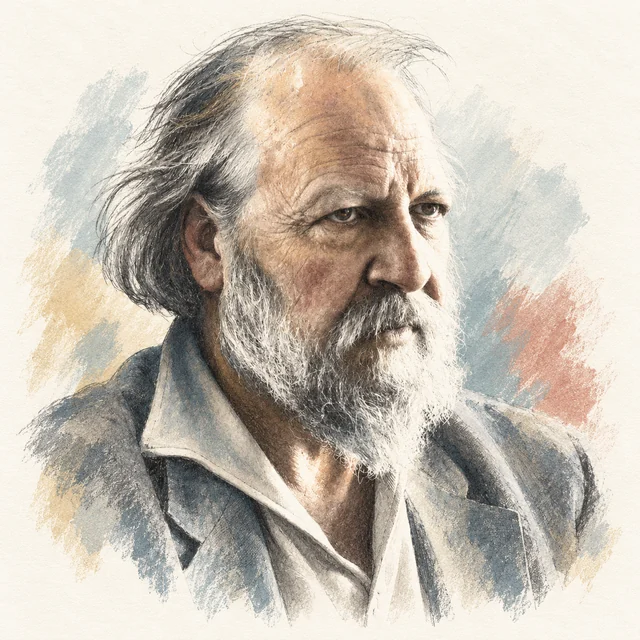
Illustrated portrait of William Golding

William Golding

Prize share · 1

Golding joined concrete, realistic storytelling to the reach of myth. His novels examine power, fear, self-deception and responsibility through contrasting viewpoints and unsettled interpretations. The Literature Prize recognised this body of fiction, not only Lord of the Flies. Invented characters and situations are literary ways to question human conduct, not controlled psychological experiments or proof that everyone is inevitably cruel.

Read the biography ↗

03 · Years in the making

The path here

  1. 1934

    Golding graduates in English at Oxford and publishes Poems.

  2. 1954

    Lord of the Flies appears.

  3. 1955

    The Inheritors changes viewpoint and historical setting.

  4. 1964

    The Spire explores faith, ambition and obsession.

  5. 1980

    Rites of Passage receives the Booker Prize.

  6. 1983

    His novels receive the Literature Prize.

04 · Read further

From the original sources

Original explanations by Curionode, based on the official records below. Biographical details and affiliations refer to the award year.

  1. Official announcement nobelprize.org
  2. Golding estate: life and works william-golding.co.uk
  3. Brasenose archive: Golding’s education and Poems brasenosecollegelibrary.wordpress.com

More in Literature

Browse this subject ↗