01 · The discovery
The idea, in everyday language
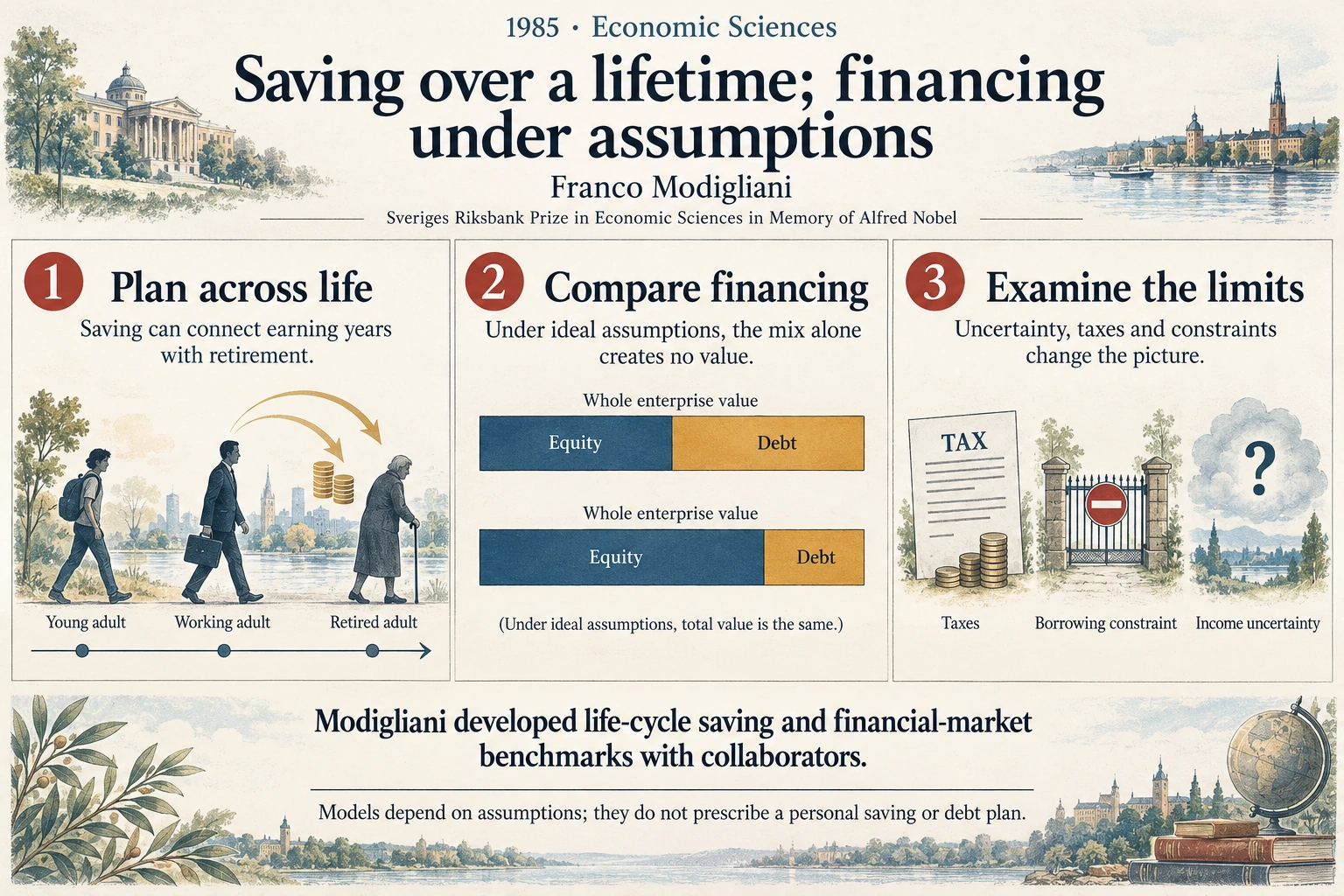
With Richard Brumberg, Modigliani developed the life-cycle hypothesis: households consider resources over a lifetime when choosing consumption and saving. Saving during earning years can support retirement consumption. The framework connects aggregate saving with income growth and the age structure of a population, while inviting comparison with evidence and alternative motives.
With Merton Miller, he asked whether changing a firm’s mix of debt and equity changes its total value. Their 1958 benchmark holds investment and business risk fixed and assumes ideal capital markets without taxes or other relevant frictions. Under those conditions, changing the financing mix alone does not create value. A separate 1961 analysis considered dividend policy.
Why it matters
The work gave economists tools to study household saving, demographics and retirement, and gave financial economics a baseline for asking why financing matters. Collaborators were central: Brumberg to the life-cycle work and Miller to the finance results. Modigliani alone received this year’s memorial prize.