c.curionodeThe Nobel Archive

1991 · Literature

Show public power inside private lives

Gordimer’s fiction explores how apartheid and political conflict shape relationships, choices and moral responsibility.

South African fictionapartheidmoral responsibilityshort stories
1991Literature

Visual guide

The prize, pictured

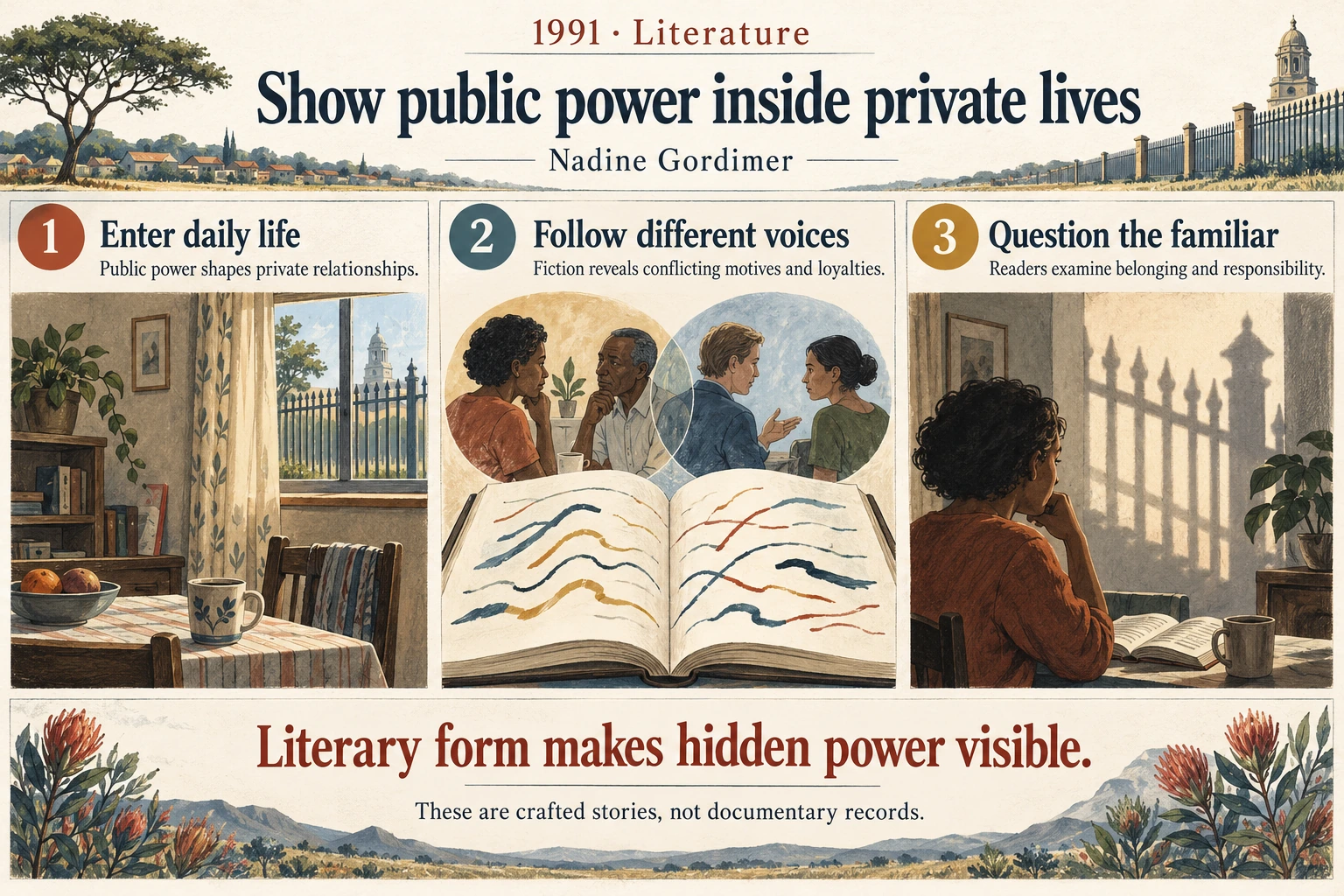
Infographic explaining Show public power inside private lives
Original AI-generated infographic. A conceptual overview; the explanations and sources below provide context.
Read the poster text

Literary form makes hidden power visible.

  1. Enter daily life

    Public power shapes private relationships.

  2. Follow different voices

    Fiction reveals conflicting motives and loyalties.

  3. Question the familiar

    Readers examine belonging and responsibility.

These are crafted stories, not documentary records.

01 · The contribution

The idea, in everyday language

Apartheid was a system of racial domination that structured South African life. Gordimer explored how that public order entered private experience: friendship, family, work, love and the assumptions people made about one another. Her novels and short stories allow characters’ motives and loyalties to develop through situations rather than reducing everyone to a political symbol.

The Conservationist examines possession and exclusion; Burger’s Daughter follows an inherited political commitment; July’s People imagines a reversal of a household’s established relations during upheaval. These works use perspective, narrative tension and ambiguity to make readers attend to lives that ideology and privilege can obscure. The Nobel recognition concerned literary achievement across a body of work.

Why it matters

Her writing brought South African experience into world literature while resisting censorship and easy moral closure. It offers readers a way to examine complicity, belonging and change through particular lives. Literary insight does not replace historical evidence or political action, but it can unsettle inherited assumptions.

02 · The people

Who brought the idea to life?

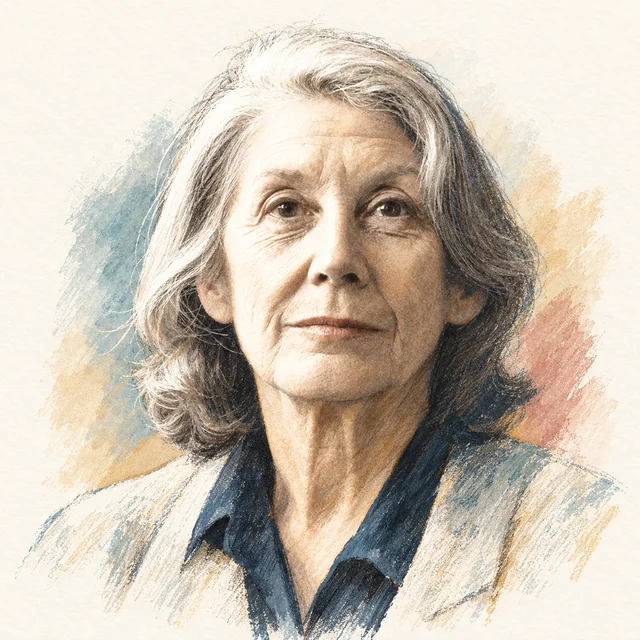
Illustrated portrait of Nadine Gordimer

Nadine Gordimer

Prize share · 1

Gordimer’s novels and stories reveal how racial power and political conflict enter ordinary relationships, loyalties and choices. Her characters confront the distance between their beliefs and their conduct, while narrative form allows competing perspectives. July’s People imagines a changed future rather than documenting an event that had already happened. The prize recognised her wider literary achievement, not only opposition to apartheid or one particular novel.

Read the biography ↗

03 · Years in the making

The path here

  1. 1953

    The Lying Days is published, her first novel.

  2. 1974

    The Conservationist examines possession and exclusion.

  3. 1981

    July’s People imagines social relations transformed by upheaval.

  4. 1991

    The Literature Prize recognises Gordimer’s body of writing.

04 · Read further

From the original sources

Original explanations by Curionode, based on the official records below. Biographical details and affiliations refer to the award year.

  1. Official announcement nobelprize.org
  2. Official bibliography nobelprize.org

More in Literature

Browse this subject ↗