c.curionodeThe Nobel Archive

1992 · Literature

Caribbean lives reshape the epic

Walcott’s poetry and theatre join vivid local experience with histories and traditions that cross the sea.

Caribbean literaturepoetry and theatrehistory and memoryliterary transformation
1992Literature

Visual guide

The prize, pictured

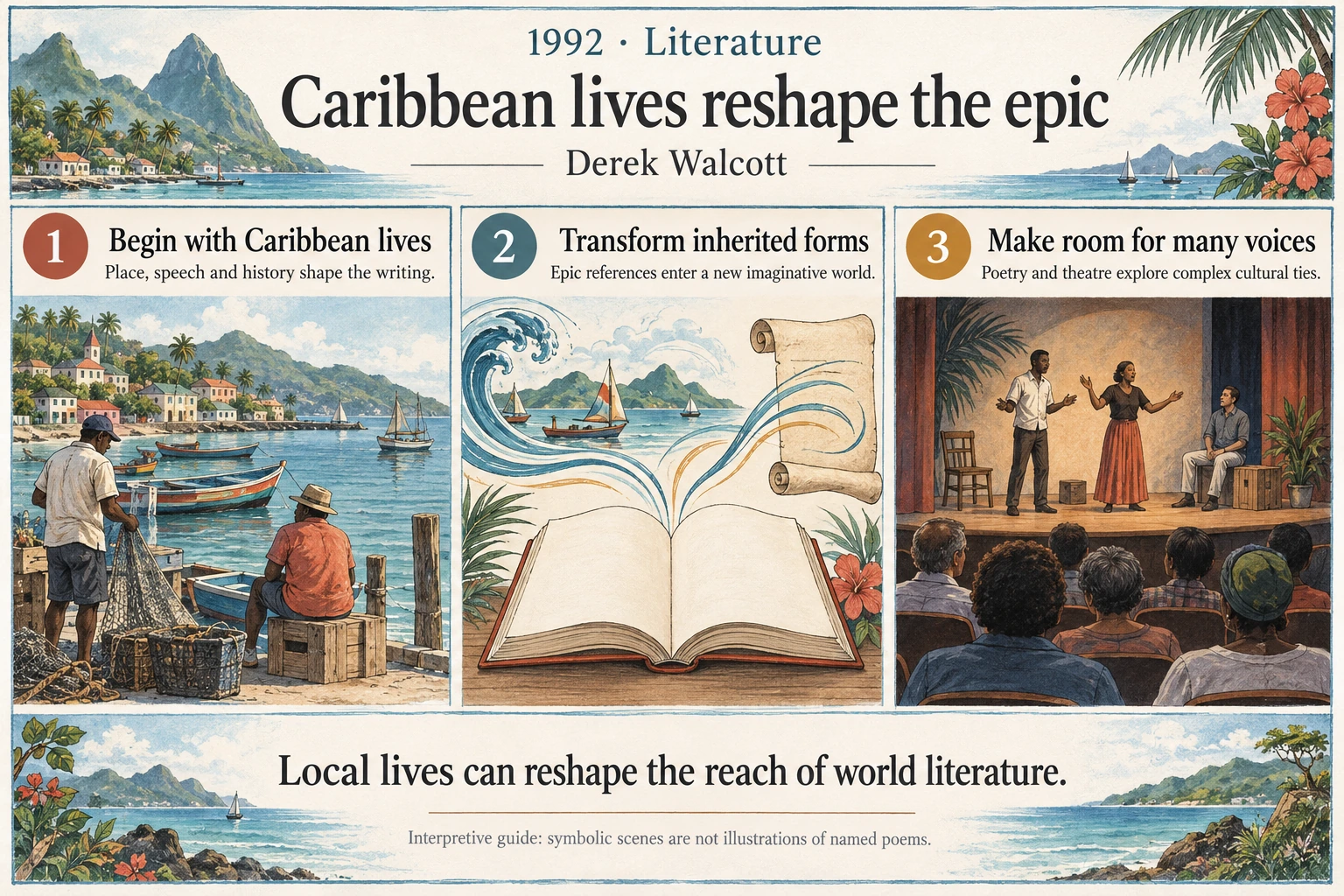
Infographic explaining Caribbean lives reshape the epic
Original AI-generated infographic. A conceptual overview; the explanations and sources below provide context.
Read the poster text

Local lives can reshape the reach of world literature.

  1. Begin with Caribbean lives

    Place, speech and history shape the writing.

  2. Transform inherited forms

    Epic references enter a new imaginative world.

  3. Make room for many voices

    Poetry and theatre explore complex cultural ties.

Interpretive guide: symbolic scenes are not illustrations of named poems.

01 · The contribution

The idea, in everyday language

Caribbean histories carry the consequences of colonial rule, slavery and encounters among different cultures. Walcott’s writing makes landscape, speech and ordinary lives central to poetic thought. The English language is both an inherited literary resource and part of a difficult colonial history. His work explores that tension rather than resolving cultural identity into one pure origin.

Another Life revisits artistic formation, while poems and plays develop varied voices and settings. Omeros draws on epic associations but gives Caribbean people and places their own imaginative weight. References to classical and modern writers enter an ambitious new composition; the work is neither a straightforward translation of Homer nor a complete documentary history of the islands.

Why it matters

The writing expanded the reach of epic and lyric poetry while developing a theatre rooted in Caribbean society. Walcott made relationships between place, memory and language central to a substantial body of work. The 1992 award recognised that entire poetic achievement rather than naming one book as the sole reason.

02 · The people

Who brought the idea to life?

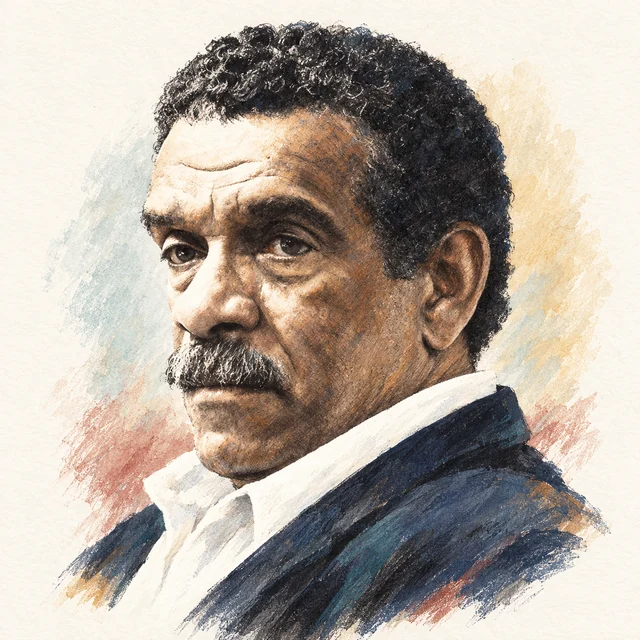
Illustrated portrait of Derek Walcott

Derek Walcott

Prize share · 1

Walcott made Caribbean landscapes, histories and ordinary lives central to ambitious poetic and dramatic forms. His writing engaged the English language and European literary traditions while confronting colonial inheritances and African ancestry. Omeros, published in 1990, transforms epic references through a Caribbean world. The prize recognised an entire body of work; neither that poem nor the region’s many cultures can be reduced to a simple retelling of Homer.

Read the biography ↗

03 · Years in the making

The path here

  1. 1948

    25 Poems marks Walcott’s early publication at eighteen.

  2. 1959

    He founds the Trinidad Theatre Workshop.

  3. 1962

    In a Green Night brings wider recognition.

  4. 1990

    Omeros transforms epic references through Caribbean lives and landscapes.

  5. 1992

    The Literature Prize recognises his poetic body of work.

04 · Read further

From the original sources

Original explanations by Curionode, based on the official records below. Biographical details and affiliations refer to the award year.

  1. Official announcement nobelprize.org
  2. Official bibliography nobelprize.org

More in Literature

Browse this subject ↗