c.curionodeThe Nobel Archive

2002 · Literature

A life that history cannot reduce to a number

Imre Kertész used fiction to examine individual experience, persecution and the uneasy work of surviving and remembering.

literaturememoryHolocaustindividual experience
2002Literature

Visual guide

The prize, pictured

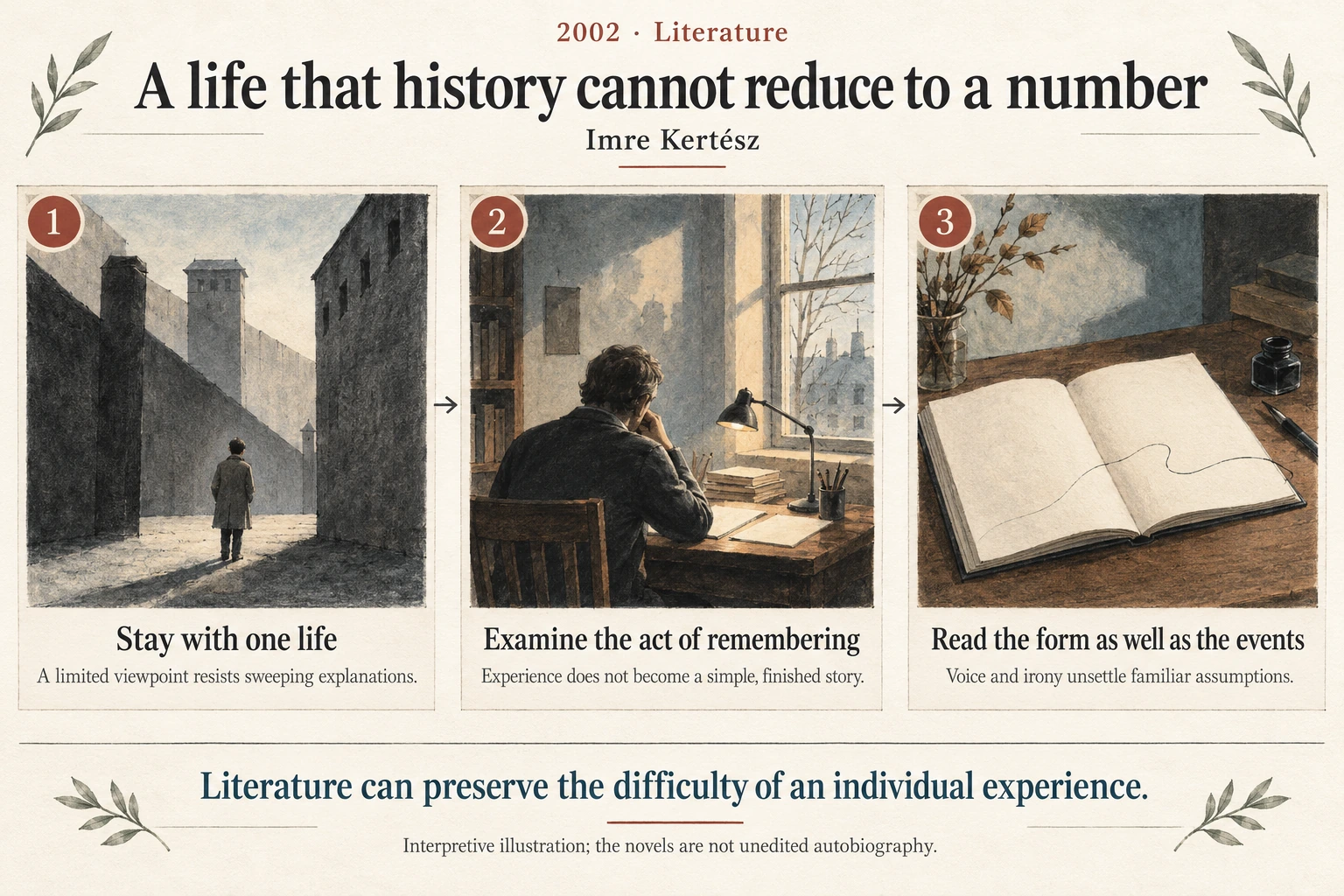
Infographic explaining A life that history cannot reduce to a number
Original AI-generated infographic. A conceptual overview; the explanations and sources below provide context.
Read the poster text

Literature can preserve the difficulty of an individual experience.

  1. Stay with one life

    A limited viewpoint resists sweeping explanations.

  2. Examine the act of remembering

    Experience does not become a simple, finished story.

  3. Read the form as well as the events

    Voice and irony unsettle familiar assumptions.

Interpretive illustration; the novels are not unedited autobiography.

01 · The contribution

The idea, in everyday language

Large accounts of history can make individual lives disappear into categories and totals. Kertész’s novels return attention to the narrow, changing perspective of a person living through events without knowing their outcome. In Fateless, a young narrator’s ordinary observations and limited understanding create an unsettling distance between what he says and what a reader may recognise.

His later writing returns to the difficulty of making a life and a language after catastrophe. Memory is not presented as a simple route to closure, and fiction is not treated as an uncomplicated transcript of experience. Voice, irony, repetition and narrative form make readers examine the explanations they bring to persecution, survival and responsibility.

Why it matters

Kertész’s work gave literary form to questions about the individual under totalitarian violence and about the aftermath of the Holocaust. It challenged comforting narratives in which survival automatically produces a clear moral lesson or a completed recovery. The value lies in the precision and difficulty of the writing, which keeps singular experience in view even when broad historical explanations seem available.

02 · The people

Who brought the idea to life?

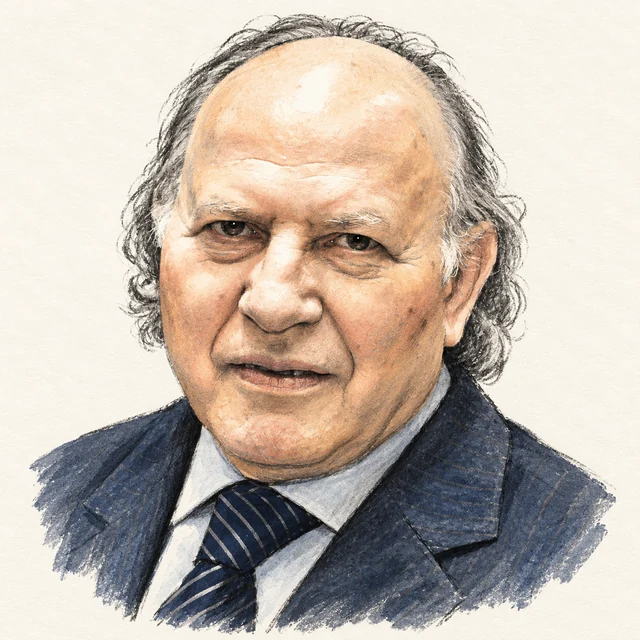
Illustrated portrait of Imre Kertész

Imre Kertész

Prize share · 1/1

Kertész transformed experiences of persecution and survival into carefully constructed fiction. Fateless follows a young narrator whose limited understanding makes familiar explanations of history feel inadequate. Later works, including Fiasco and Kaddish for a Child Not Born, examine writing, memory and life after catastrophe. The prize recognised the force of this literary achievement, not simply a testimony of events: narrative voice, form and ambiguity are essential to how the books work.

Read the biography ↗

03 · Years in the making

The path here

  1. 1975

    Fateless was first published in Hungarian.

  2. 1988

    Fiasco examined writing and the difficulty of telling a life.

  3. 1990

    Kaddish for a Child Not Born returned to life after the Holocaust.

04 · Read further

From the original sources

Original explanations by Curionode, based on the official records below. Biographical details and affiliations refer to the award year.

  1. Official announcement nobelprize.org
  2. Nobel Prize biobibliography nobelprize.org

More in Literature

Browse this subject ↗