01 · The contribution
The idea, in everyday language
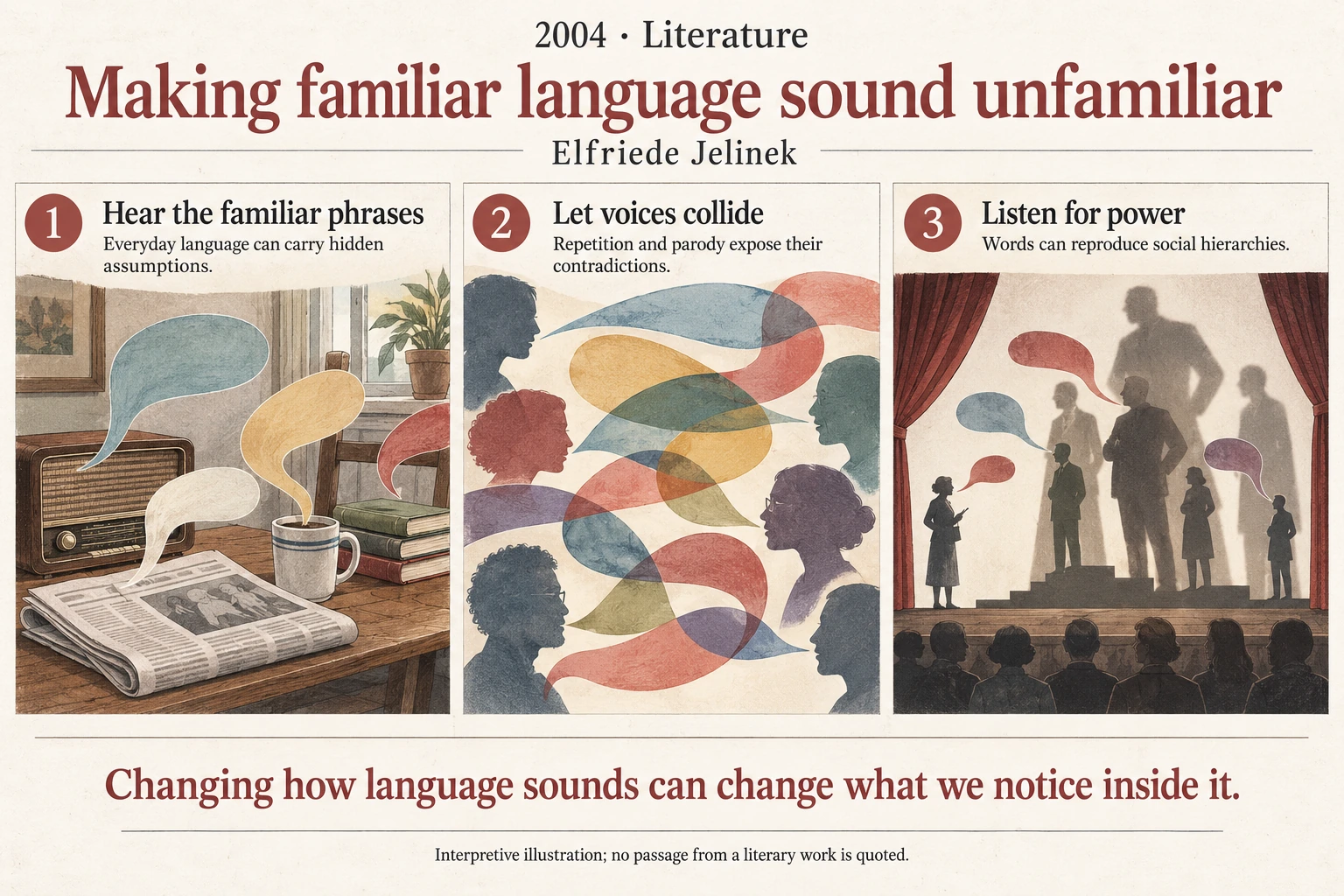
An apparently ordinary phrase can carry a ready-made idea about who should obey, what success looks like or how women and men are expected to behave. Jelinek takes language from entertainment, public rhetoric and everyday speech and makes those assumptions difficult to ignore. Repetition and parody can turn a comforting formula into something abrasive or absurd.
Her prose and drama often let voices interrupt, echo and undermine one another. Rather than always providing stable characters with a conventional conversation, the writing can work like a collision of social languages. Musical rhythm and counterpoint help shape this effect. The reader or audience is invited to hear how words reproduce power, even when their speakers treat them as natural or harmless.
Why it matters
Jelinek expanded the possibilities of political and experimental writing by making language itself part of the action. Her work examines class, gender, consumer culture and historical memory through form as well as subject matter. The prize recognised a distinctive literary practice in novels and plays, including the tension between musical verbal energy and the social violence that familiar phrases can conceal.