01 · The contribution
The idea, in everyday language
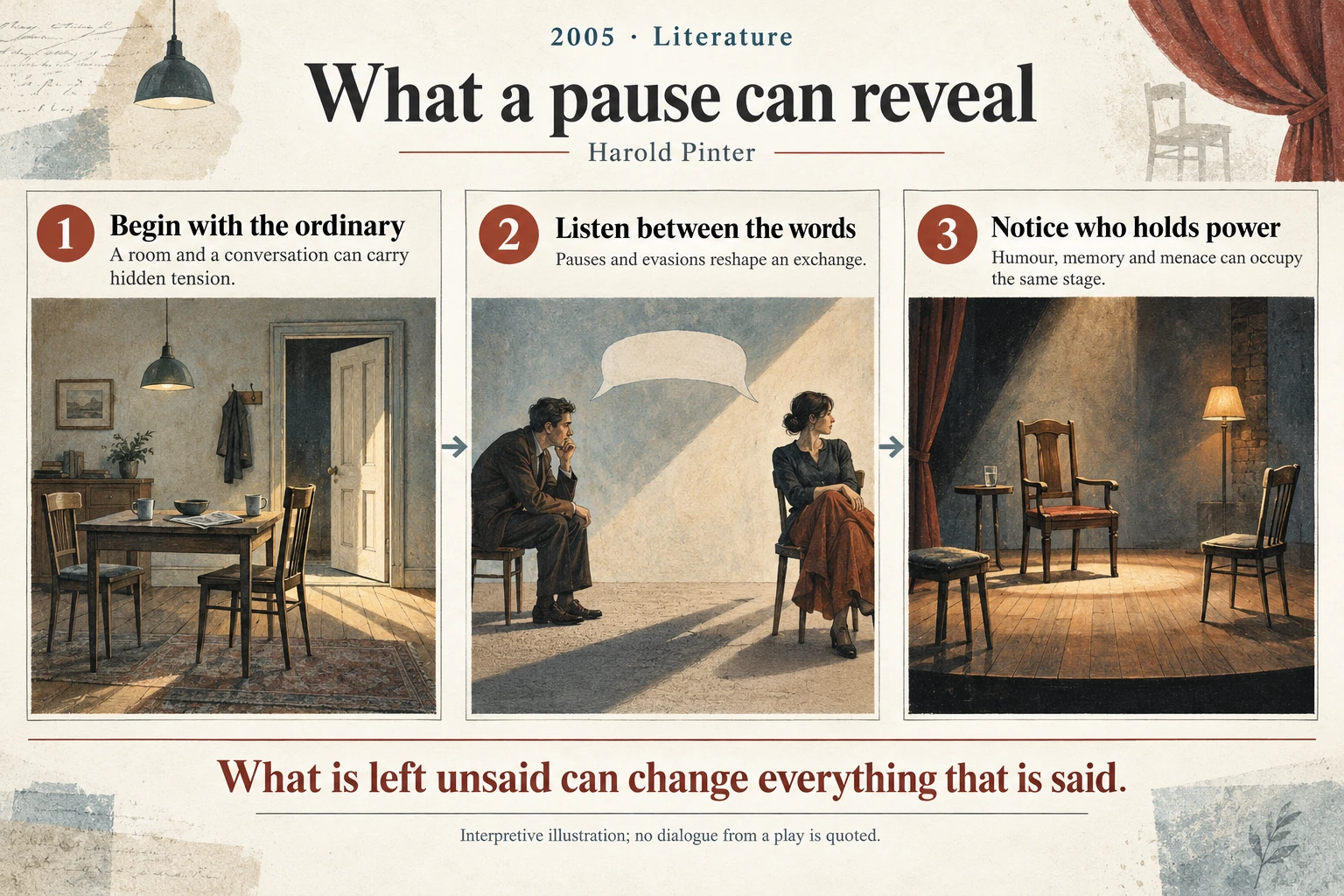
A room, a few people and an ordinary exchange can become unsettling when the audience cannot tell who controls the situation. In Pinter’s drama, words can hide as much as they disclose. A pause may withhold an answer, test another person or make a familiar space feel insecure. The effect comes from the relationship between speech, silence and action, not from silence alone.
His characters often dispute the past, defend a place they regard as theirs or face an unexpected intrusion. Dark humour can coexist with threat. Later plays explore oppression more explicitly, but these concerns grow from earlier questions about who can define reality and whose account is accepted. The prize recognised this dramatic writing across a substantial body of work.
Why it matters
Pinter expanded what theatre could communicate through apparently modest situations. Performers and audiences must attend to timing, ambiguity and shifts of authority. His influence reaches stage, film and the language used to describe a scene in which everyday behaviour carries an undercurrent of menace.