c.curionodeThe Nobel Archive

2004 · Literature

Making familiar language sound unfamiliar

Jelinek makes competing voices expose the power hidden inside everyday clichés.

languagepolyphonysocial criticismexperimental theatre
2004Literature

Visual guide

The prize, pictured

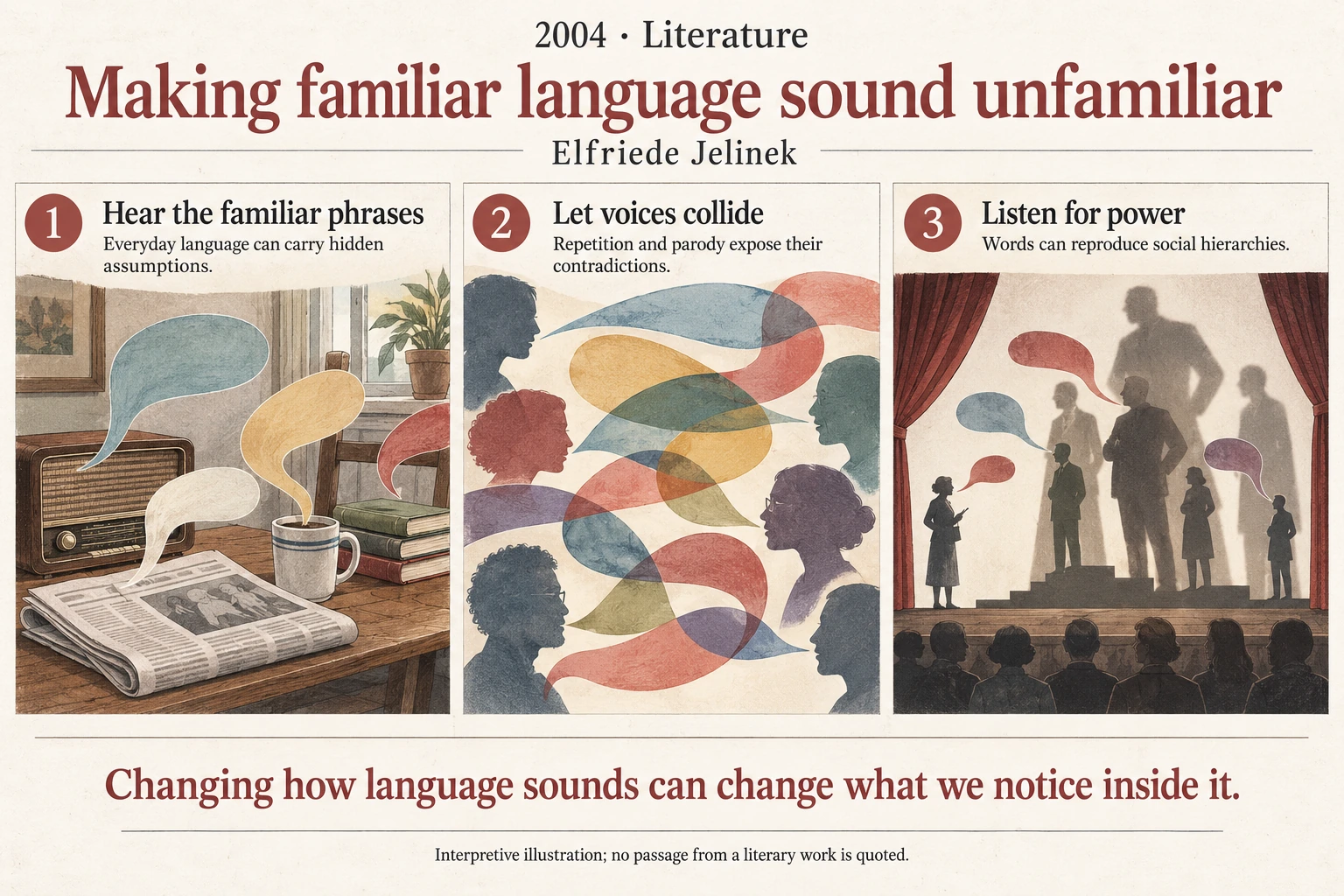
Infographic explaining Making familiar language sound unfamiliar
Original AI-generated infographic. A conceptual overview; the explanations and sources below provide context.
Read the poster text

Changing how language sounds can change what we notice inside it.

  1. Hear the familiar phrases

    Everyday language can carry hidden assumptions.

  2. Let voices collide

    Repetition and parody expose their contradictions.

  3. Listen for power

    Words can reproduce social hierarchies.

Interpretive illustration; no passage from a literary work is quoted.

01 · The contribution

The idea, in everyday language

An apparently ordinary phrase can carry a ready-made idea about who should obey, what success looks like or how women and men are expected to behave. Jelinek takes language from entertainment, public rhetoric and everyday speech and makes those assumptions difficult to ignore. Repetition and parody can turn a comforting formula into something abrasive or absurd.

Her prose and drama often let voices interrupt, echo and undermine one another. Rather than always providing stable characters with a conventional conversation, the writing can work like a collision of social languages. Musical rhythm and counterpoint help shape this effect. The reader or audience is invited to hear how words reproduce power, even when their speakers treat them as natural or harmless.

Why it matters

Jelinek expanded the possibilities of political and experimental writing by making language itself part of the action. Her work examines class, gender, consumer culture and historical memory through form as well as subject matter. The prize recognised a distinctive literary practice in novels and plays, including the tension between musical verbal energy and the social violence that familiar phrases can conceal.


02 · The people

Who brought the idea to life?

Illustrated portrait of Elfriede Jelinek

Elfriede Jelinek

Prize share · 1/1

Jelinek takes familiar language from entertainment, public speech and everyday expectations and makes its assumptions audible. Repetition, parody and shifting voices reveal how clichés can support class and gender hierarchies. The Piano Teacher, published in German in 1983, is one prominent example of her examination of authority and submission. Her dramatic writing often gives priority to streams of language rather than conventional conversations between stable characters.

Read the biography ↗

03 · Years in the making

The path here

  1. 1967

    Jelinek made her literary debut with the poetry collection Lisas Schatten.

  2. 1983

    The Piano Teacher was published in German.

  3. 2004

    The Nobel Prize recognised her flow of voices and counter-voices in novels and plays.

04 · Read further

From the original sources

Original explanations by Curionode, based on the official records below. Biographical details and affiliations refer to the award year.

  1. Official announcement nobelprize.org
  2. Nobel Prize biobibliography nobelprize.org

More in Literature

Browse this subject ↗