c.curionodeThe Nobel Archive

2006 · Peace

Small loans, wider possibilities

Yunus and Grameen Bank expanded access to credit for people excluded from conventional banking.

microcreditfinancial inclusiondevelopmentwomen’s opportunities
2006Peace

Visual guide

The prize, pictured

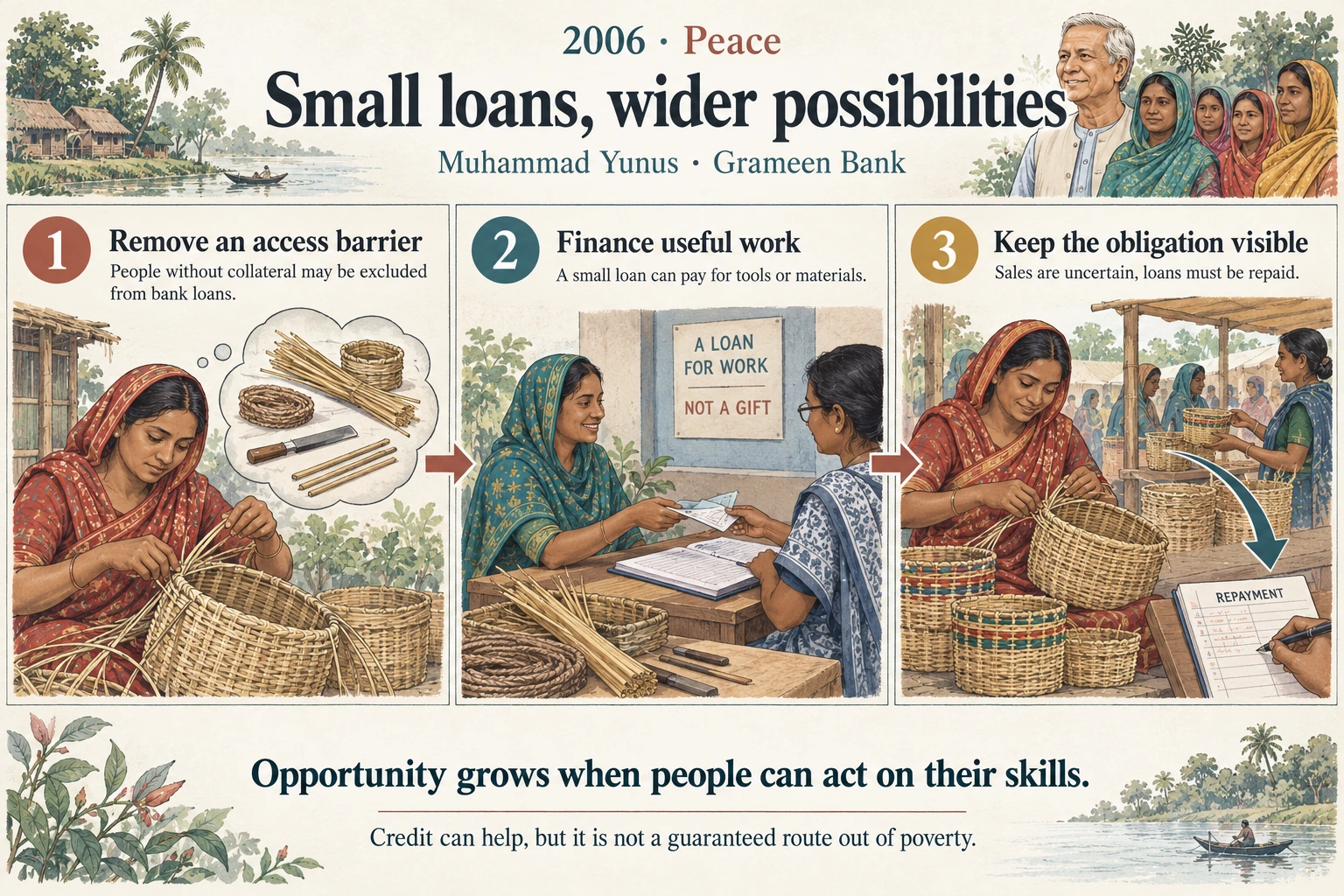
Infographic explaining Small loans, wider possibilities
Original AI-generated infographic. A conceptual overview; the explanations and sources below provide context.
Read the poster text

Opportunity grows when people can act on their skills.

  1. Remove an access barrier

    People without collateral may be excluded from bank loans.

  2. Finance useful work

    A small loan can pay for tools or materials.

  3. Keep the obligation visible

    Sales are uncertain; loans must be repaid.

Credit can help, but it is not a guaranteed route out of poverty.

01 · The contribution

The idea, in everyday language

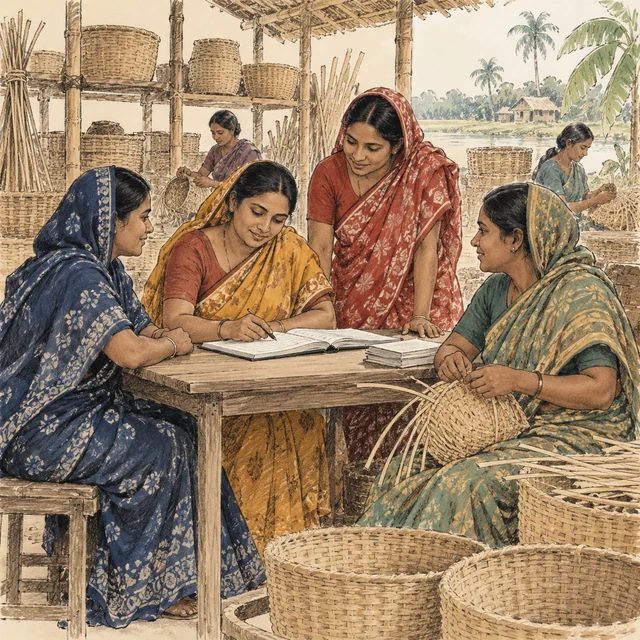
A person may have the skill to make baskets or repair clothing but lack money for materials and tools. A conventional lender may ask for collateral: an asset it can claim if the loan is not repaid. People with few assets can therefore be excluded even when a modest amount of capital would help them work.

Yunus and Grameen developed small-loan arrangements for such borrowers, especially women. What began as an experimental project in 1976 became a bank in 1983. The Peace Prize connected this approach to economic and social development from below: people gaining opportunities to act within their own communities, rather than waiting for development to arrive only through large institutions.

Why it matters

The work drew international attention to financial exclusion and helped spread microcredit models. The Nobel Committee linked participation in economic life, particularly women’s opportunities, with conditions that can support lasting peace. That is a rationale about development and dignity, not a claim that banks directly end every conflict.
02 · The recipients

Who brought the idea to life?

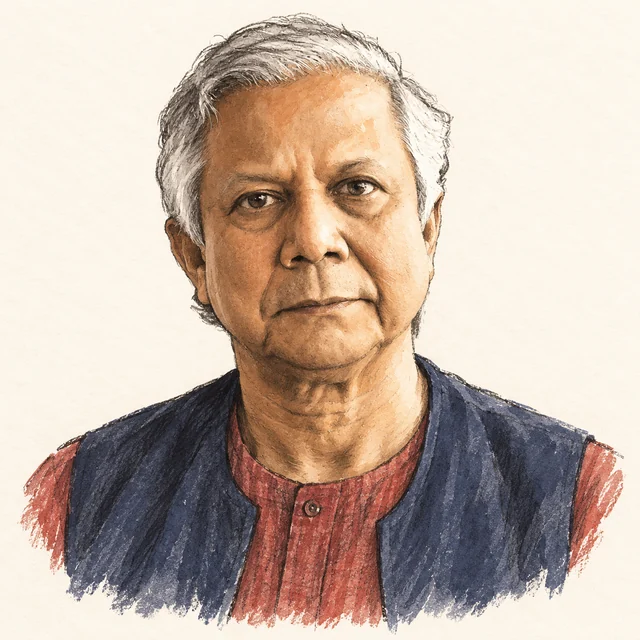
Illustrated portrait of Muhammad Yunus

Muhammad Yunus

Prize share · 1/2

Yunus developed and promoted lending to people excluded from conventional bank credit because they lacked collateral. Small loans could let borrowers buy tools or materials for income-generating work. The Peace Prize linked these efforts to opportunity, dignity and development from below. It did not establish that every loan succeeds or that borrowing alone can remove the many causes of poverty.

Read the biography ↗
Symbolic illustration representing Grameen Bank

Grameen Bank

Prize share · 1/2

The bank put microcredit into practice on a large scale through local relationships, repeated lending and repayment arrangements. Its organisational role was to make access to small loans an enduring institution rather than an isolated experiment. Grameen Bank shared the 2006 Peace Prize with its founder; the award recognised the institution collectively, not every borrower or employee as a separate Nobel laureate.

Read the biography ↗

03 · Years in the making

The path here

  1. 1976

    The experimental Grameen credit project began in Bangladesh.

  2. 1983

    Grameen became a bank, extending the earlier lending project.

  3. 2006

    Yunus and Grameen Bank shared the Peace Prize for development from below.

04 · Read further

From the original sources

Original explanations by Curionode, based on the official records below. Biographical details and affiliations refer to the award year.

  1. Official announcement nobelprize.org