c.curionodeThe Nobel Archive

2007 · Peace

Bringing climate knowledge into public view

The IPCC assessed evidence; Al Gore helped communicate the climate challenge to a wider audience.

climate assessmentpublic communicationhuman security
2007Peace

Visual guide

The prize, pictured

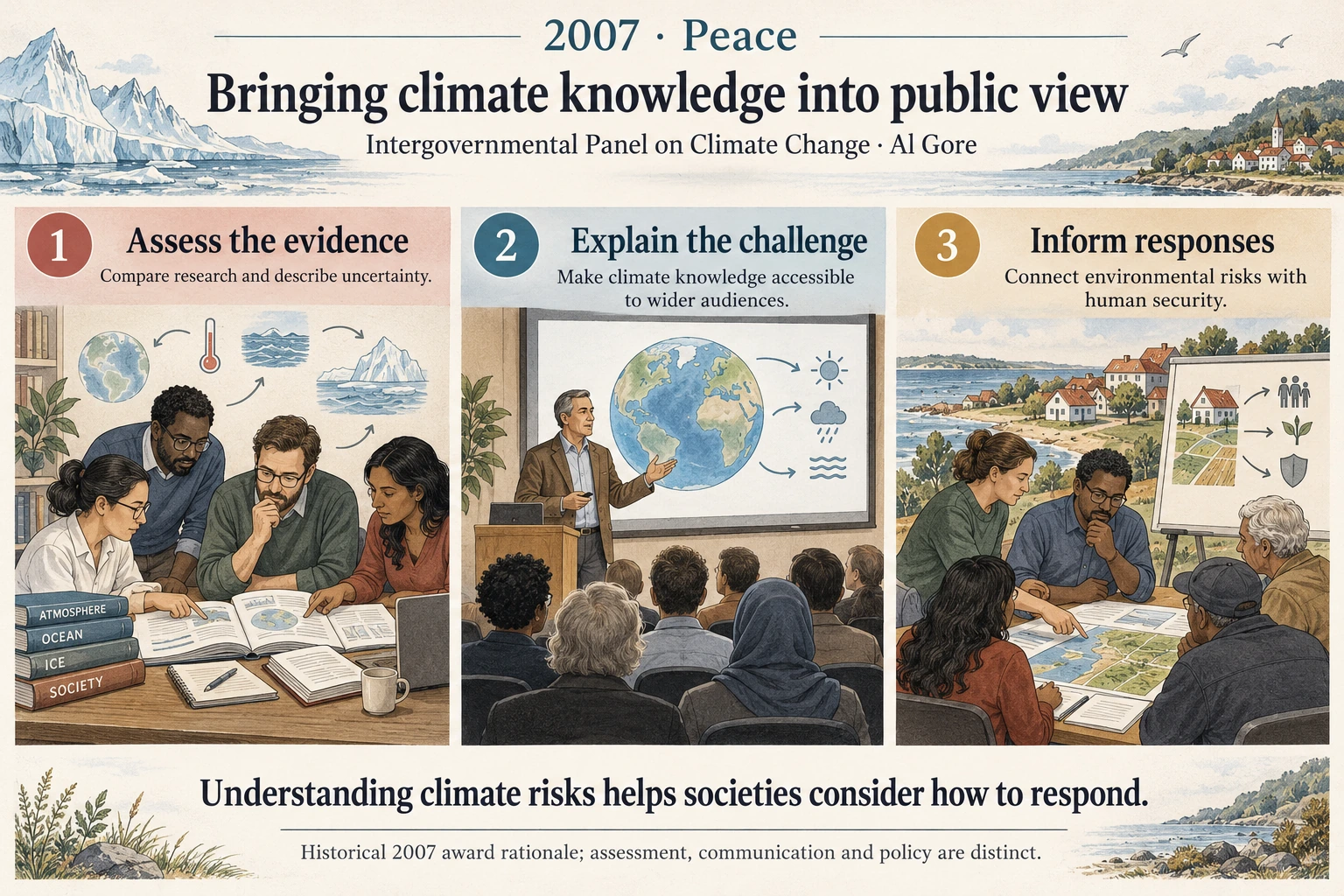
Infographic explaining Bringing climate knowledge into public view
Original AI-generated infographic. A conceptual overview; the explanations and sources below provide context.
Read the poster text

Understanding climate risks helps societies consider how to respond.

  1. Assess the evidence

    Compare research and describe uncertainty.

  2. Explain the challenge

    Make climate knowledge accessible to wider audiences.

  3. Inform responses

    Connect environmental risks with human security.

Historical 2007 award rationale; assessment, communication and policy are distinct.

01 · The contribution

The idea, in everyday language

Climate change brings together many kinds of evidence: measurements of the atmosphere and oceans, studies of ice, physical explanations and model-based projections. The IPCC’s task is to assess this existing research, comparing findings and describing confidence and uncertainty. It is an assessment body, not a laboratory that carries out all the underlying research.

Gore’s contribution was public communication through political work, books, lectures and the 2006 documentary An Inconvenient Truth. The Nobel Committee linked climate knowledge to the conditions for peace: pressures on livelihoods and resources can increase insecurity, especially for vulnerable communities. The shared award recognised building and spreading understanding as a foundation for response.

Why it matters

The 2007 award brought international attention to the connection between environmental change and human security. It recognised both collective assessment and public explanation, encouraging climate knowledge to enter decisions. Understanding risks can support mitigation and adaptation, but an award cannot itself deliver emissions reductions, settle every policy choice or remove vulnerability.
02 · The recipients

Who brought the idea to life?

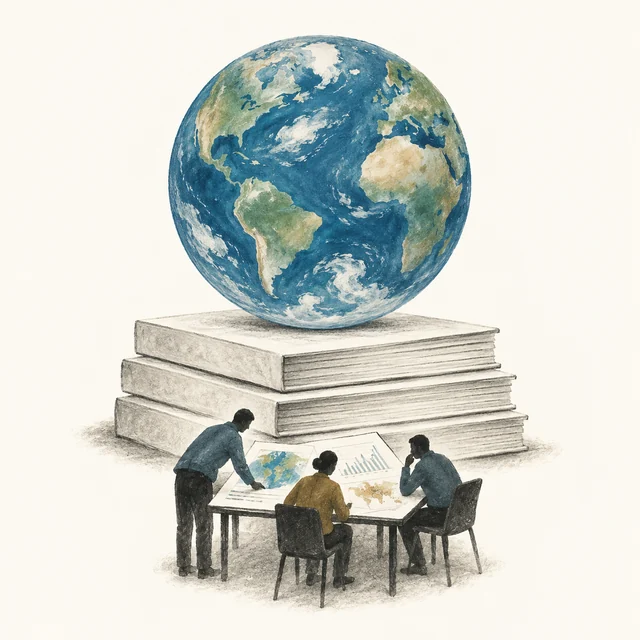
Symbolic illustration representing Intergovernmental Panel on Climate Change

Intergovernmental Panel on Climate Change

Prize share · 1/2

The 2007 prize recognised its work in assembling and communicating knowledge about human-caused climate change, shared equally with Al Gore. Its assessment process compares evidence, records uncertainties and undergoes extensive review. Reports are intended to inform decisions without prescribing one policy. The laureate is the organisation as a whole; the award does not make every contributing author a separate Nobel laureate.

Read the biography ↗
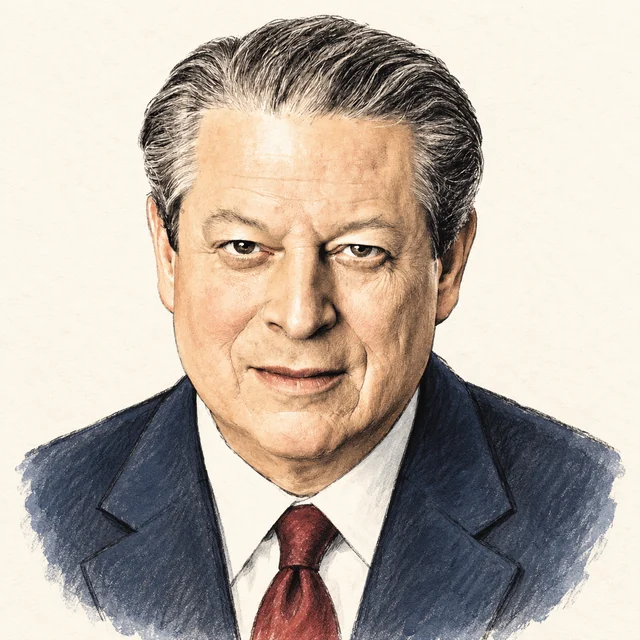
Illustrated portrait of Al Gore

Al Gore

Prize share · 1/2

The Nobel Committee recognised his sustained work to communicate human-caused climate change and the need for responses. He shared the award equally with the IPCC, whose role was the assessment of scientific knowledge. Public communication and scientific assessment are complementary but different activities: the prize did not mean Gore discovered climate change, or that every statement in any public presentation was individually certified.

Read the biography ↗

03 · Years in the making

The path here

  1. 1988

    WMO and UNEP established the IPCC, with endorsement by the UN General Assembly.

  2. 2006

    An Inconvenient Truth brought Gore’s climate presentation to a broad film audience.

  3. 2007

    The Peace prize jointly recognised climate assessment and public communication.

04 · Read further

From the original sources

Original explanations by Curionode, based on the official records below. Biographical details and affiliations refer to the award year.

  1. Official announcement nobelprize.org
  2. IPCC: history and assessment role ipcc.ch