c.curionodeThe Nobel Archive

2017 · Literature

What a careful voice leaves unsaid

Kazuo Ishiguro’s restrained narrators reveal the distance between a life as remembered and a life as understood.

Memory and regretNarrative restraintUnreliable perspectives
2017Literature

Visual guide

The prize, pictured

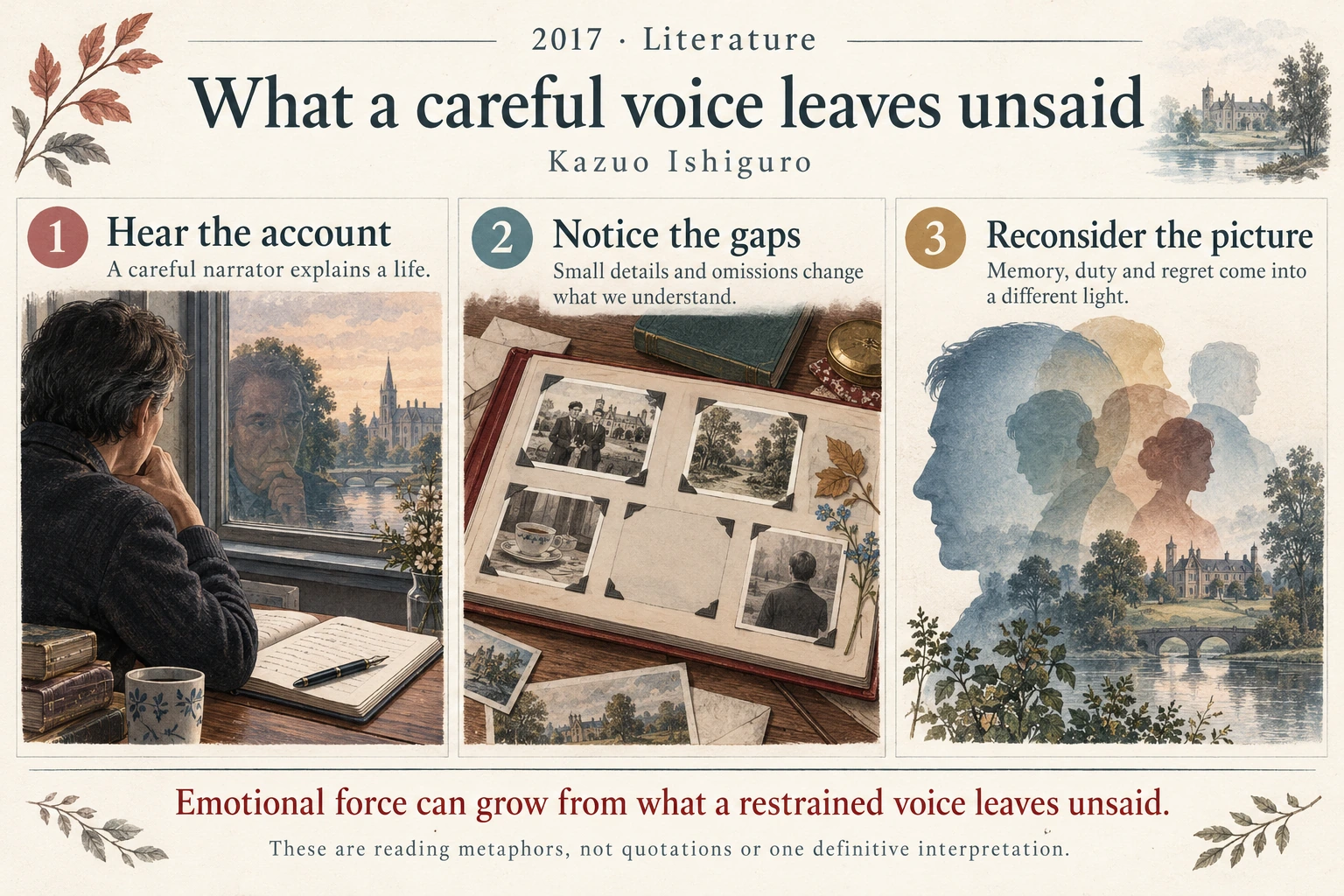
Infographic explaining What a careful voice leaves unsaid
Original AI-generated infographic. A conceptual overview; the explanations and sources below provide context.
Read the poster text

Emotional force can grow from what a restrained voice leaves unsaid.

  1. Hear the account

    A careful narrator explains a life.

  2. Notice the gaps

    Small details and omissions change what we understand.

  3. Reconsider the picture

    Memory, duty and regret come into a different light.

These are reading metaphors, not quotations or one definitive interpretation.

01 · The contribution

The idea, in everyday language

A narrator can sound precise and sincere while failing to see something important about their own life. Ishiguro makes that gap part of the reader’s experience. In The Remains of the Day, a butler’s account of service and professionalism gradually raises questions about loyalty, lost opportunities and regret. Small details and omissions matter because the narrator does not simply announce everything the reader needs to understand. Memory becomes an act of interpretation, not a perfect recording.

Ishiguro carries related questions across different settings and genres. His early novels examine memory in the aftermath of war; Never Let Me Go uses a speculative world to explore attachment and the value assigned to human lives. The Buried Giant asks how remembering and forgetting affect private relationships and a shared past. The award recognised the emotional force and insight of this writing, rather than selecting one novel as a complete statement of his work.

Why it matters

His fiction gives readers practice in listening beyond confident explanations. Questions about duty, care, responsibility and self-protection emerge through particular lives, rather than only through abstract argument. The controlled language can make emotional discoveries more powerful because the reader notices them gradually. Different readers may interpret the same silences differently.

02 · The people

Who brought the idea to life?

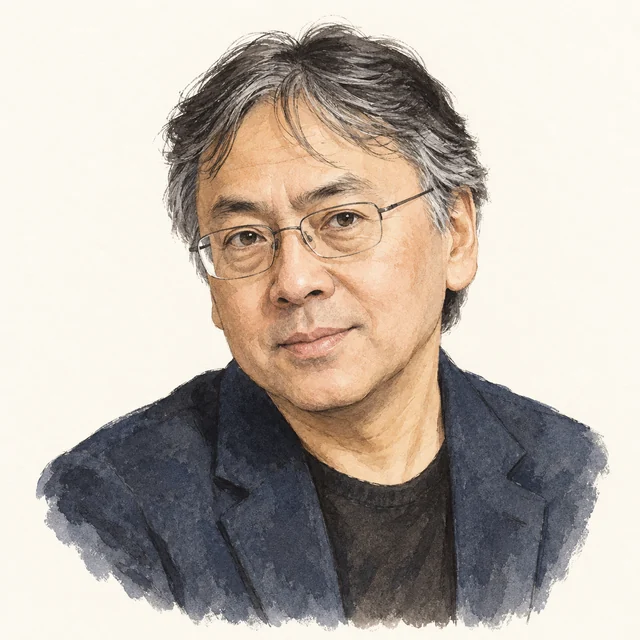
Illustrated portrait of Kazuo Ishiguro

Kazuo Ishiguro

Prize share · 1/1

His novels explore gaps between what a person tells themselves and what a reader gradually understands. The Remains of the Day examines duty and regret; Never Let Me Go uses speculative fiction to ask questions about attachment and human worth. The prize recognised his writing across genres.

Read the biography ↗

03 · Years in the making

The path here

  1. 1982

    A Pale View of Hills appears, introducing themes of memory and self-delusion.

  2. 1989

    The Remains of the Day explores duty, memory and regret.

  3. 2005–2015

    Never Let Me Go and The Buried Giant extend these questions into imagined worlds.

04 · Read further

From the original sources

Original explanations by Curionode, based on the official records below. Biographical details and affiliations refer to the award year.

  1. Official award announcement nobelprize.org
  2. Official biobibliography nobelprize.org

More in Literature

Browse this subject ↗