01 · The contribution
The idea, in everyday language
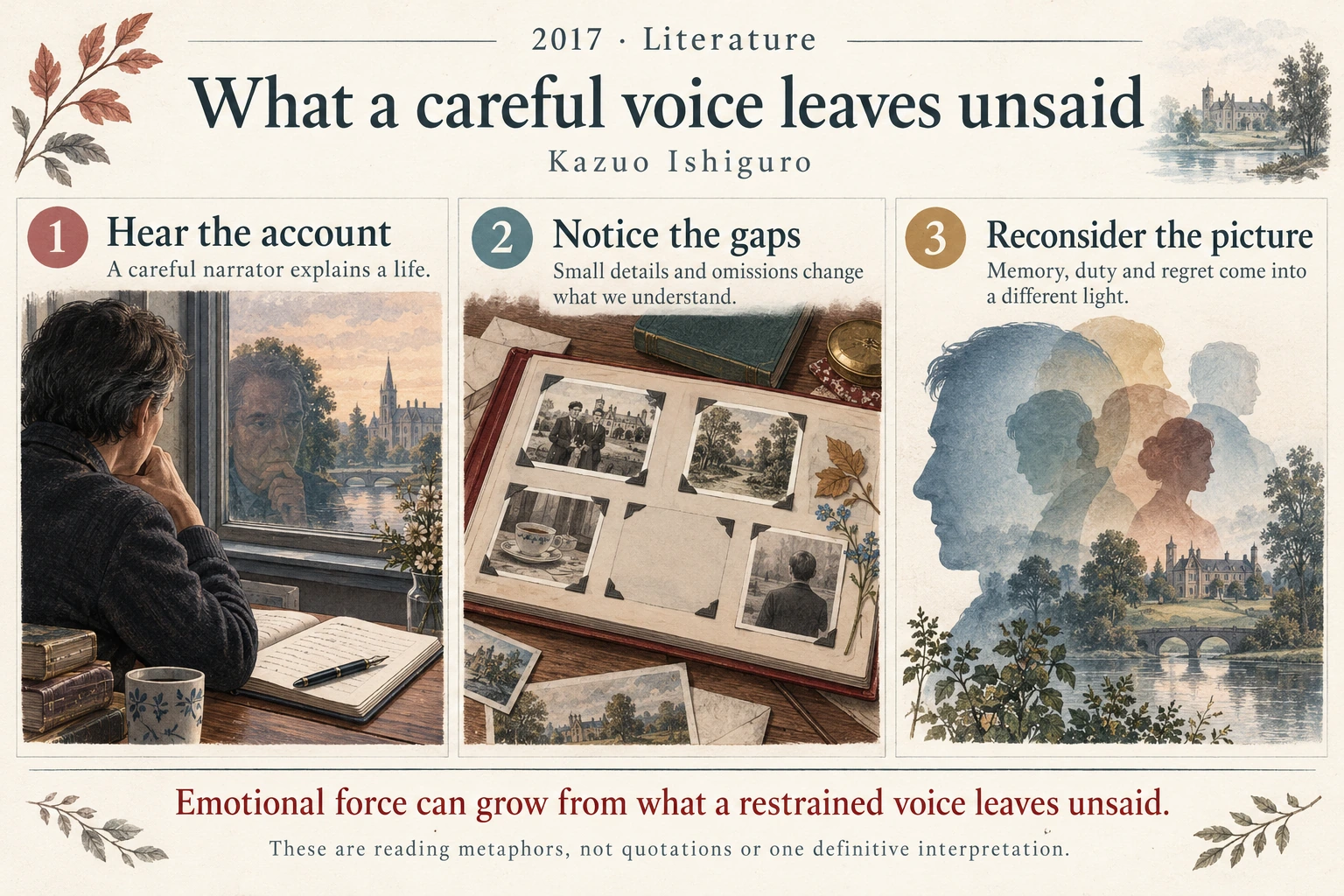
A narrator can sound precise and sincere while failing to see something important about their own life. Ishiguro makes that gap part of the reader’s experience. In The Remains of the Day, a butler’s account of service and professionalism gradually raises questions about loyalty, lost opportunities and regret. Small details and omissions matter because the narrator does not simply announce everything the reader needs to understand. Memory becomes an act of interpretation, not a perfect recording.
Ishiguro carries related questions across different settings and genres. His early novels examine memory in the aftermath of war; Never Let Me Go uses a speculative world to explore attachment and the value assigned to human lives. The Buried Giant asks how remembering and forgetting affect private relationships and a shared past. The award recognised the emotional force and insight of this writing, rather than selecting one novel as a complete statement of his work.
Why it matters
His fiction gives readers practice in listening beyond confident explanations. Questions about duty, care, responsibility and self-protection emerge through particular lives, rather than only through abstract argument. The controlled language can make emotional discoveries more powerful because the reader notices them gradually. Different readers may interpret the same silences differently.