c.curionodeThe Nobel Archive

2018 · Peace

Care, voice and justice for survivors

Denis Mukwege and Nadia Murad were recognised for opposing sexual violence used as a weapon of war and armed conflict.

Survivor dignityCare and advocacyAccountability
2018Peace

Visual guide

The prize, pictured

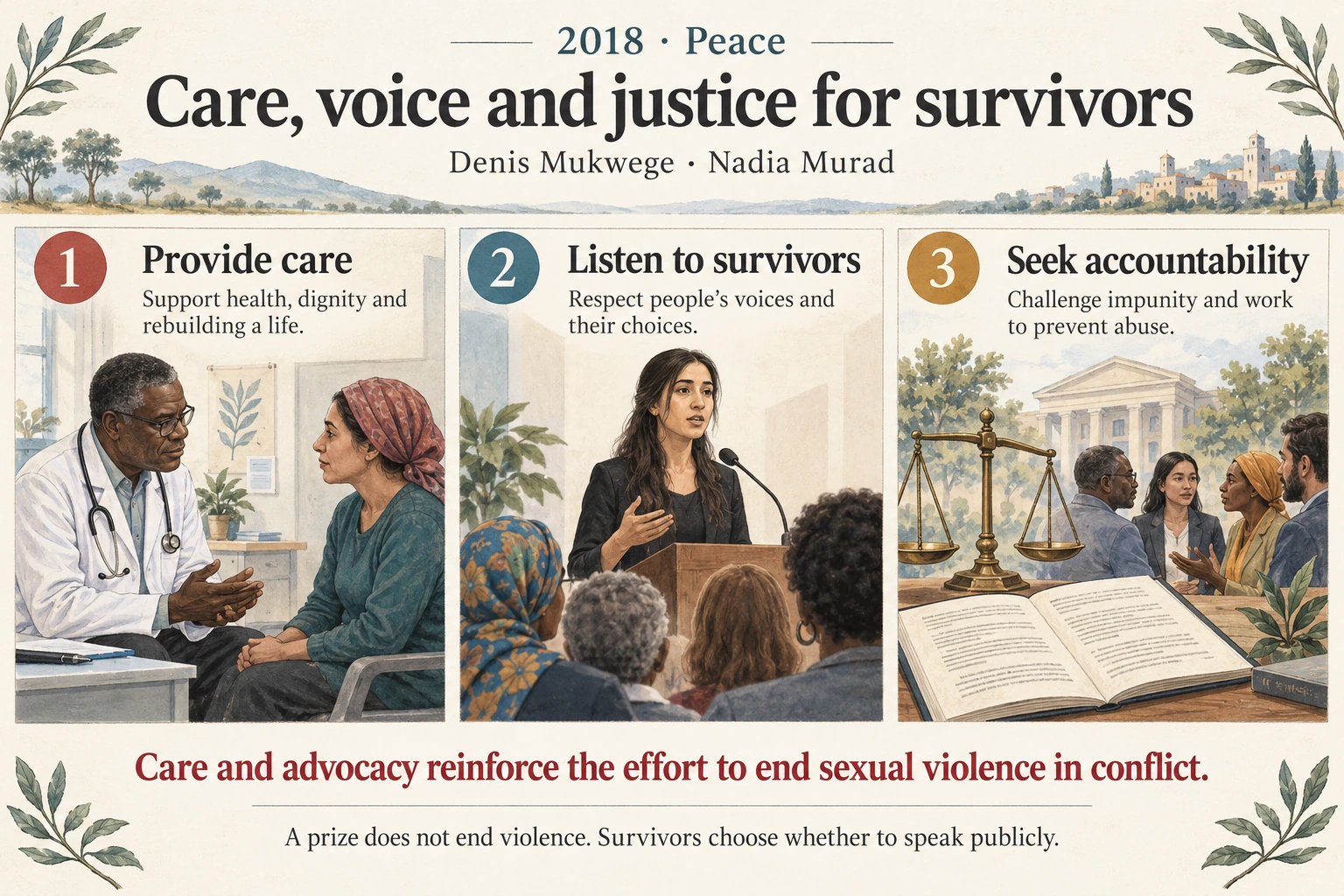
Infographic explaining Care, voice and justice for survivors
Original AI-generated infographic. A conceptual overview; the explanations and sources below provide context.
Read the poster text

Care and advocacy reinforce the effort to end sexual violence in conflict.

  1. Provide care

    Support health, dignity and rebuilding a life.

  2. Listen to survivors

    Respect people’s voices and their choices.

  3. Seek accountability

    Challenge impunity and work to prevent abuse.

A prize does not end violence. Survivors choose whether to speak publicly.

01 · The contribution

The idea, in everyday language

Violence in war can attack people’s bodies, safety and place in a community long after a battle ends. Denis Mukwege’s work at Panzi Hospital connects medical care with the needs of survivors rebuilding their lives. Founded in Bukavu in 1999, the hospital became a place where he and a wider team treated people harmed by sexual violence. His public advocacy also challenged impunity: caring for injuries does not remove the responsibility to prevent abuses and hold perpetrators accountable.

Nadia Murad survived Islamic State’s 2014 attack on the Yazidi community and captivity that followed. After escaping, she chose to speak publicly and call for justice. Her testimony and advocacy brought survivors’ experiences into international discussions where they had too often been ignored. The two laureates came to the issue through different experiences, but their work connected immediate support with the longer effort to protect rights and end the use of sexual violence as a weapon.

Why it matters

The award drew attention to survivors’ dignity, the work of caregivers and the importance of listening to people affected by conflict. Mukwege’s clinical work and Murad’s advocacy show how support and public accountability can reinforce one another. The contribution is humanitarian and civic; it should not be described as a laboratory discovery.
02 · The people

Who brought the idea to life?

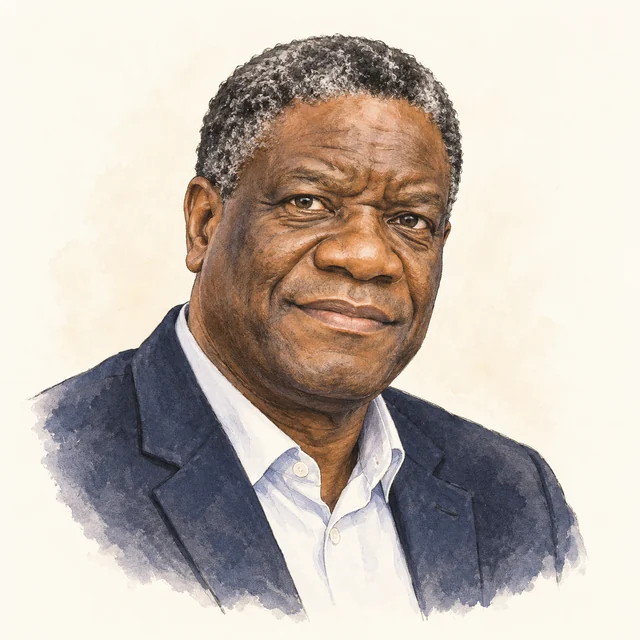
Illustrated portrait of Denis Mukwege

Denis Mukwege

Prize share · 1/2

The prize recognised his care for survivors and his efforts to end sexual violence used as a weapon of war. His contribution connects the work of a clinical team with demands for protection, accountability and respect for survivors’ choices and dignity.

Read the biography ↗
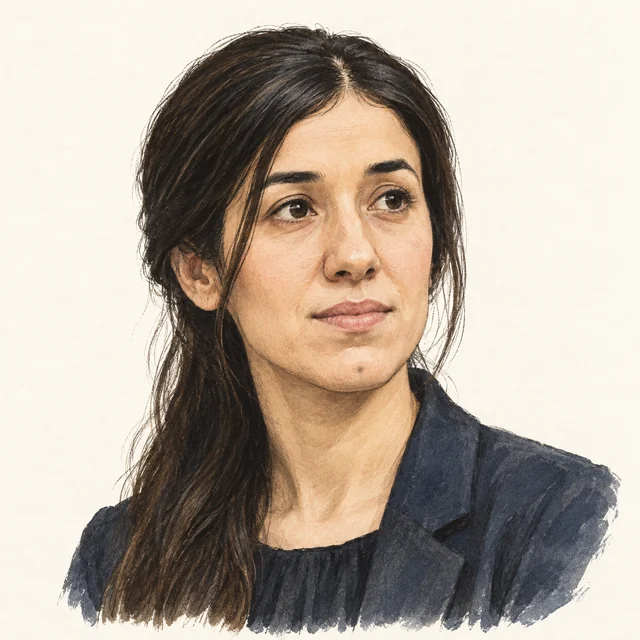
Illustrated portrait of Nadia Murad

Nadia Murad

Prize share · 1/2

She brought international attention to sexual violence in conflict and to crimes against the Yazidi community. Her testimony and advocacy press for accountability and support for survivors. The Nobel recognition concerns this work, without implying that public testimony is an obligation for every survivor.

Read the biography ↗

03 · Years in the making

The path here

  1. 1999

    Mukwege establishes Panzi Hospital in Bukavu.

  2. 2016

    Murad becomes a UN goodwill ambassador for the dignity of trafficking survivors.

  3. 2018

    The Peace Prize recognises their efforts against sexual violence in conflict.

04 · Read further

From the original sources

Original explanations by Curionode, based on the official records below. Biographical details and affiliations refer to the award year.

  1. Official award record nobelprize.org
  2. Award announcement nobelprize.org
  3. Panzi Hospital history panzifoundation.org