01 · The contribution
The idea, in everyday language
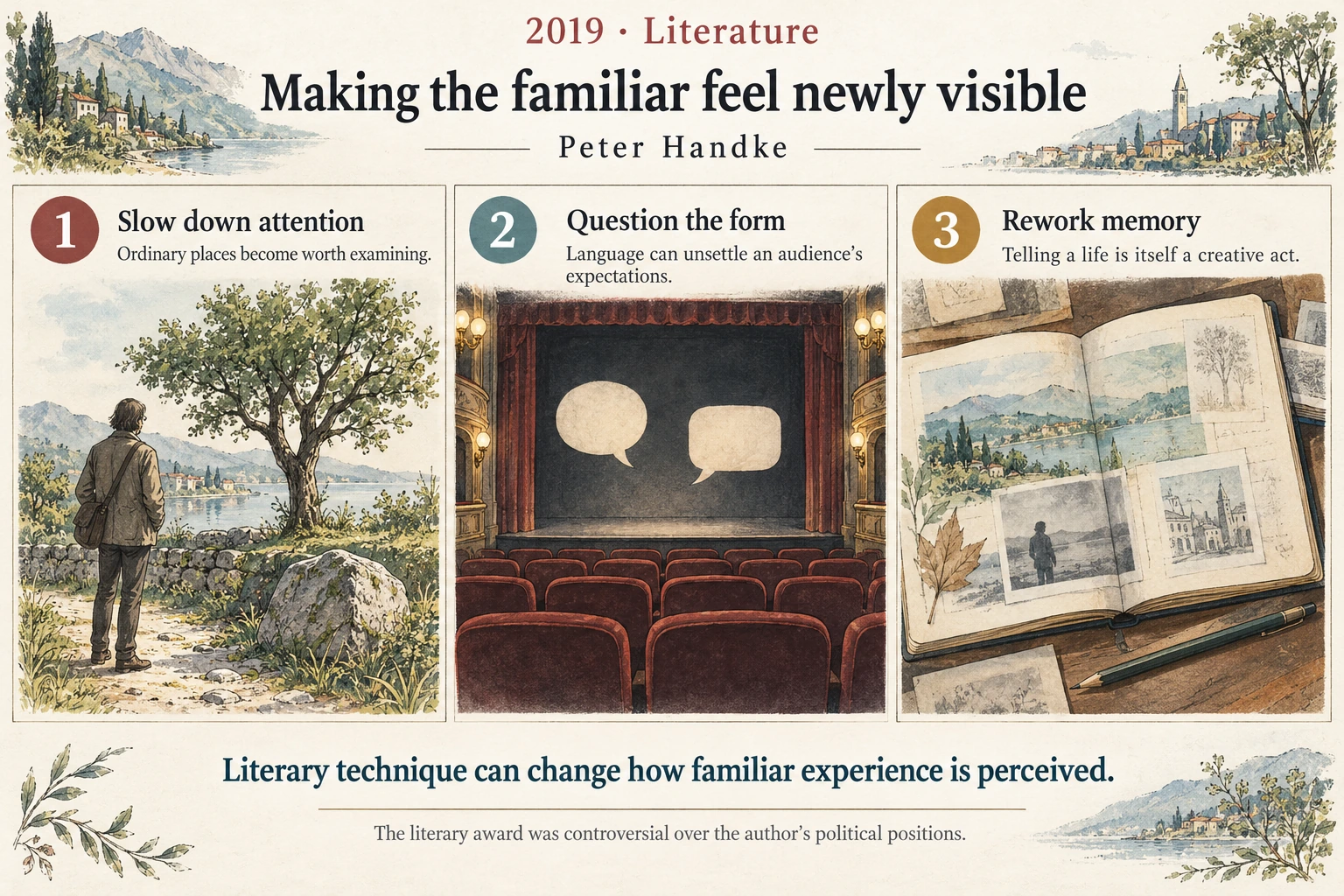
Handke often slows a reader down. A walk, a landscape or an ordinary object can occupy space that a conventional story would give to a dramatic event. By changing the rhythm and precision of description, he asks what we actually notice—and how words organise that noticing.
His work also tests the expectations built into literary forms. Plays can turn attention toward the audience and the act of speaking; prose can question whether memory gives a stable account of a life. The Academy’s award concerned a body of work across forms, rather than one discovery or one book.
Why it matters
His writing expanded ways of treating perception, place and remembered experience in prose and theatre. Readers can study how reduced plot, detailed observation and disruption of familiar conventions change the relationship between language and the world it describes.