01 · The contribution
The idea, in everyday language
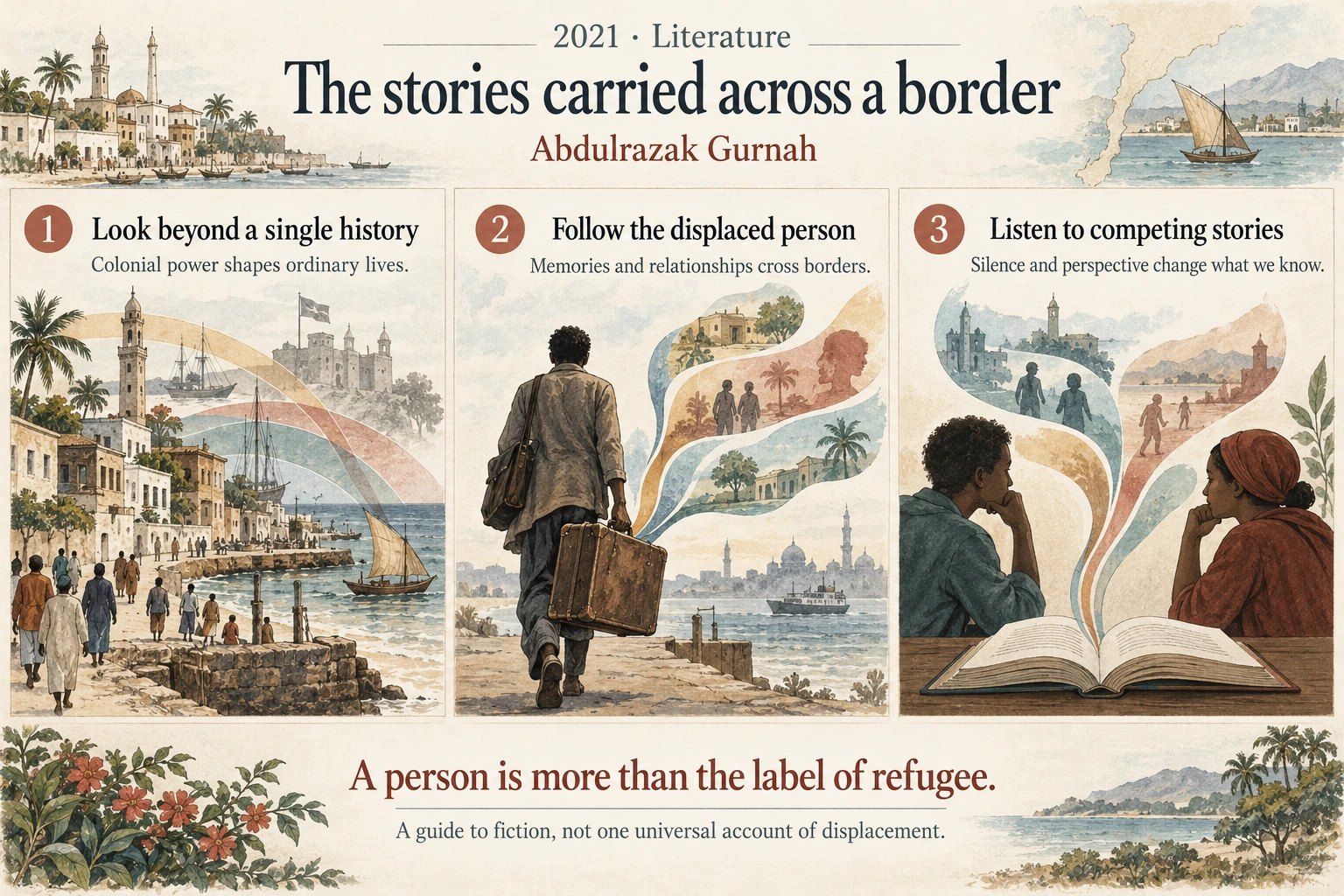
Leaving a country does not leave its history behind. Gurnah’s fiction follows people whose relationships, memories and opportunities have been shaped by colonial power and migration. East Africa appears as a place of intersecting languages, trade routes and conflicts, rather than a single undifferentiated background.
His narrators may hide parts of their past, misunderstand one another or tell competing versions of the same events. In By the Sea, two men’s encounters gradually unsettle what each thinks he knows. The reader learns to attend to a person’s particular history instead of treating a refugee as a symbol.
Why it matters
His novels shift attention toward people and places often pushed to the margins of colonial narratives. They invite readers to consider how belonging, shame, affection and power continue to shape a life after migration.