c.curionodeThe Nobel Archive

2022 · Literature

A personal memory, a social history

Annie Ernaux turns the details of a life into a precise investigation of class, gender and collective experience.

MemoryClassAutobiography
2022Literature

Visual guide

The prize, pictured

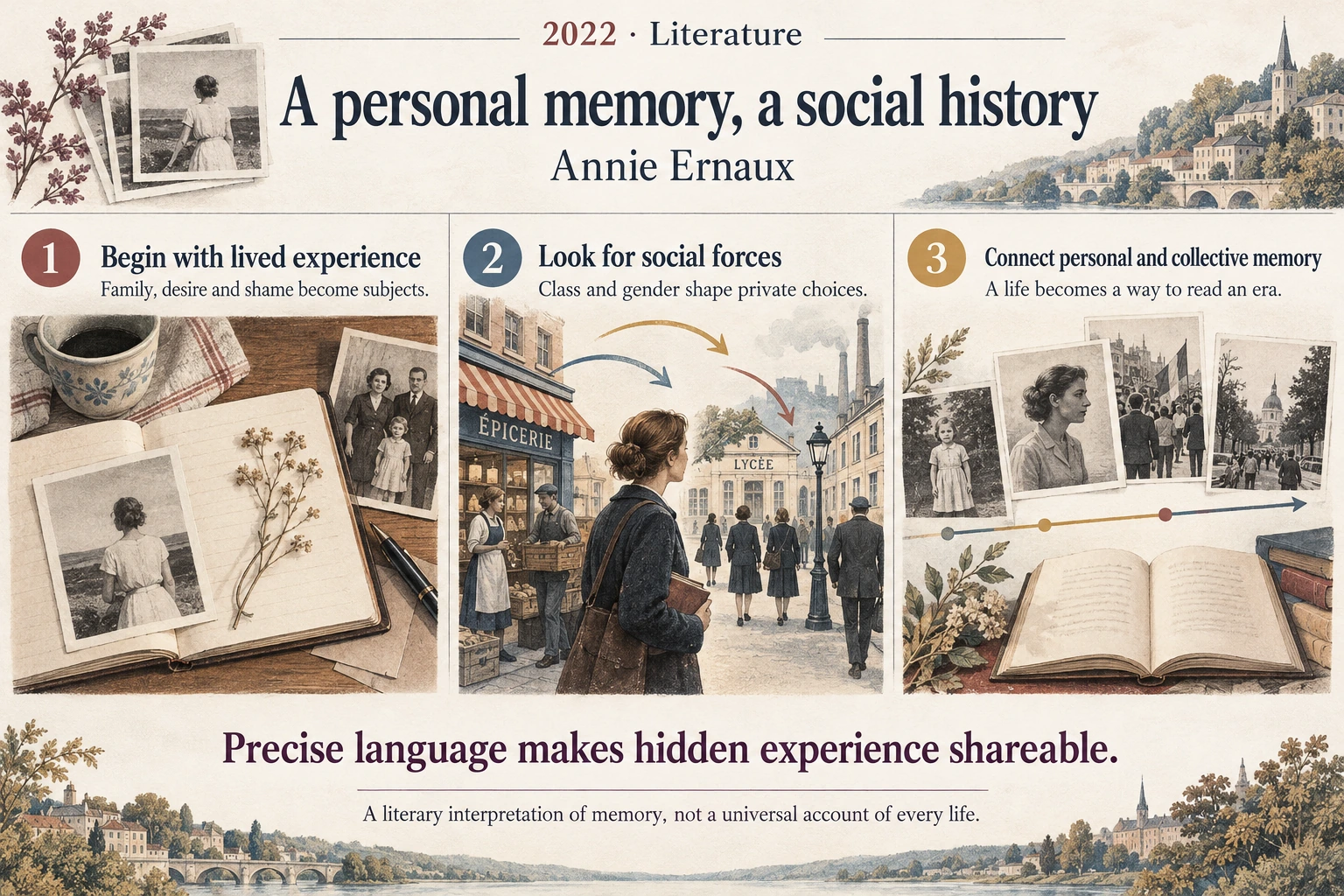
Infographic explaining A personal memory, a social history
Original AI-generated infographic. A conceptual overview; the explanations and sources below provide context.
Read the poster text

Precise language makes hidden experience shareable.

  1. Begin with lived experience

    Family, desire and shame become subjects.

  2. Look for social forces

    Class and gender shape private choices.

  3. Connect personal and collective memory

    A life becomes a way to read an era.

A literary interpretation of memory, not a universal account of every life.

01 · The contribution

The idea, in everyday language

A memory can feel entirely private, yet the words available to describe it and the choices a person could make come from a wider society. Ernaux writes about family, education, desire, shame and bodily experience while examining the social forces within them.

Her deliberately restrained prose often refuses the comforting distance of a conventional fictional character. In The Years, photographs, public events and changing everyday habits connect individual memory with the experience of a generation.

Why it matters

Her writing makes experiences often treated as private or unspeakable available for shared reflection. It expands what autobiography can do by bringing social analysis into the texture of lived experience.

02 · The people

Who brought the idea to life?

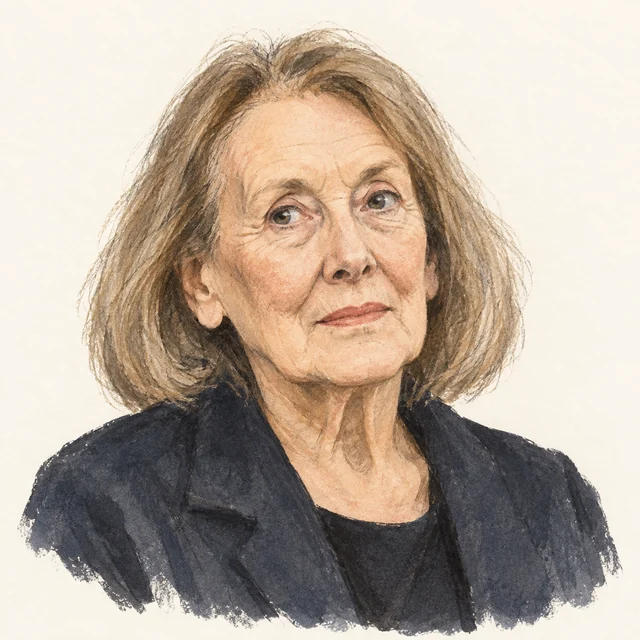
Illustrated portrait of Annie Ernaux

Annie Ernaux

Prize share · 1/1

Works such as A Man’s Place, Happening and The Years connect remembered events with the social rules surrounding them. Her restrained language asks readers to look closely at experiences that shame, convention or unequal power can make difficult to describe.

Read the biography ↗

03 · Years in the making

The path here

  1. 1974

    Her first book, Les Armoires vides, is published.

  2. 1983

    La Place examines her father’s life and the distance created by class mobility.

  3. 2008

    Les Années connects an individual life with collective memory.

04 · Read further

From the original sources

Original explanations by Curionode, based on the official records below. Biographical details and affiliations refer to the award year.

  1. Official award announcement nobelprize.org
  2. Official biobibliography nobelprize.org

More in Literature

Browse this subject ↗