c.curionodeThe Nobel Archive

2020 · Literature

A spare voice, a wider human world

Louise Glück’s poetry turns intimate experience into searching conversations about loss, desire and change.

PoetryMythTransformation
2020Literature

Visual guide

The prize, pictured

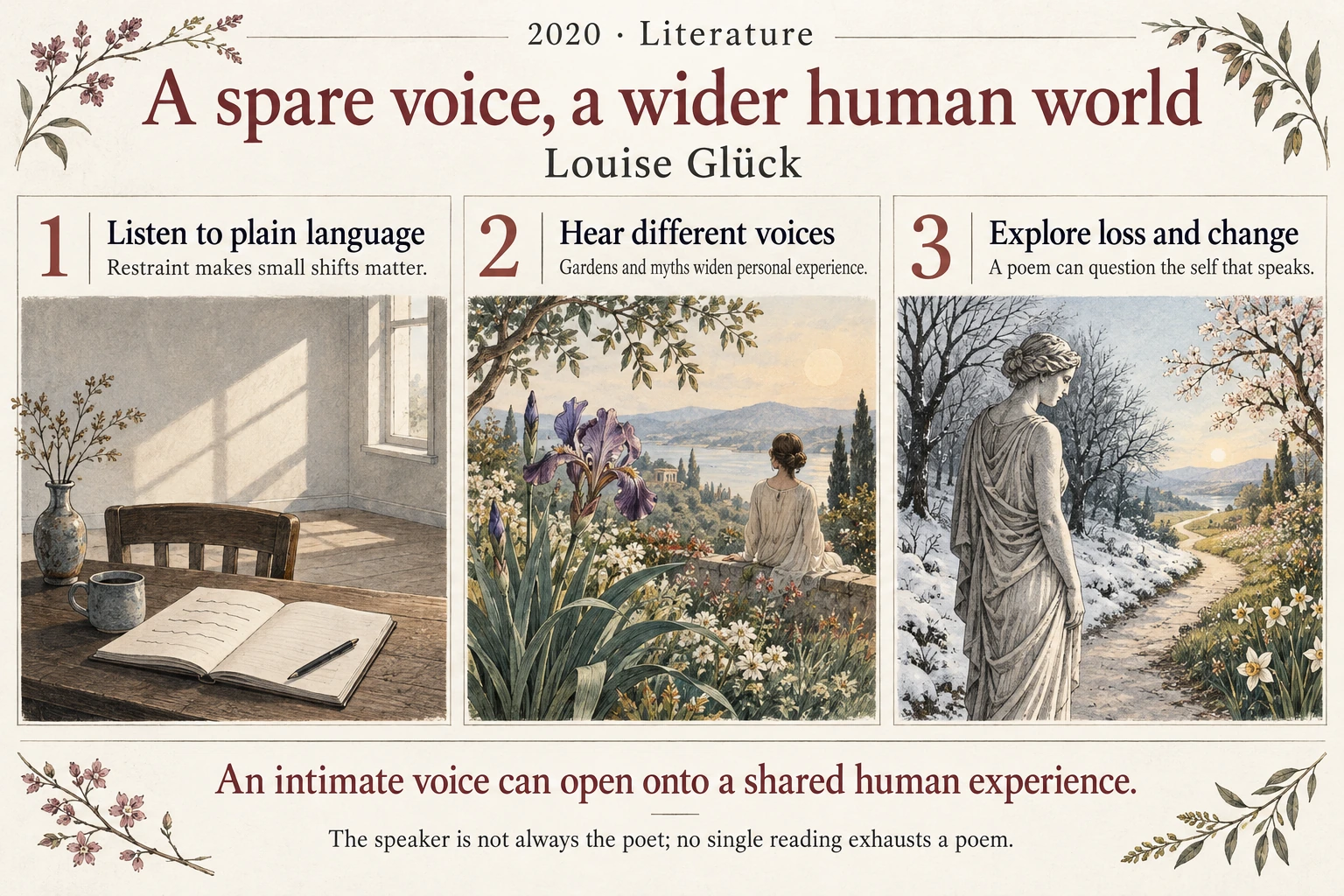
Infographic explaining A spare voice, a wider human world
Original AI-generated infographic. A conceptual overview; the explanations and sources below provide context.
Read the poster text

An intimate voice can open onto a shared human experience.

  1. Listen to plain language

    Restraint makes small shifts matter.

  2. Hear different voices

    Gardens and myths widen personal experience.

  3. Explore loss and change

    A poem can question the self that speaks.

The speaker is not always the poet; no single reading exhausts a poem.

01 · The contribution

The idea, in everyday language

A plain sentence can carry more than it first appears to say. Glück’s poems often use direct speech and restrained images, yet their speakers question their own memories and wishes. Family life and personal loss become occasions for examining how a self understands—and sometimes deceives—itself.

Her poems also borrow voices from flowers, gardens and classical myth. In The Wild Iris, different speakers share a garden; in Averno, the story of Persephone becomes a way to explore separation and mortality. The movement among voices opens an experience beyond a single autobiographical account.

Why it matters

Her work shows how a poem can be intimate without being a simple diary entry. Familiar situations and ancient stories become ways to recognise complicated feelings, while carefully arranged collections build meanings across poems.

02 · The people

Who brought the idea to life?

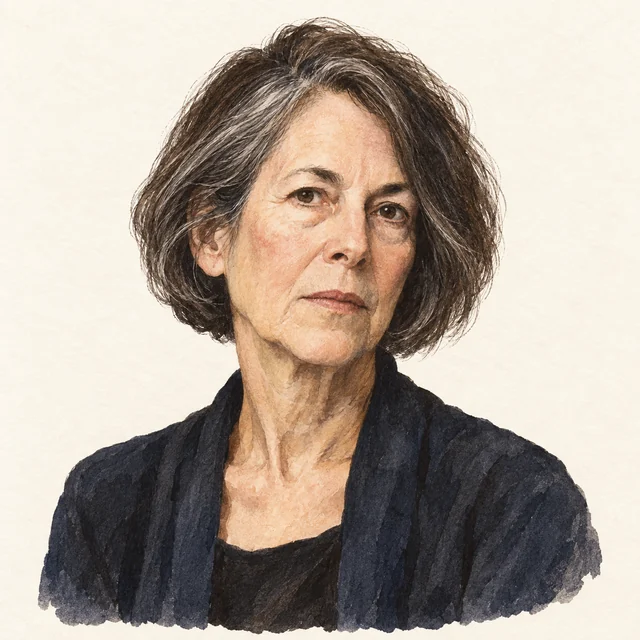
Illustrated portrait of Louise Glück

Louise Glück

Prize share · 1/1

Her poems use apparently plain speech and carefully arranged voices to examine loss, desire and transformation. Rather than treating a speaker as a transparent copy of the author, she lets flowers, mythic figures and shifting perspectives open private experience to wider recognition.

Read the biography ↗

03 · Years in the making

The path here

  1. 1968

    Firstborn, Glück’s first poetry collection, is published.

  2. 1992

    The Wild Iris brings flower, human and other voices into a garden.

  3. 2006

    Averno explores mortality and separation through the myth of Persephone.

04 · Read further

From the original sources

Original explanations by Curionode, based on the official records below. Biographical details and affiliations refer to the award year.

  1. Official award announcement nobelprize.org
  2. Official biobibliography nobelprize.org

More in Literature

Browse this subject ↗