c.curionodeThe Nobel Archive

2020 · Physics

Following stars to an invisible giant

Mathematics showed that black holes can form; stellar orbits revealed a hidden, enormous mass in our own galaxy.

Black holesGeneral relativityGalactic Centre
2020Physics

Visual guide

The prize, pictured

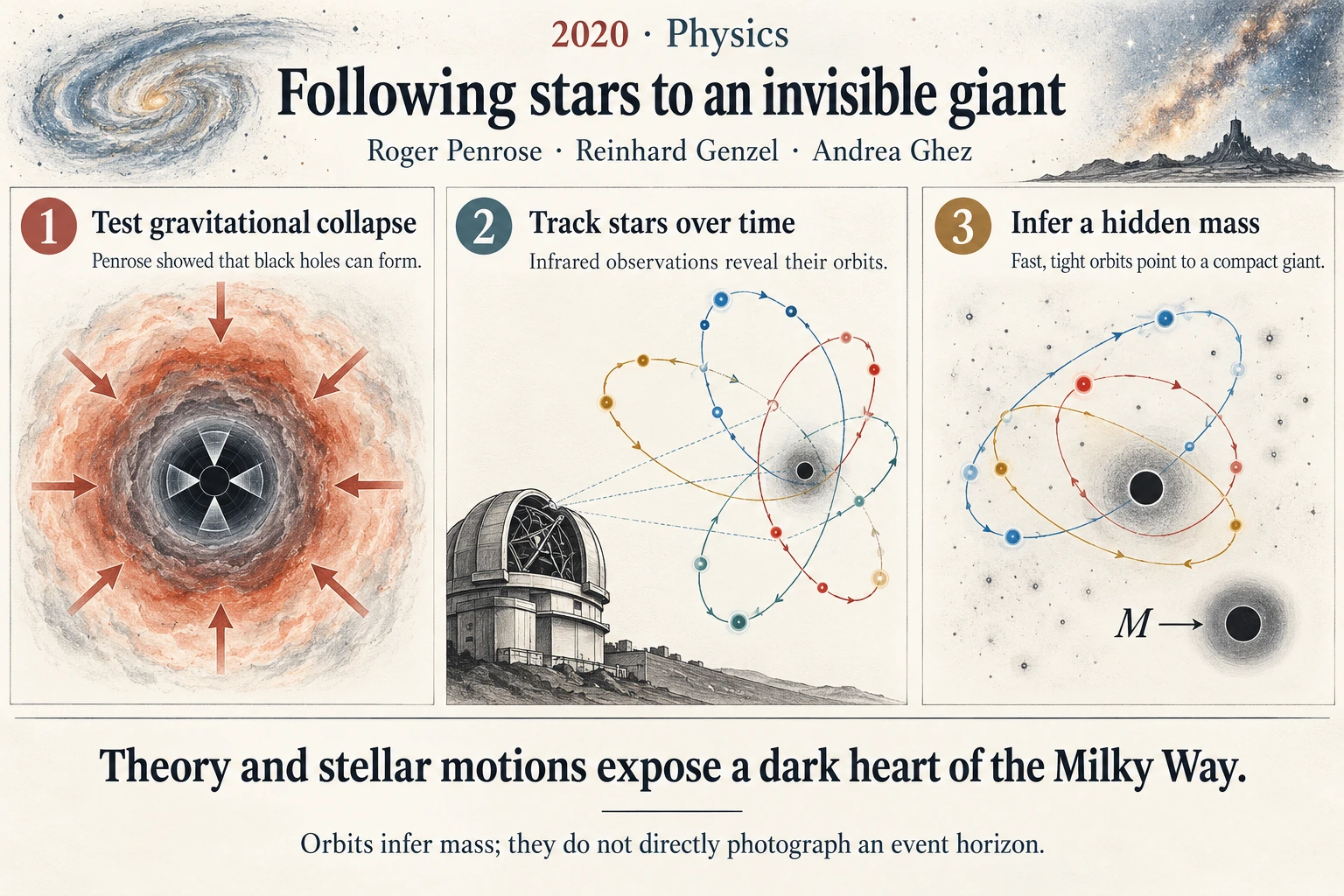
Infographic explaining Following stars to an invisible giant
Original AI-generated infographic. A conceptual overview; the explanations and sources below provide context.
Read the poster text

Theory and stellar motions expose a dark heart of the Milky Way.

  1. Test gravitational collapse

    Penrose showed that black holes can form.

  2. Track stars over time

    Infrared observations reveal their orbits.

  3. Infer a hidden mass

    Fast, tight orbits point to a compact giant.

Orbits infer mass; they do not directly photograph an event horizon.

01 · The discovery

The idea, in everyday language

Einstein’s theory describes gravity through the geometry of spacetime. Penrose showed that collapse toward a singularity is not merely an artefact of assuming a perfectly spherical star. Under the theorem’s conditions, a trapped surface marks a situation in which even outward-directed light is forced toward smaller regions.

Genzel and Ghez led separate observing teams that tracked stars near Sagittarius A*. Infrared light helped them see through dust, and improved imaging reduced atmospheric blur. The stars’ rapid, tightly curved paths revealed roughly four million solar masses confined to a very small region: compelling evidence for a supermassive black hole.

Why it matters

The work linked a major prediction of general relativity with observations of the Milky Way’s centre. It also created ways to investigate gravity near an extreme object by measuring the paths and light of surrounding stars.
02 · The people

Who brought the idea to life?

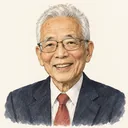
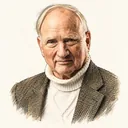
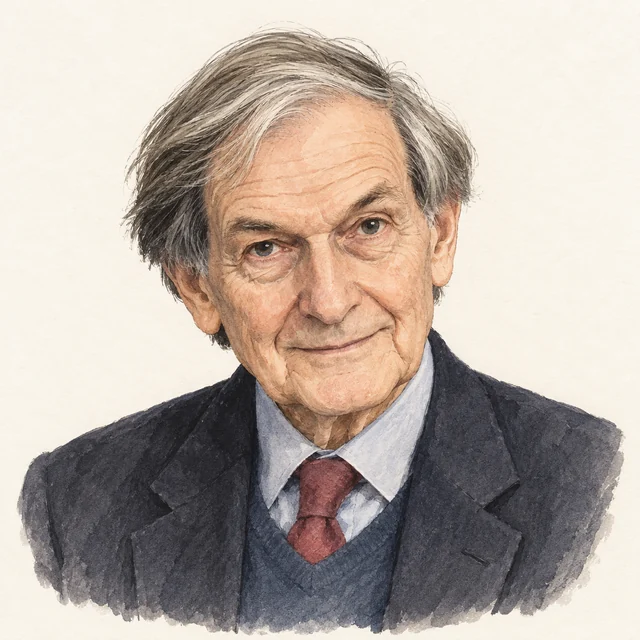
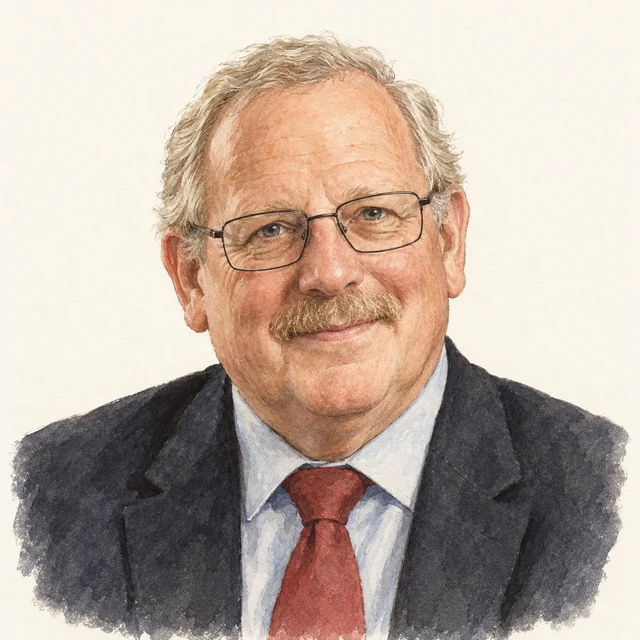
Illustrated portrait of Roger Penrose

Roger Penrose

Prize share · 1/2

In 1965, he developed a theorem showing that gravitational collapse can lead to a singularity under specified physical and mathematical conditions. His use of trapped surfaces helped establish black-hole formation as a robust prediction of general relativity.

Read the biography ↗
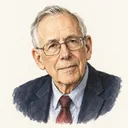
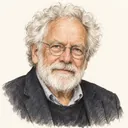
Illustrated portrait of Reinhard Genzel

Reinhard Genzel

Prize share · 1/4

His group used infrared observations and increasingly precise stellar orbits to infer a huge mass concentrated in a very small region around Sagittarius A*. The observations provided strong evidence for a supermassive black hole at the centre of the Milky Way.

Read the biography ↗
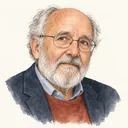
Illustrated portrait of Andrea Ghez

Andrea Ghez

Prize share · 1/4

Leading an independent team, she mapped stellar motions around Sagittarius A* using large telescopes in Hawaii. The tight, fast orbits revealed a compact central mass of roughly four million Suns, in agreement with Genzel’s group.

Read the biography ↗

03 · Years in the making

The path here

  1. 1965

    Penrose publishes his singularity theorem using trapped surfaces.

  2. Early 1990s

    Genzel’s and Ghez’s teams begin long-term studies of stars near the Galactic Centre.

  3. 2020

    The prize joins theoretical black-hole formation with evidence for a compact Galactic Centre mass.

04 · Read further

From the original sources

Original explanations by Curionode, based on the official records below. Biographical details and affiliations refer to the award year.

  1. Official award announcement nobelprize.org
  2. Nobel Committee’s accessible background nobelprize.org