c.curionodeThe Nobel Archive

2024 · Chemistry

Reading and writing the shapes of life

Computers helped predict protein structures—and design proteins nature had never made.

ProteinsAIDesign
2024Chemistry

Visual guide

The prize, pictured

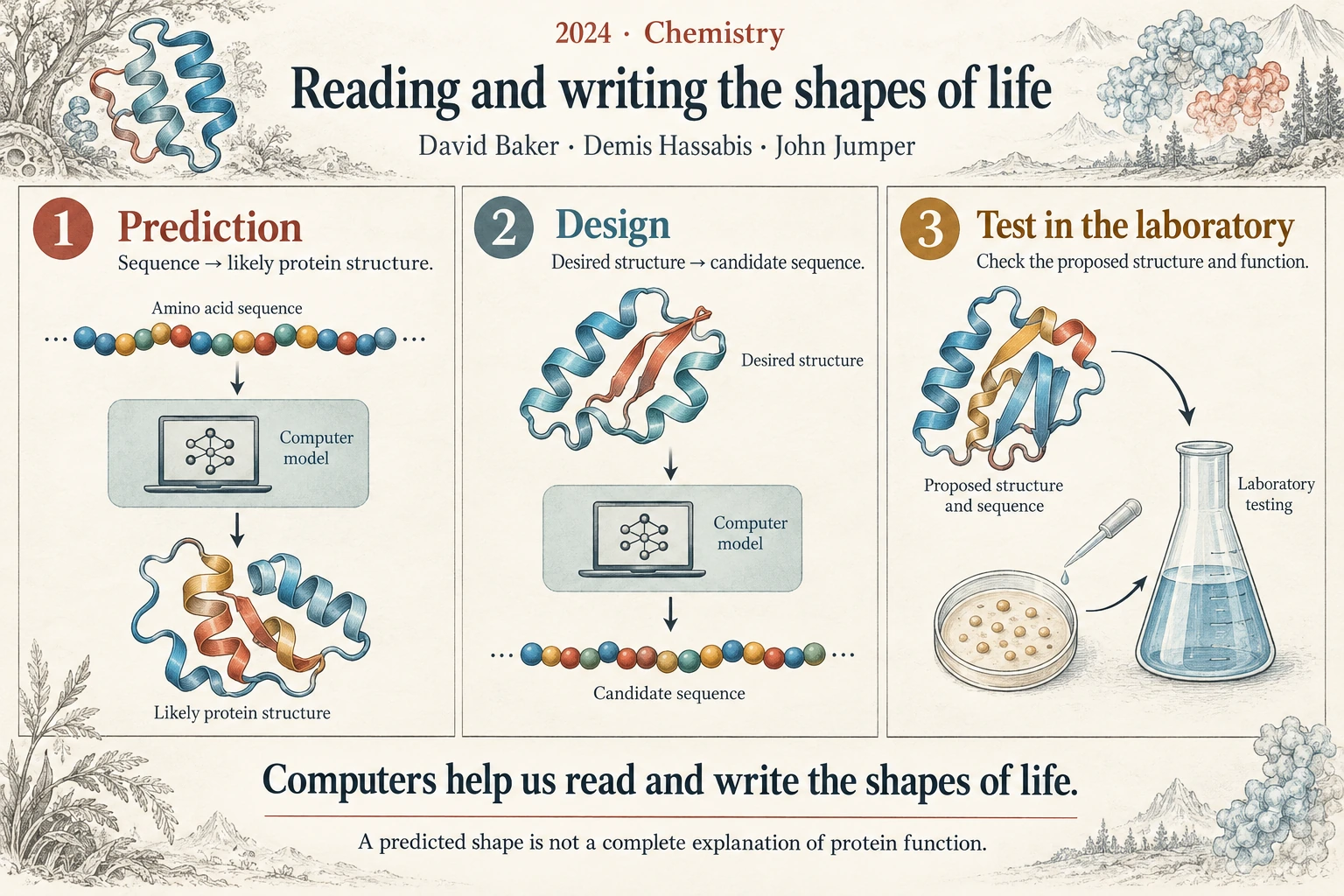
Infographic explaining Reading and writing the shapes of life
Original AI-generated infographic. A conceptual overview; the explanations and sources below provide context.
Read the poster text

Computers help us read and write the shapes of life.

  1. Prediction

    Sequence → likely protein structure.

  2. Design

    Desired structure → candidate sequence.

  3. Test in the laboratory

    Check the proposed structure and function.

A predicted shape is not a complete explanation of protein function.

01 · The discovery

The idea, in everyday language

Proteins are chains of amino acids that fold into intricate shapes. Those shapes help determine what the molecules do. Predicting a shape from its sequence had been a major challenge for decades.

Hassabis and Jumper’s AlphaFold2 made a remarkable advance in structure prediction. Baker tackled the complementary problem: choosing sequences that build new protein structures. Prediction asks what an existing sequence may become; design asks what sequence could make a desired object.

Why it matters

Researchers can use predicted structures and designed proteins to plan experiments in medicine, biotechnology and environmental research much more efficiently.

02 · The people

Who brought the idea to life?

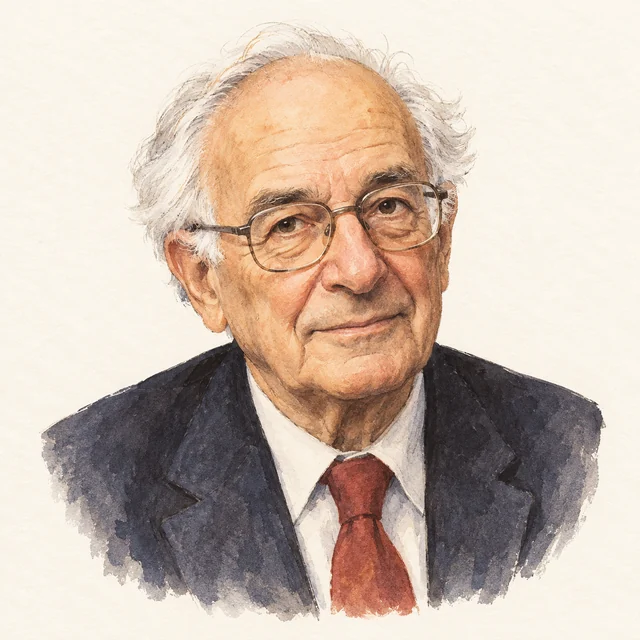
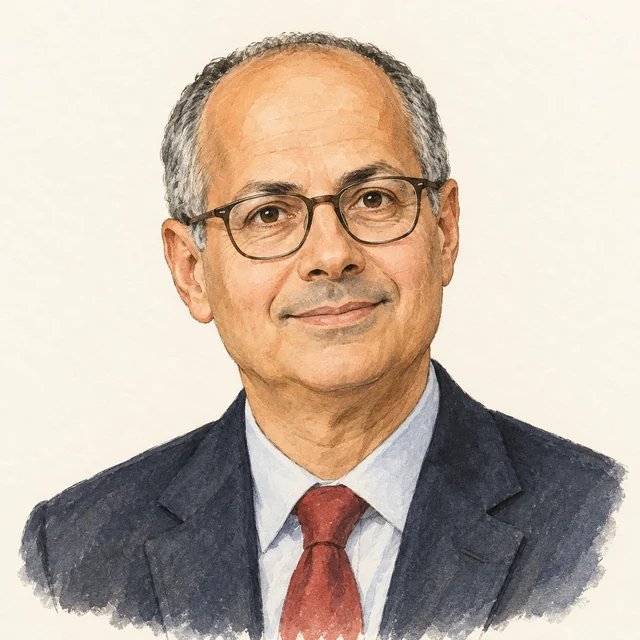
Illustrated portrait of David Baker

David Baker

Prize share · 1/2

His team developed computational methods for designing new proteins, including a landmark new fold in 2003. A proposed design still has to be made and tested in the laboratory.

Read the biography ↗
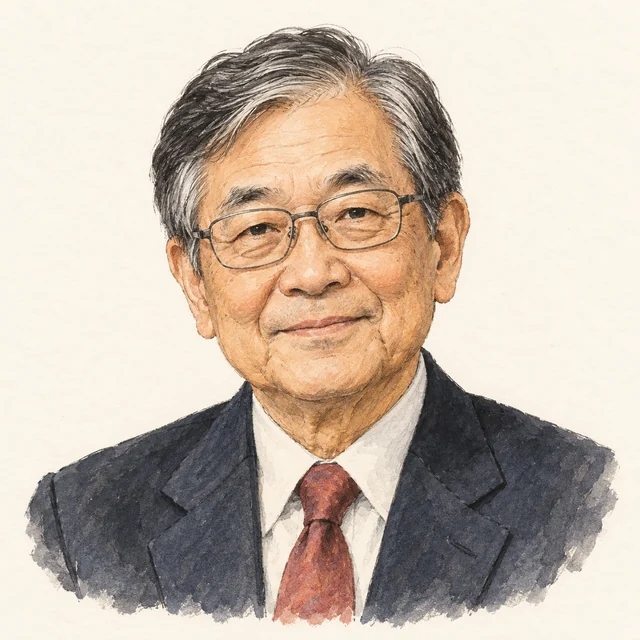
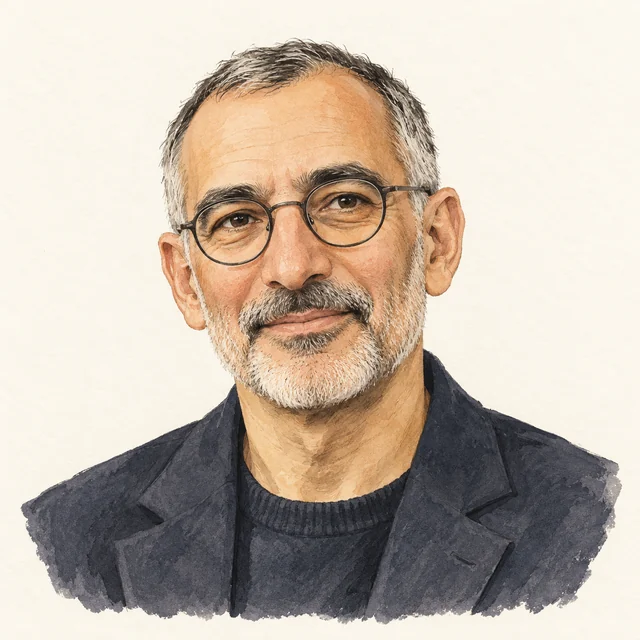
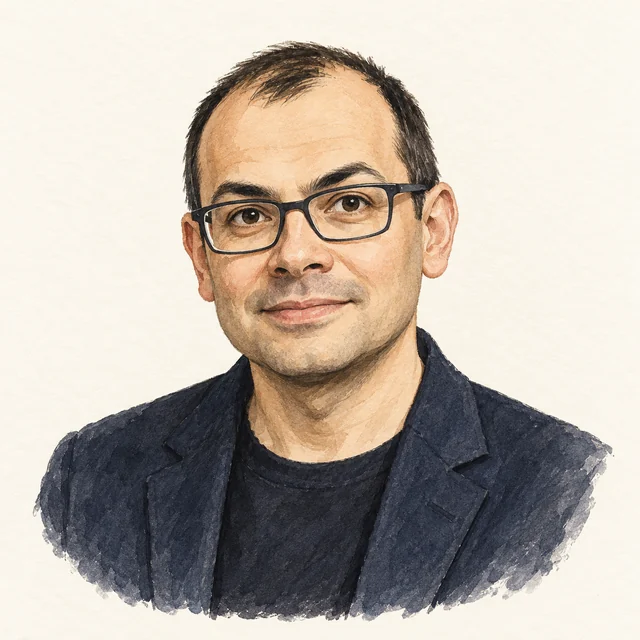
Illustrated portrait of Demis Hassabis

Demis Hassabis

Prize share · 1/4

Together with John Jumper and their team, he developed AlphaFold2, presented in 2020. It greatly improved predictions of protein structures from amino-acid sequences and made structural hypotheses available to researchers at a new scale.

Read the biography ↗
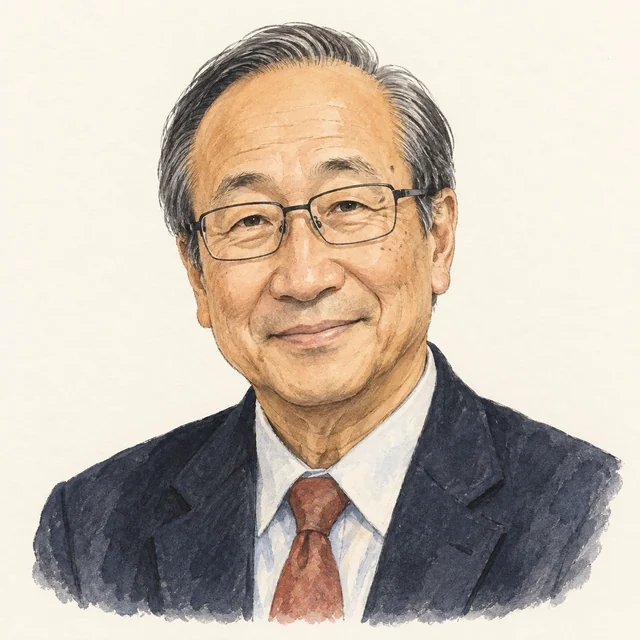
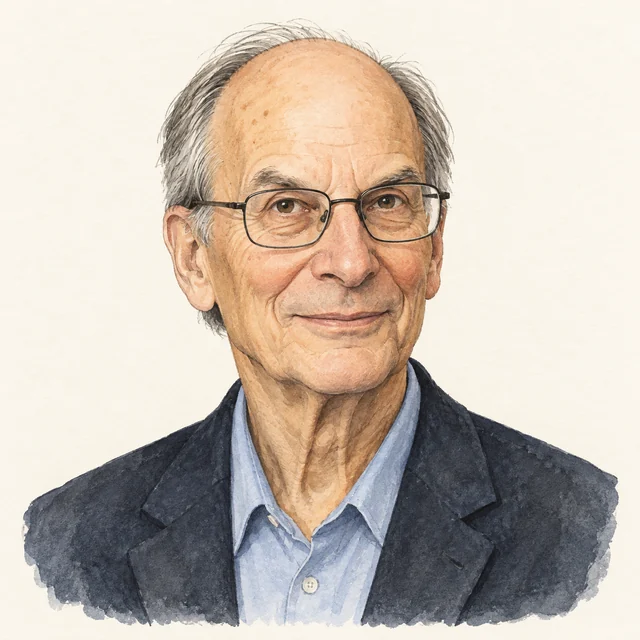
Illustrated portrait of John Jumper

John Jumper

Prize share · 1/4

He helped lead the design of AlphaFold2, which reasons about relationships within a protein’s sequence and its three-dimensional geometry. Its predictions can guide experiments, though confidence and biological context still matter.

Read the biography ↗

03 · Years in the making

The path here

  1. 2003

    Baker’s team reports a protein designed with a new fold.

  2. 2020

    AlphaFold2 achieves a major leap in structure prediction.

  3. 2024

    Baker receives half the prize; Hassabis and Jumper share the other half.

04 · Read further

From the original sources

Original explanations by Curionode, based on the official records below. Biographical details and affiliations refer to the award year.

  1. Official award announcement nobelprize.org
  2. Nobel Committee’s accessible background nobelprize.org

More in Chemistry

Browse this subject ↗