c.curionodeThe Nobel Archive

2023 · Chemistry

Tiny crystals, a whole spectrum

Quantum dots showed that changing a particle’s size can change the colour of its light.

NanotechnologyColourMaterials
2023Chemistry

Visual guide

The prize, pictured

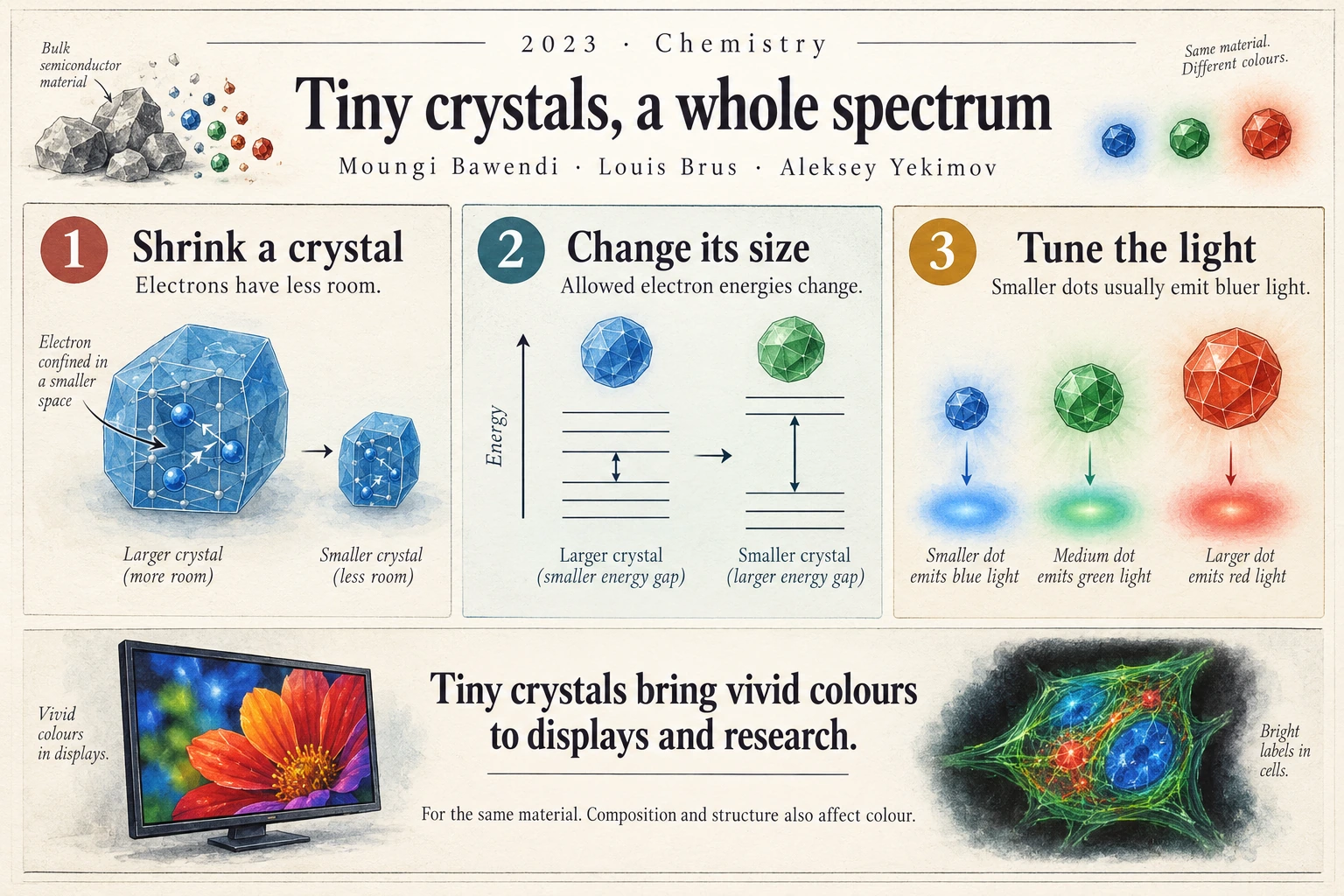
Infographic explaining Tiny crystals, a whole spectrum
Original AI-generated infographic. A conceptual overview; the explanations and sources below provide context.
Read the poster text

Tiny crystals bring vivid colours to displays and research.

  1. Shrink a crystal

    Electrons have less room.

  2. Change its size

    Allowed electron energies change.

  3. Tune the light

    Smaller dots usually emit bluer light.

For the same material. Composition and structure also affect colour.

01 · The discovery

The idea, in everyday language

A large piece of semiconductor has fairly predictable properties. Shrink it to a crystal only a few nanometres across and the space available to its electrons changes which energies are allowed.

Yekimov found size-dependent effects in glass; Brus found them in particles floating in liquid. Bawendi developed a reliable way to make high-quality dots of controlled sizes. For a given material, smaller dots generally emit higher-energy, bluer light and larger dots redder light.

See the idea

Size changes the light

Change the size of the crystal.

For the same semiconductor, a smaller dot generally emits higher-energy, bluer light. This is a qualitative illustration, not a calibrated colour or energy prediction.

Why it matters

Quantum dots are used to produce vivid colours in displays and as fluorescent labels in research. Their usefulness depends on controlling both their chemistry and their size.

02 · The people

Who brought the idea to life?

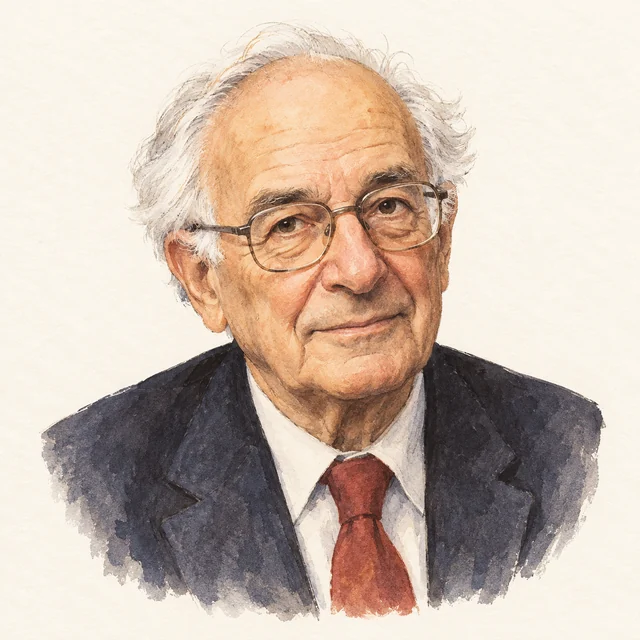
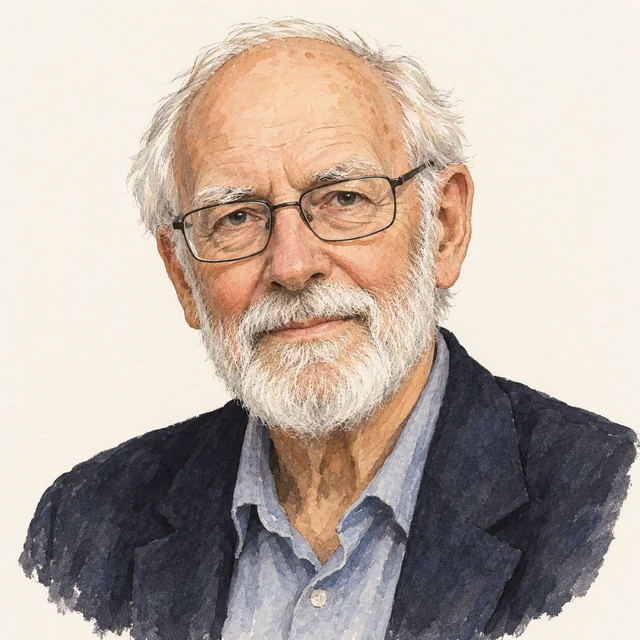
Illustrated portrait of Moungi Bawendi

Moungi Bawendi

Prize share · 1/3

In 1993, his group developed a method for growing quantum dots with closely controlled sizes and high quality. That control made their optical properties reproducible enough for practical applications.

Read the biography ↗
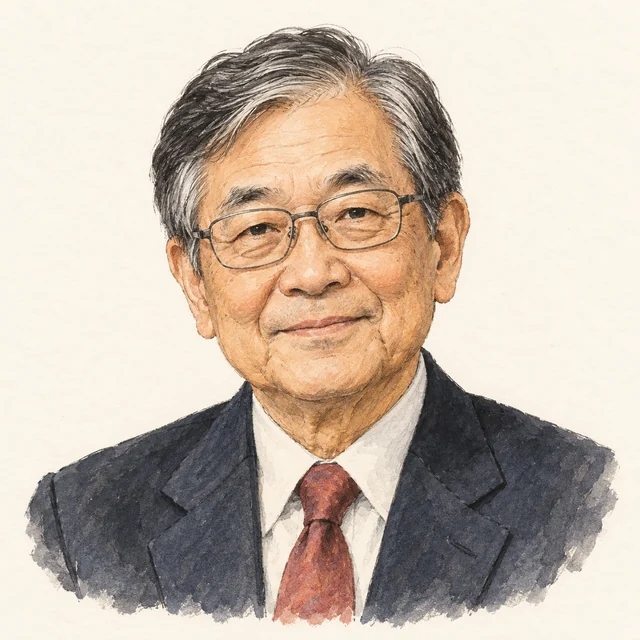
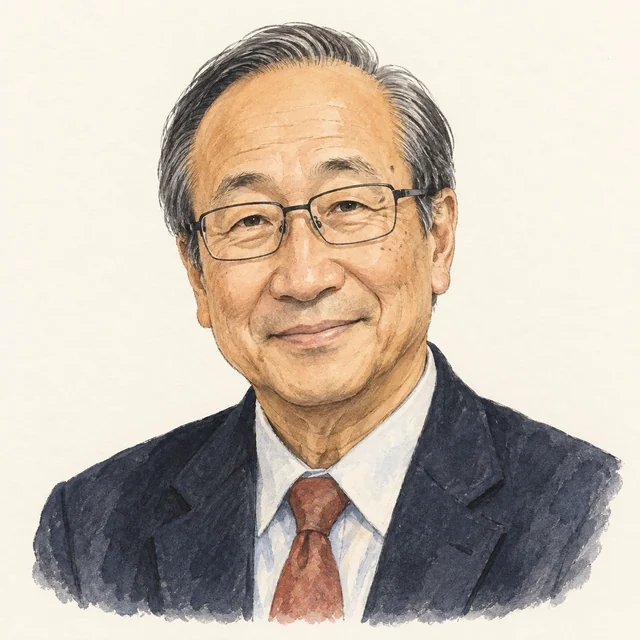
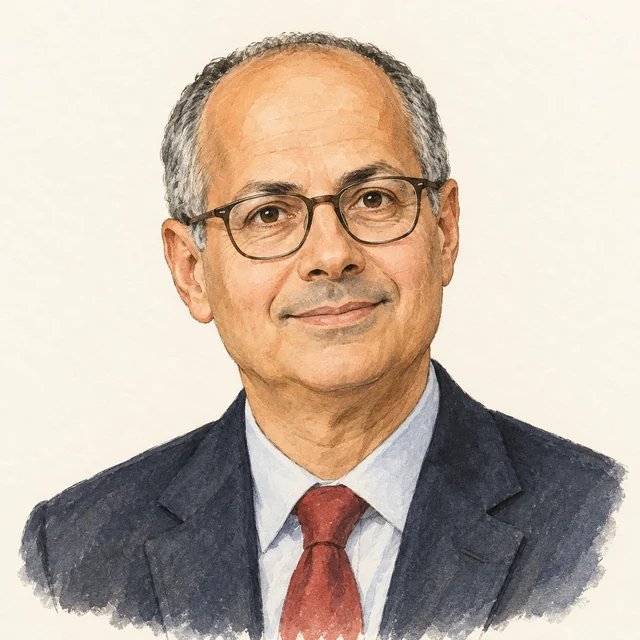
Illustrated portrait of Louis Brus

Louis Brus

Prize share · 1/3

He demonstrated size-dependent quantum effects in particles suspended in liquid in the early 1980s. This showed that the effect was not restricted to particles trapped inside glass.

Read the biography ↗
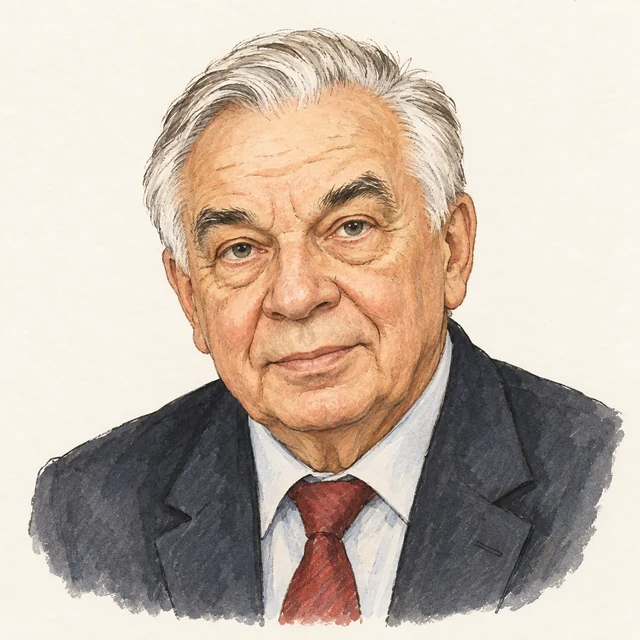
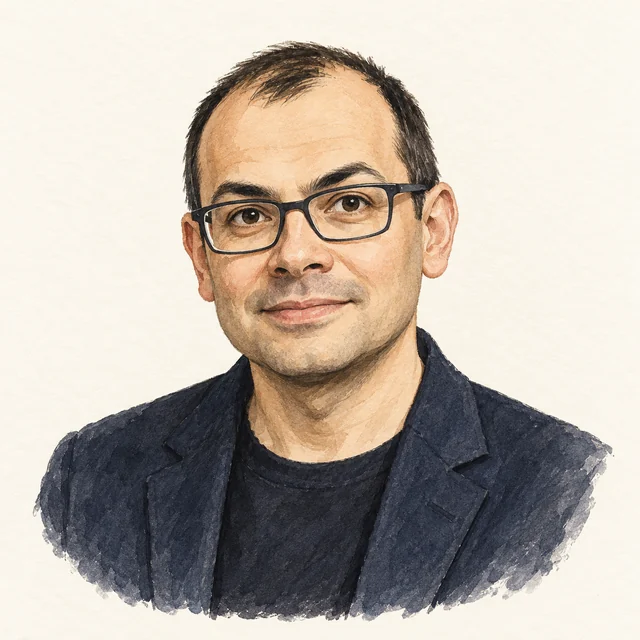
Illustrated portrait of Aleksey Yekimov

Aleksey Yekimov

Prize share · 1/3

In the early 1980s, he showed that the colour of glass containing tiny copper chloride crystals depended on the crystals’ size. Their composition alone could not explain the changing colours.

Read the biography ↗

03 · Years in the making

The path here

  1. Early 1980s

    Yekimov observes quantum size effects in coloured glass.

  2. 1980s

    Brus demonstrates size-dependent effects in solution.

  3. 1993

    Bawendi’s team makes nearly uniform, high-quality dots.

04 · Read further

From the original sources

Original explanations by Curionode, based on the official records below. Biographical details and affiliations refer to the award year.

  1. Official award announcement nobelprize.org
  2. Nobel Committee’s accessible background nobelprize.org

More in Chemistry

Browse this subject ↗