c.curionodeThe Nobel Archive

2025 · Chemistry

Crystals with room inside

Metal–organic frameworks made empty space a material designers could put to work.

MaterialsPoresMolecular design
2025Chemistry

Visual guide

The prize, pictured

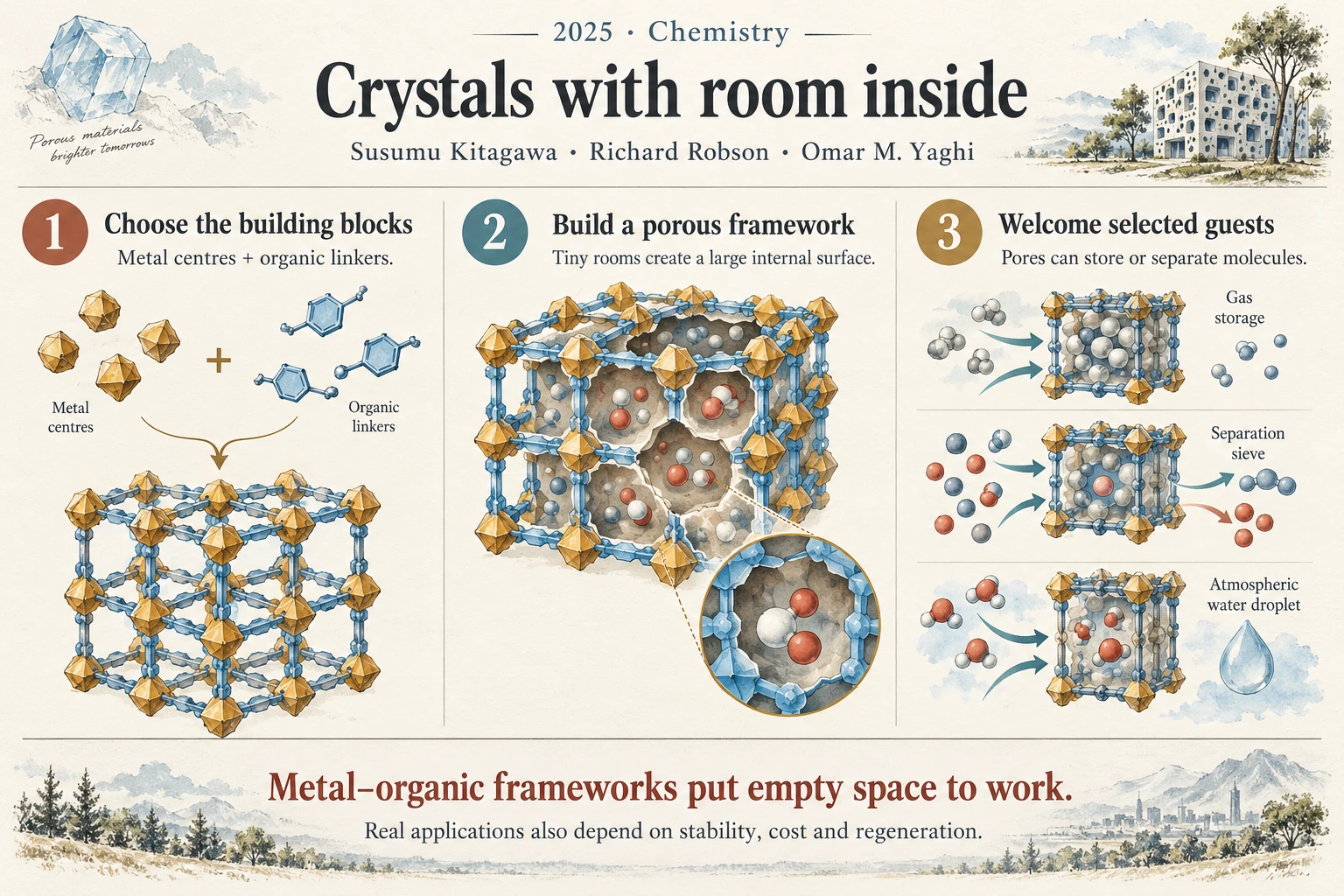
Infographic explaining Crystals with room inside
Original AI-generated infographic. A conceptual overview; the explanations and sources below provide context.
Read the poster text

Metal–organic frameworks put empty space to work.

  1. Choose the building blocks

    Metal centres + organic linkers.

  2. Build a porous framework

    Tiny rooms create a large internal surface.

  3. Welcome selected guests

    Pores can store or separate molecules.

Real applications also depend on stability, cost and regeneration.

01 · The discovery

The idea, in everyday language

A metal–organic framework, or MOF, is an extended structure made by linking metal centres with carbon-containing molecules. The result can contain many tiny pores: an enormous internal surface tucked inside a small amount of solid.

Robson helped establish the architectural idea. Kitagawa showed that gases could enter and leave these structures and explored flexibility. Yaghi developed stable frameworks whose properties could be deliberately redesigned. The empty spaces could now be tailored for particular guest molecules.

Why it matters

Researchers are developing MOFs for gas storage, separations, carbon capture and water harvesting. Choosing the internal chemistry can be as important as choosing the pore size.
02 · The people

Who brought the idea to life?

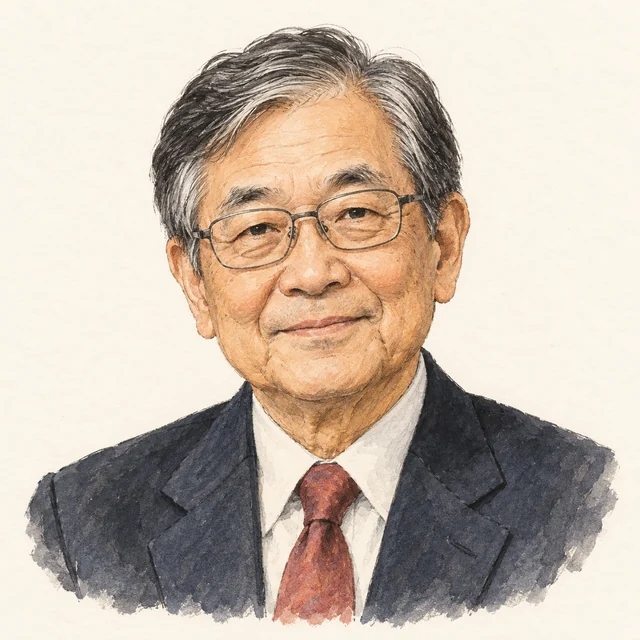
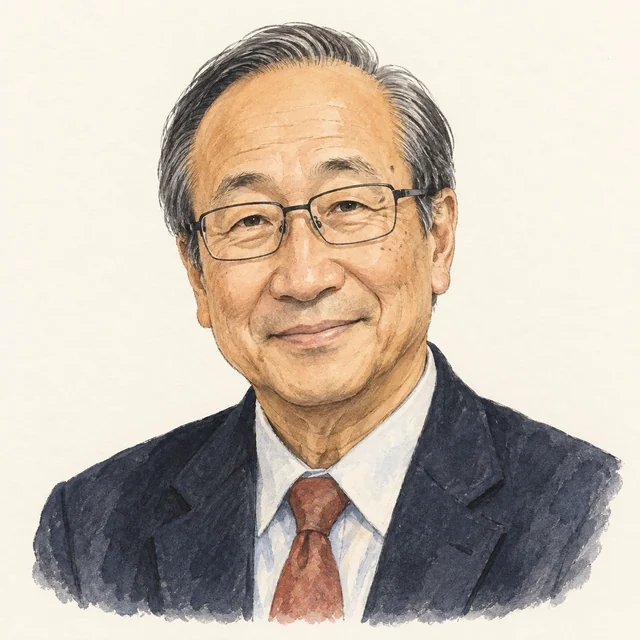
Illustrated portrait of Susumu Kitagawa

Susumu Kitagawa

Prize share · 1/3

He demonstrated that gases could move in and out of metal–organic frameworks and developed the idea of flexible porous structures. The framework could behave as a responsive host, not just a rigid container.

Read the biography ↗
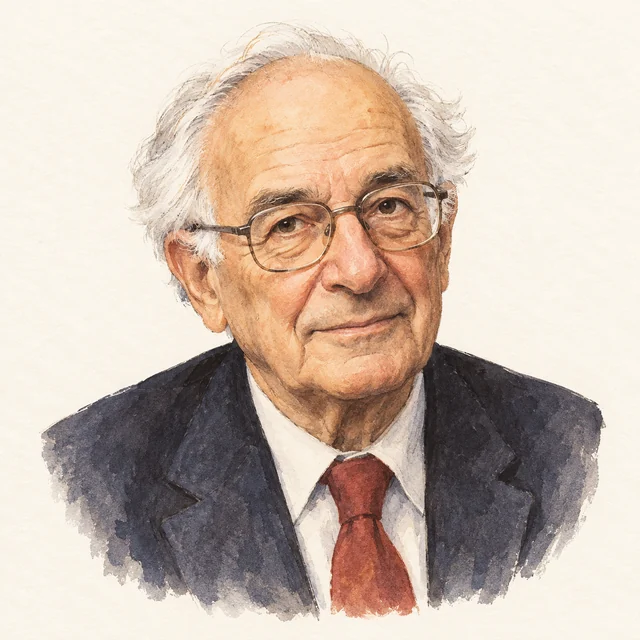
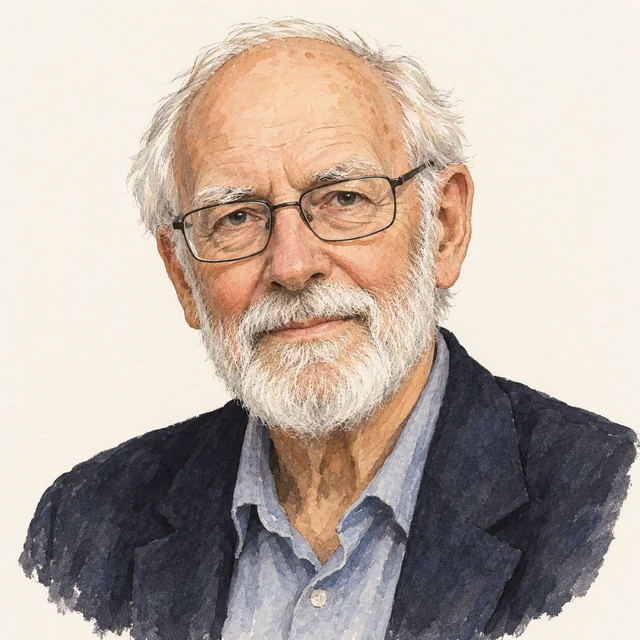
Illustrated portrait of Richard Robson

Richard Robson

Prize share · 1/3

He showed that metal centres and organic linkers could assemble into open, ordered networks. His early frameworks helped establish the design principle behind the field, even when the first structures were not yet robust.

Read the biography ↗
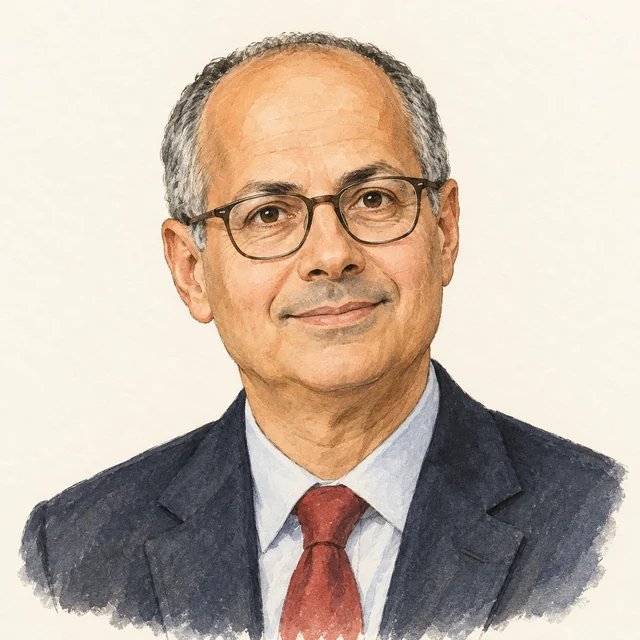
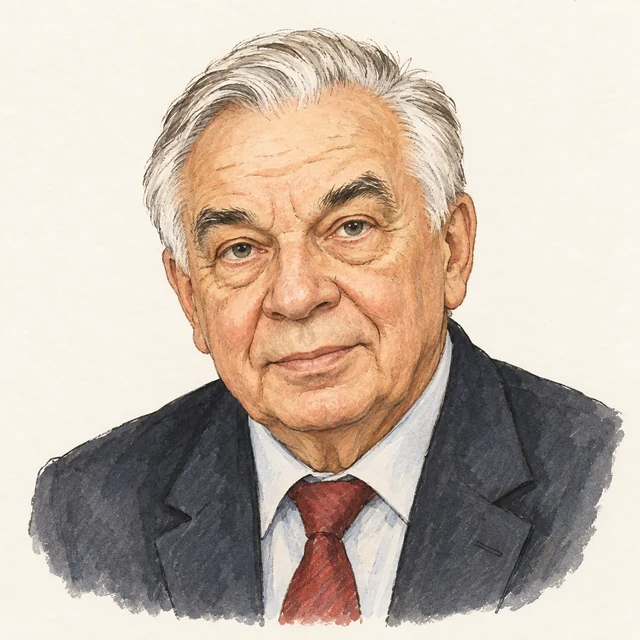
Illustrated portrait of Omar M. Yaghi

Omar M. Yaghi

Prize share · 1/3

He created stable metal–organic frameworks and showed how their structures and properties could be systematically redesigned. This helped make porous crystals a versatile platform for storing and separating molecules.

Read the biography ↗

03 · Years in the making

The path here

  1. 1989

    Robson demonstrates open frameworks built from linked molecular units.

  2. 1997

    Kitagawa demonstrates gas movement through a porous framework.

  3. 1999

    Yaghi’s MOF-5 helps establish stable, highly porous frameworks.

04 · Read further

From the original sources

Original explanations by Curionode, based on the official records below. Biographical details and affiliations refer to the award year.

  1. Official award announcement nobelprize.org
  2. Nobel Committee’s accessible background nobelprize.org

More in Chemistry

Browse this subject ↗