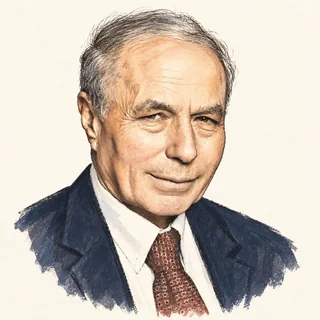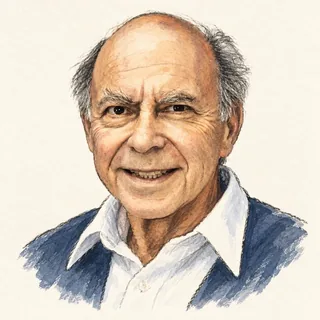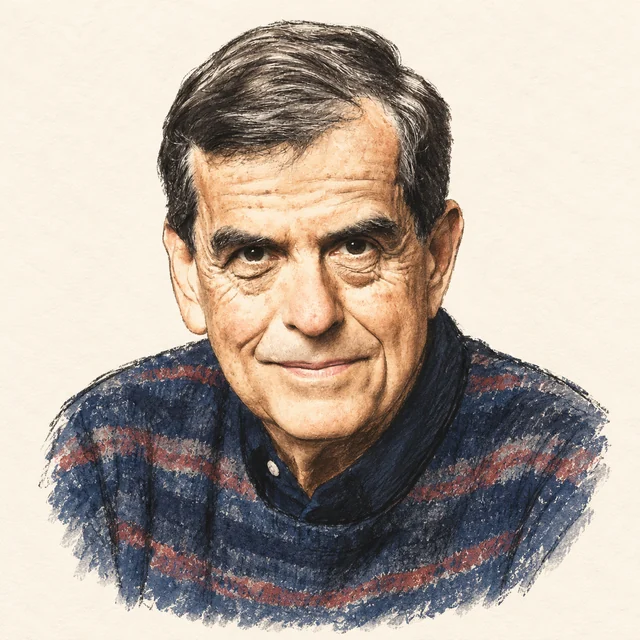
A life in context
The person behind the prize
Ciechanover trained in medicine before committing to biochemical research. At the Technion he worked with Avram Hershko on a puzzle that initially attracted less attention than protein synthesis: how cells selectively remove proteins, and why this process requires energy. Their collaboration with Irwin Rose at the Fox Chase Cancer Center connected laboratories in Israel and the United States.
The contribution
Ciechanover helped separate a cell extract into components and identify a small, heat-stable protein required for energy-dependent degradation. Initially called APF-1, it proved to be ubiquitin. The team’s experiments showed that ubiquitin becomes attached to proteins destined for breakdown, leading to a multistep tagging mechanism. The discovery explained how destruction can be a regulated cellular process rather than indiscriminate decay.
The idea in plain language
Cells must remove proteins as well as make them. Some are damaged or misfolded; others are perfectly functional but need to disappear at a particular time. Ciechanover, Hershko and Rose used cell extracts to investigate why this selective breakdown requires energy. They found that a small protein, ubiquitin, becomes attached to target proteins through a sequence of enzyme reactions.
Read the full award story ↗