c.curionodeThe Nobel Archive

2004 · Chemistry

A recycling label for cellular proteins

Ubiquitin helps cells select proteins for controlled breakdown.

ubiquitinprotein degradationproteasomecell regulation
2004Chemistry

Visual guide

The prize, pictured

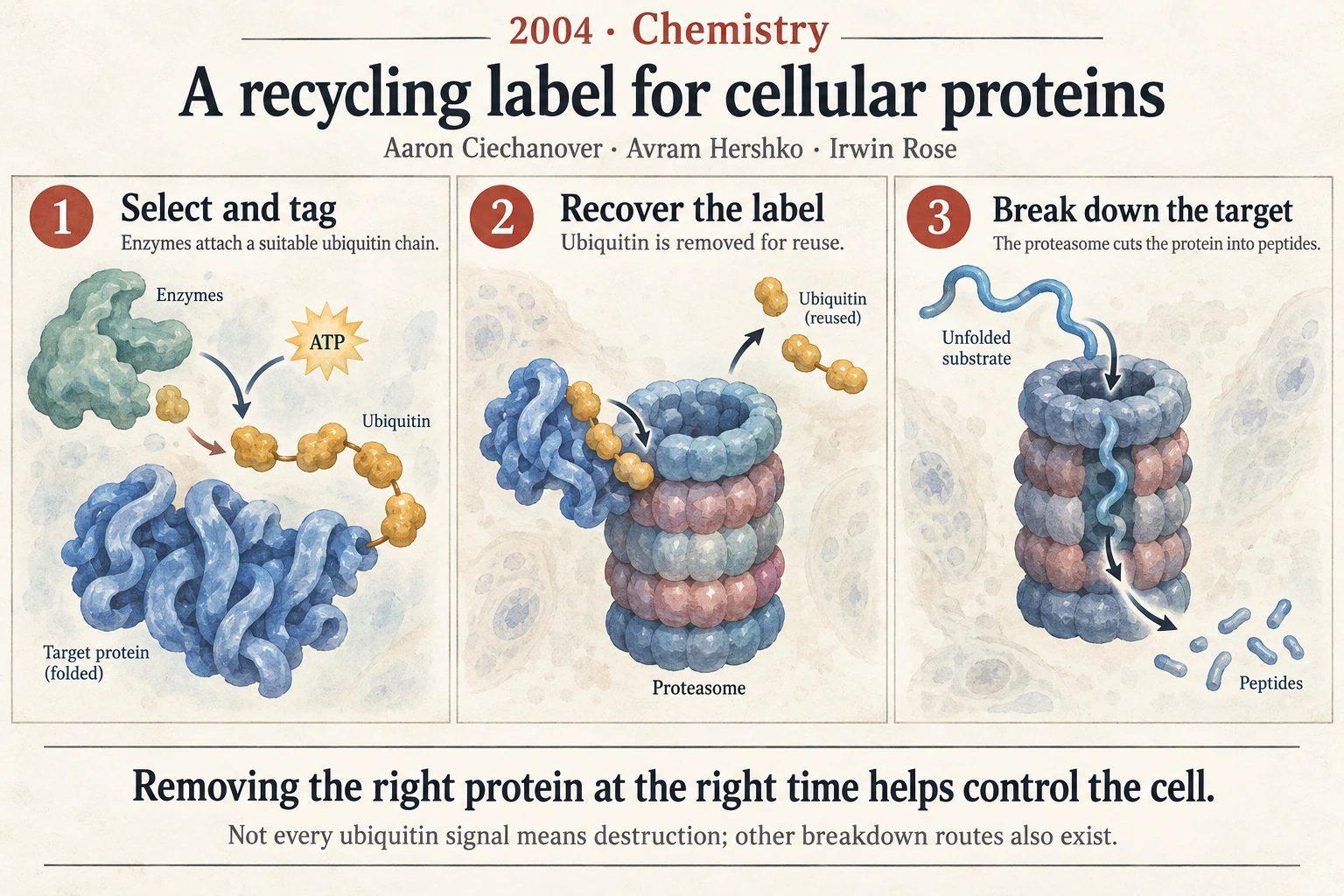
Infographic explaining A recycling label for cellular proteins
Original AI-generated infographic. A conceptual overview; the explanations and sources below provide context.
Read the poster text

Removing the right protein at the right time helps control the cell.

  1. Select and tag

    Enzymes attach a suitable ubiquitin chain.

  2. Recover the label

    Ubiquitin is removed for reuse.

  3. Break down the target

    The proteasome cuts the protein into peptides.

Not every ubiquitin signal means destruction; other breakdown routes also exist.

01 · The discovery

The idea, in everyday language

Cells must remove proteins as well as make them. Some are damaged or misfolded; others are perfectly functional but need to disappear at a particular time. Ciechanover, Hershko and Rose used cell extracts to investigate why this selective breakdown requires energy. They found that a small protein, ubiquitin, becomes attached to target proteins through a sequence of enzyme reactions.

In a common degradation pathway, a suitable chain of ubiquitin molecules helps a target reach the proteasome, a molecular complex with a protected cutting chamber. The ubiquitin label is removed for reuse, while the target is unfolded and fed inside. The proteasome cuts it into shorter peptides. E1, E2 and E3 enzyme activities help build the label, with E3 enzymes playing important roles in selecting targets.

Why it matters

Regulated destruction helps cells move through the cell cycle, control signalling and maintain protein quality. It also contributes to immune recognition and other essential processes. Understanding the pathway created new ways to investigate disease and to develop medicines that alter protein turnover. The core advance was the explanation of selective control, rather than the discovery that proteins can decay.
02 · The people

Who brought the idea to life?

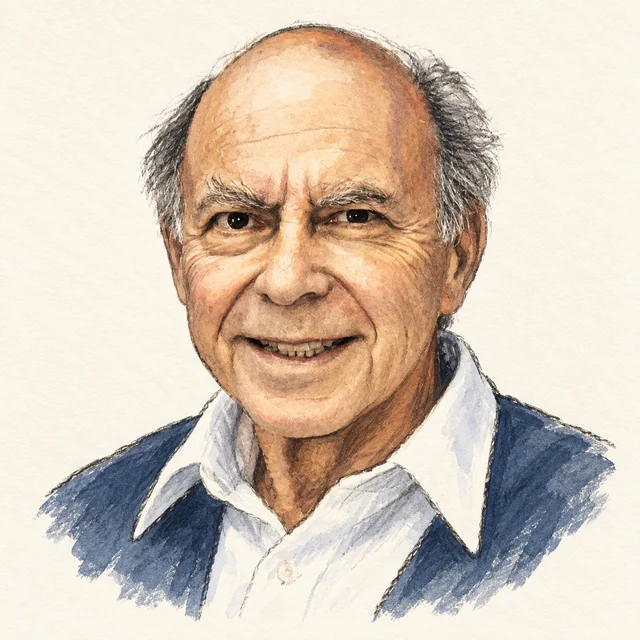
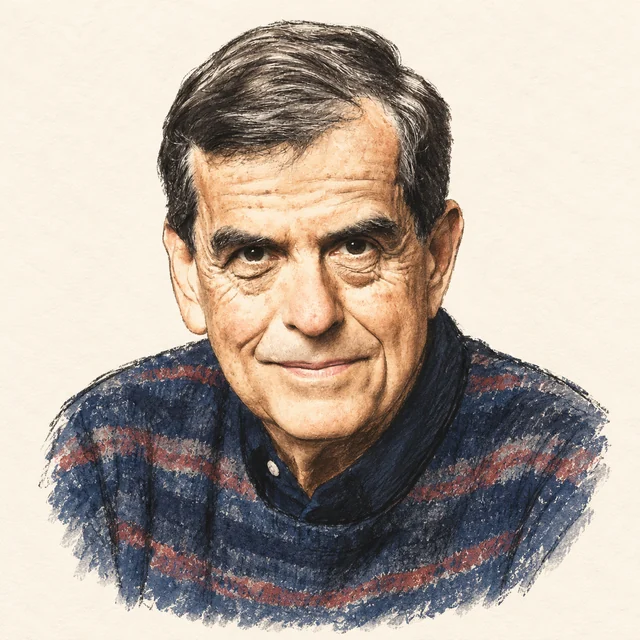
Illustrated portrait of Aaron Ciechanover

Aaron Ciechanover

Prize share · 1/3

Ciechanover helped separate a cell extract into components and identify a small, heat-stable protein required for energy-dependent degradation. Initially called APF-1, it proved to be ubiquitin. The team’s experiments showed that ubiquitin becomes attached to proteins destined for breakdown, leading to a multistep tagging mechanism. The discovery explained how destruction can be a regulated cellular process rather than indiscriminate decay.

Read the biography ↗
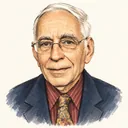
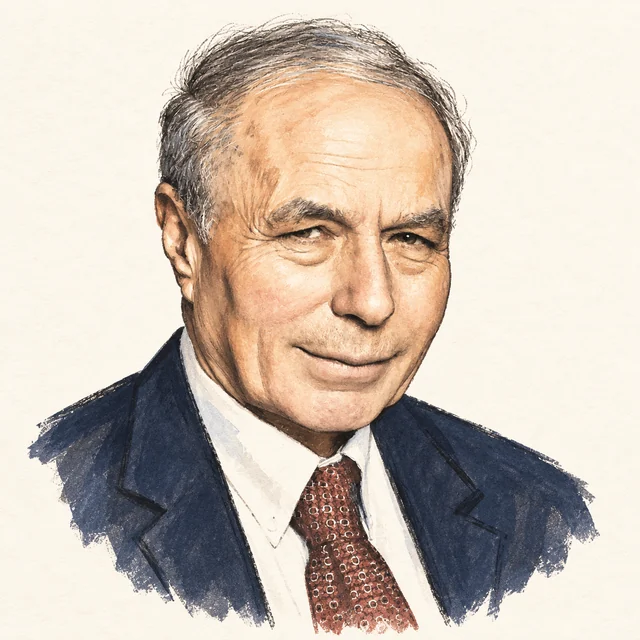
Illustrated portrait of Avram Hershko

Avram Hershko

Prize share · 1/3

Hershko helped establish that the selective destruction of proteins involves an energy-dependent tagging system. Experiments with cell extracts revealed ubiquitin attachment, while subsequent work identified the enzyme activities known as E1, E2 and E3. E3 enzymes contribute much of the target selection. This work showed how removing a particular protein at the right time can control cellular behaviour as effectively as making a new one.

Read the biography ↗
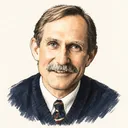
Illustrated portrait of Irwin Rose

Irwin Rose

Prize share · 1/3

Rose contributed to the biochemical dissection of the ubiquitin system, helping the collaborators identify how a small protein label becomes attached to other proteins before they are degraded. Their 1980 studies established covalent attachment and the involvement of multiple ubiquitin molecules. This collaborative work connected energy use, enzyme reactions and selective protein removal, rather than treating breakdown as a single unexplained step.

Read the biography ↗

03 · Years in the making

The path here

  1. 1978

    A small, heat-stable factor required for energy-dependent breakdown was reported.

  2. 1980

    Experiments established attachment of multiple ubiquitin molecules to target proteins.

  3. 1981–1983

    Researchers developed the multistep tagging model involving E1, E2 and E3 activities.

04 · Read further

From the original sources

Original explanations by Curionode, based on the official records below. Biographical details and affiliations refer to the award year.

  1. Official announcement nobelprize.org
  2. Popular science background nobelprize.org

More in Chemistry

Browse this subject ↗