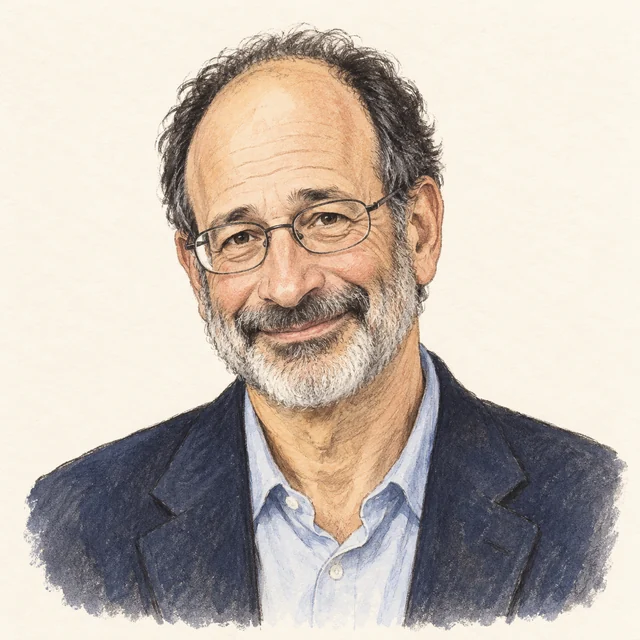
A life in context
The person behind the prize
Roth studied at Columbia and earned his doctorate at Stanford in 1974. He worked at Illinois and Pittsburgh before moving to Harvard in 1998, then returned to Stanford in 2012. His research combined mathematical models, experiments and close study of actual institutions. He examined markets in which people must be matched with opportunities or resources, but a simple price auction cannot meet the practical or ethical requirements.
The contribution
Roth showed how stability could help explain the success of systems matching medical graduates with hospitals. With collaborators, he designed improved matching procedures that addressed real constraints, including couples seeking positions together. His work also contributed to school assignment and kidney exchange, demonstrating that a useful mechanism must fit its setting rather than merely look elegant on paper.
The idea in plain language
Some important allocations cannot be made by simply giving everything to the highest bidder. Students need school places, medical graduates need training positions, and both sides may have preferences or priorities. With David Gale, Shapley developed a procedure in which one side proposes and the other holds its preferred offers provisionally. Rejected applicants try their next acceptable option. Under the model’s assumptions, the process ends with a stable matching: no unpaired applicant and institution both prefer to leave their assignments and match with each other.
Read the full award story ↗