c.curionodeThe Nobel Archive

2012 · Economic Sciences

Finding matches that people can live with

Shapley developed a theory of stable matching; Roth showed how careful design could improve real allocation systems.

The Sveriges Riksbank Prize in Economic Sciences in Memory of Alfred Nobel.

stable matchingmarket designallocation rules
2012Economic Sciences

Visual guide

The prize, pictured

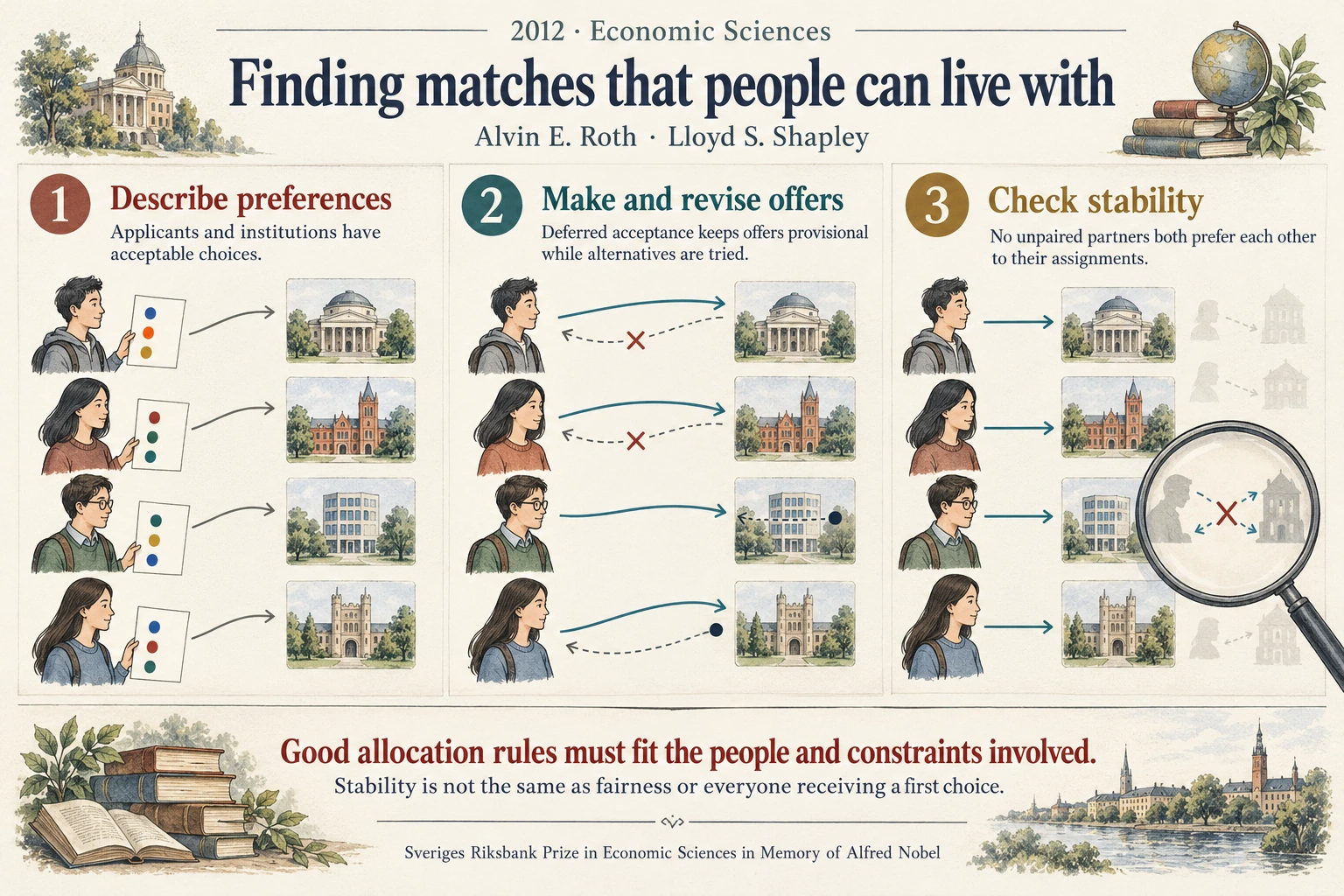
Infographic explaining Finding matches that people can live with
Original AI-generated infographic. A conceptual overview; the explanations and sources below provide context.
Read the poster text

Good allocation rules must fit the people and constraints involved.

  1. Describe preferences

    Applicants and institutions have acceptable choices.

  2. Make and revise offers

    Deferred acceptance keeps offers provisional while alternatives are tried.

  3. Check stability

    No unpaired partners both prefer each other to their assignments.

Stability is not the same as fairness or everyone receiving a first choice.

01 · The discovery

The idea, in everyday language

Some important allocations cannot be made by simply giving everything to the highest bidder. Students need school places, medical graduates need training positions, and both sides may have preferences or priorities. With David Gale, Shapley developed a procedure in which one side proposes and the other holds its preferred offers provisionally. Rejected applicants try their next acceptable option. Under the model’s assumptions, the process ends with a stable matching: no unpaired applicant and institution both prefer to leave their assignments and match with each other.

Roth investigated how actual matching institutions work. He found that stability helped explain the success of the US medical-residency matching system and worked with colleagues to redesign procedures for practical constraints. Couples seeking positions together, school admission rules and incentives to report preferences all make institutional detail important. Related market-design work also enabled kidney-exchange arrangements, using specialised methods suited to medical compatibility and exchange cycles rather than simply copying one school-admission algorithm.

Why it matters

The contribution joined mathematical theory with the design of real institutions. It showed that rules about timing, offers and priorities can change outcomes even when no price is used to allocate the resource. Designing a useful system requires studying who participates, which matches are acceptable and how the rules affect people’s incentives.
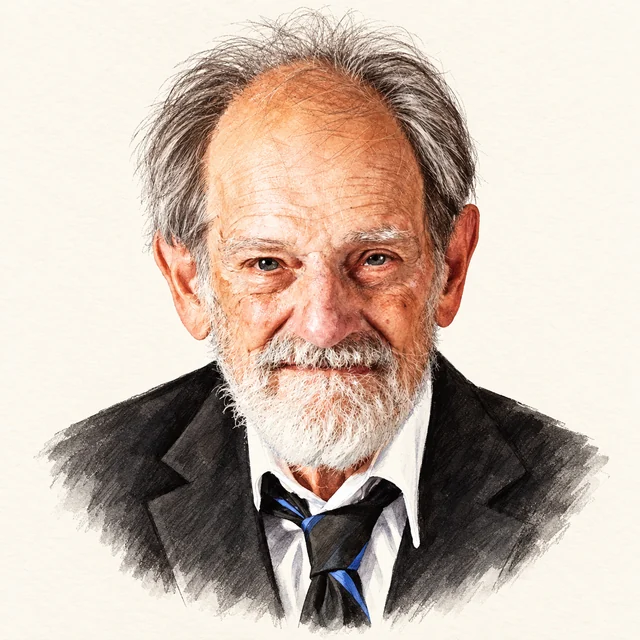
02 · The people

Who brought the idea to life?

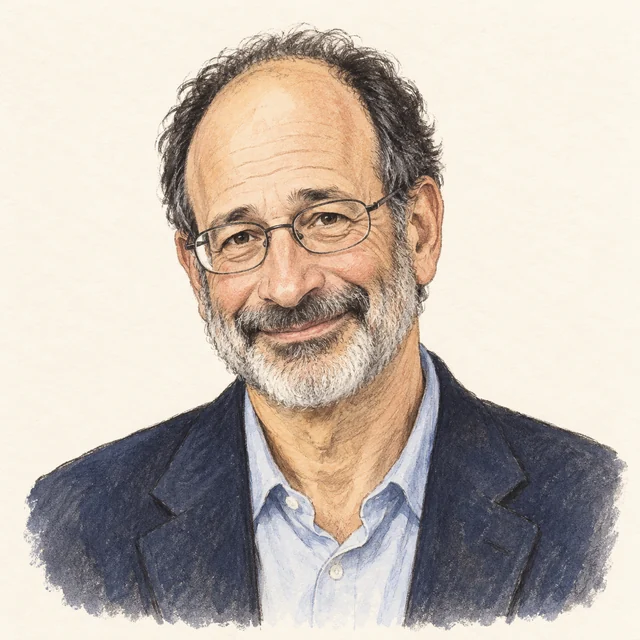
Illustrated portrait of Alvin E. Roth

Alvin E. Roth

Prize share · 1/2

Roth showed how stability could help explain the success of systems matching medical graduates with hospitals. With collaborators, he designed improved matching procedures that addressed real constraints, including couples seeking positions together. His work also contributed to school assignment and kidney exchange, demonstrating that a useful mechanism must fit its setting rather than merely look elegant on paper.

Read the biography ↗
Illustrated portrait of Lloyd S. Shapley

Lloyd S. Shapley

Prize share · 1/2

With David Gale, Shapley developed the deferred-acceptance algorithm in 1962. Under the model’s assumptions it produces a stable matching: there is no unmatched pair who would both prefer each other to their assigned partners. The work also showed that the choice of which side makes proposals can systematically favour that side, making institutional details central to the result.

Read the biography ↗

03 · Years in the making

The path here

  1. 1962

    Gale and Shapley publish their deferred-acceptance approach to stable matching.

  2. 1984

    Roth analyses the stability and incentives of the medical-residency matching system.

  3. 1997

    A redesigned residency matching procedure developed by Roth and Elliott Peranson is adopted.

04 · Read further

From the original sources

Original explanations by Curionode, based on the official records below. Biographical details and affiliations refer to the award year.

  1. Official award announcement nobelprize.org
  2. Nobel Committee’s accessible background nobelprize.org

More in Economic Sciences

Browse this subject ↗