A life in context
The person behind the prize
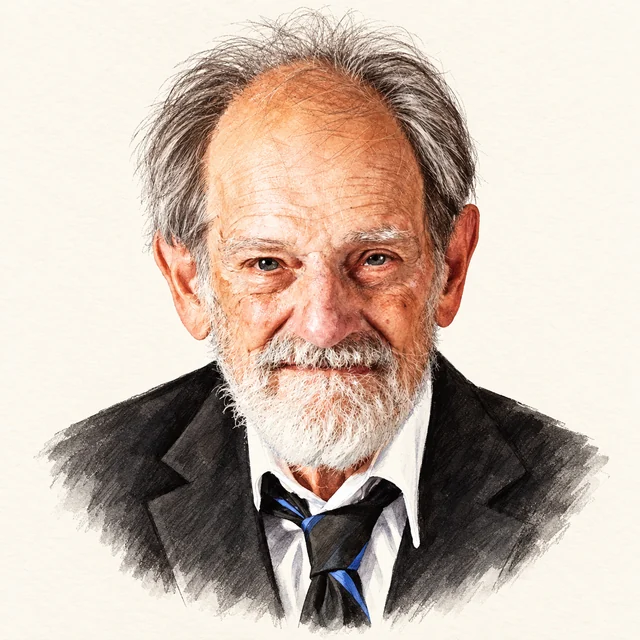
Shapley grew up in Cambridge, Massachusetts, where his father was an astronomer. His studies at Harvard were interrupted by military service during the Second World War. He later earned his doctorate at Princeton in 1953 and worked for many years at the RAND Corporation before joining UCLA in 1981. He became a central figure in cooperative game theory, studying how the structure of cooperation shapes possible allocations.
The contribution
With David Gale, Shapley developed the deferred-acceptance algorithm in 1962. Under the model’s assumptions it produces a stable matching: there is no unmatched pair who would both prefer each other to their assigned partners. The work also showed that the choice of which side makes proposals can systematically favour that side, making institutional details central to the result.
The idea in plain language
Some important allocations cannot be made by simply giving everything to the highest bidder. Students need school places, medical graduates need training positions, and both sides may have preferences or priorities. With David Gale, Shapley developed a procedure in which one side proposes and the other holds its preferred offers provisionally. Rejected applicants try their next acceptable option. Under the model’s assumptions, the process ends with a stable matching: no unpaired applicant and institution both prefer to leave their assignments and match with each other.
Read the full award story ↗