A life in context
The person behind the prize
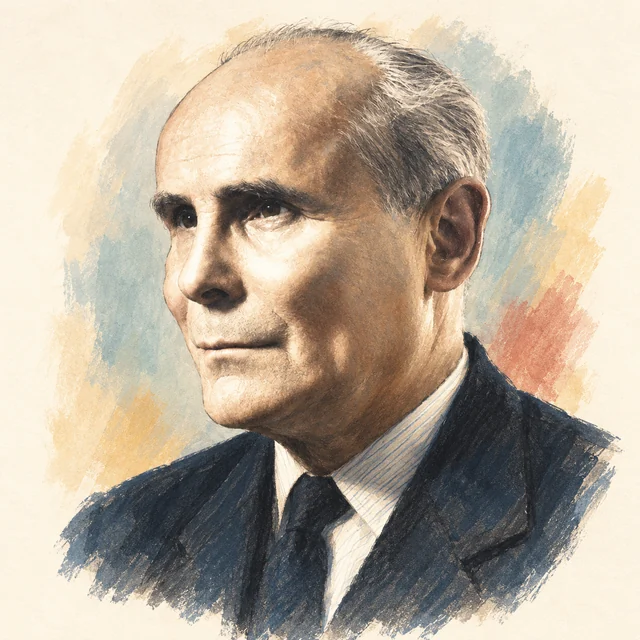
Cournand studied in Paris, with early qualifications in arts and sciences followed by medicine. Wartime service interrupted his medical training; he completed his medical doctorate in Paris in 1930. A residency at Bellevue’s chest service brought him to New York that year. He stayed to investigate respiration and circulation with Richards and became an American citizen in 1941. Their group developed cardiac catheterization into a method for studying physiological and pathological changes in people, publishing a human-catheterization report in 1941. Measurements of pressure, oxygen content and blood flow helped investigate shock, heart disease and the interaction between lungs and circulation. His Columbia appointments progressed from instructor in 1934 to professor in 1951. He received one third of the 1956 prize, alongside Forssmann and Richards. The clinical investigation depended on many collaborators and careful development; the award did not imply that an invasive procedure has no risks or cures every heart condition.
The contribution
Cournand and Richards developed cardiac catheterization as a method for measuring and understanding cardiopulmonary function and disease. Cournand received one third of the Medicine Prize.
The idea in plain language
Pressure and blood flow inside the circulation were difficult to study directly in people. Measurements available outside the heart could not answer every question about the right heart, pulmonary circulation or the oxygen content of blood returning from the body.
Read the full award story ↗