A life in context
The person behind the prize
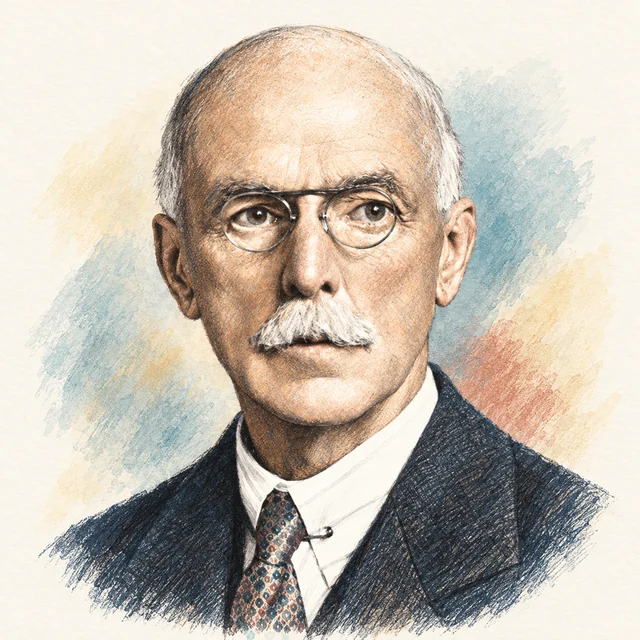
Harden graduated in chemistry at Owens College, Manchester, in 1885 and worked with Otto Fischer at Erlangen before returning to teach in Manchester. In 1897 he joined the British Institute of Preventive Medicine, later known as the Lister Institute, and became head of its biochemical department in 1907. Chemical studies of bacteria and the products of glucose breakdown drew him toward the reactions occurring in yeast. With William John Young he investigated cell-free yeast juice and the substances needed for sugar fermentation. Their 1906 coferment paper documented a heat-stable, dialysable activating component, distinct from the larger enzyme fraction. Harden also established the importance of phosphate and sugar-phosphate compounds in fermentation. These experiments opened ways to analyse a living process as cooperating chemical reactions, rather than treating yeast activity as one indivisible force. He shared the 1929 Chemistry Prize equally with Hans von Euler-Chelpin. Harden was knighted in 1926, retired in 1930 and continued scientific work afterwards. He died in 1940.
The contribution
Harden received half the Chemistry Prize for investigations of sugar fermentation and fermentative enzymes. Work with Young distinguished necessary components of cell-free fermentation and established the importance of phosphate.
The idea in plain language
Buchner had shown that fermentation could occur without intact yeast cells. Harden and his collaborators, including William John Young, asked what the active juice required. Separating it into fractions could remove activity from each fraction; bringing necessary components together restored it. Their 1906 coferment paper described a small, heat-stable activating component.
Read the full award story ↗