A life in context
The person behind the prize
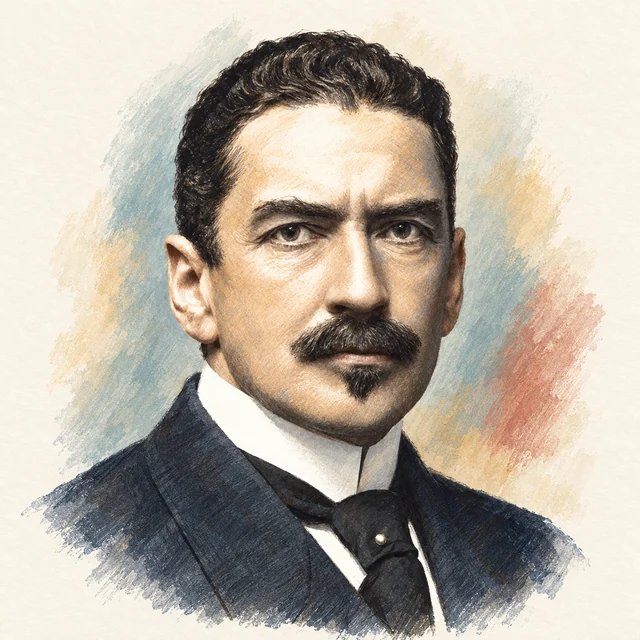
Von Euler-Chelpin initially trained as an artist in Munich. Questions about colour helped lead him toward science, and he completed a chemistry doctorate in Berlin in 1895. Further work with Walther Nernst and Svante Arrhenius developed his interests in physical chemistry and catalysis. He became a professor in Stockholm in 1906 and pursued the chemistry of enzymes, fermentation and vitamins with a succession of collaborators. Studies of the first stages of sugar fermentation examined phosphorylation and the role of the small activating component called cozymase. Work with colleagues including Karl Myrbäck concentrated this component and clarified its properties. It extended the experimental approach opened by Arthur Harden and William John Young, rather than simply repeating their separation experiment. The full modern account of glycolysis and coenzyme chemistry required further work beyond the discoveries recognized in 1929. Von Euler-Chelpin shared that year’s Chemistry Prize equally with Harden and directed a new Stockholm biochemical institute. He continued research after retiring from teaching and died in Stockholm in 1964.
The contribution
Von Euler-Chelpin received half the Chemistry Prize for investigations of fermentation and fermentative enzymes. His group developed chemical studies of phosphorylation and cozymase that deepened understanding of the cooperating reaction system.
The idea in plain language
Buchner had shown that fermentation could occur without intact yeast cells. Harden and his collaborators, including William John Young, asked what the active juice required. Separating it into fractions could remove activity from each fraction; bringing necessary components together restored it. Their 1906 coferment paper described a small, heat-stable activating component.
Read the full award story ↗