A life in context
The person behind the prize
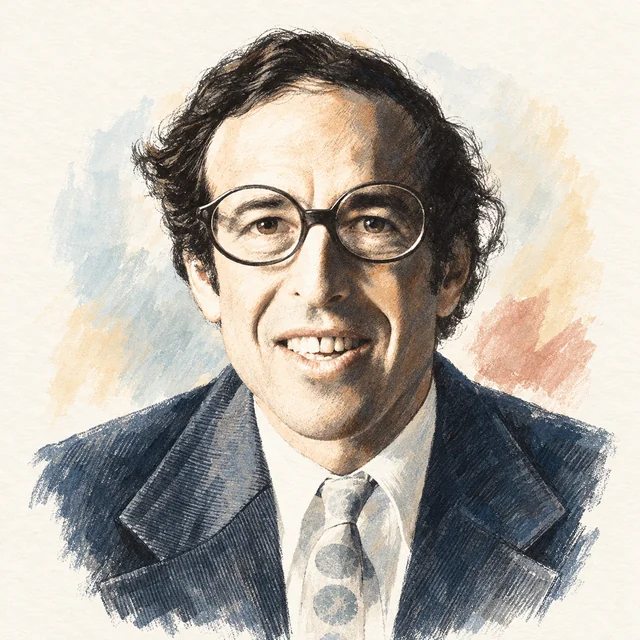
Mottelson grew up in Illinois in a family that discussed scientific and social questions. Wartime naval training brought him to Purdue, where he graduated in 1947. He completed a Harvard doctorate under Julian Schwinger in 1950, then chose a travelling fellowship in Copenhagen. The institute’s international atmosphere became his long-term scientific home. His collaboration with Aage Bohr began in 1951 and combined theoretical interpretation with experimental evidence about nuclear shapes and spectra. He held a position in CERN’s Copenhagen theory group before becoming a professor at the newly founded Nordita in 1957. The two Nuclear Structure volumes, written with Bohr, organised both individual-particle motion and nuclear deformations. The award recognised this sustained collaborative account of how the two kinds of motion interact.
The contribution
Mottelson and Bohr explained nuclear rotations, vibrations and their coupling to individual nucleons. He shared the Physics Prize equally with Bohr and Rainwater.
The idea in plain language
The shell model describes protons and neutrons through quantum states, while a liquid-drop picture captures collective properties of the nucleus. Each highlights part of the problem. Large nuclear quadrupole moments and patterns in nuclear spectra called for an account that could connect individual motion with a non-spherical distribution of the whole nucleus. Rainwater’s 1950 proposal and Bohr’s independent ideas showed how these features could be related: the arrangement of nucleons influences the collective shape, and that shape changes the states available to the nucleons.
Read the full award story ↗