A life in context
The person behind the prize
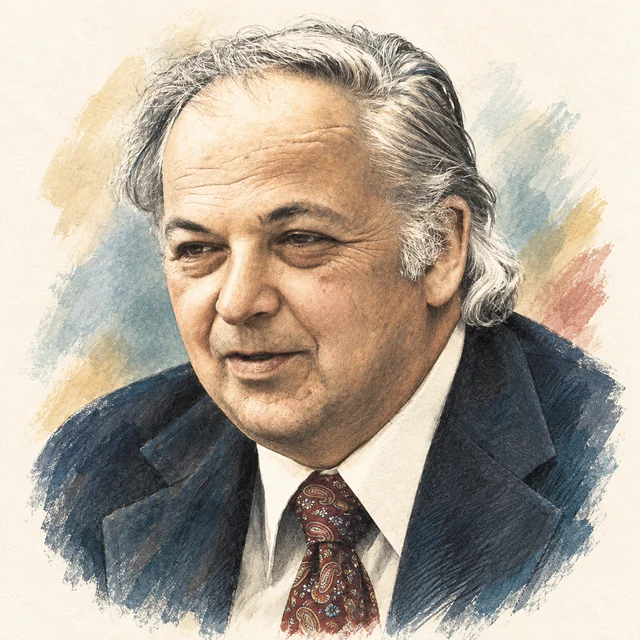
Richter entered MIT in 1948 and chose physics after initially considering chemistry. Work in Francis Bitter’s magnet laboratory introduced him to experimental research and the electron–positron system. He completed a doctorate in 1956, then moved to Stanford to test quantum electrodynamics. Building early colliding-beam equipment required years of work on the beams as well as the detectors. At SLAC from 1963 he pursued a higher-energy electron–positron storage ring, eventually built as SPEAR. His team’s 1974 discovery of the psi particle coincided with Ting’s independent J discovery at Brookhaven. The two names became J/psi. Later Richter directed SLAC and developed accelerator programmes, but his 1976 recognition concerned the discovery and its implications for particle physics.
The contribution
Richter’s SLAC/Berkeley collaboration found the psi resonance in electron–positron collisions at SPEAR. He shared the Physics Prize equally with Ting, whose different experiment independently found the same charm–anticharm bound particle.
The idea in plain language
At SLAC, Richter’s collaboration varied the energy of electrons and positrons colliding in the SPEAR storage ring. At a particular energy, particle production rose sharply: a narrow resonance signalled an unexpectedly long-lived state. At Brookhaven, Ting’s team directed protons into a stationary beryllium target and selected rare electron–positron pairs from a large background. Their measured energies and momenta allowed the team to infer the mass of a parent particle. These were independent experiments with different methods, not two stages of one apparatus.
Read the full award story ↗