A life in context
The person behind the prize
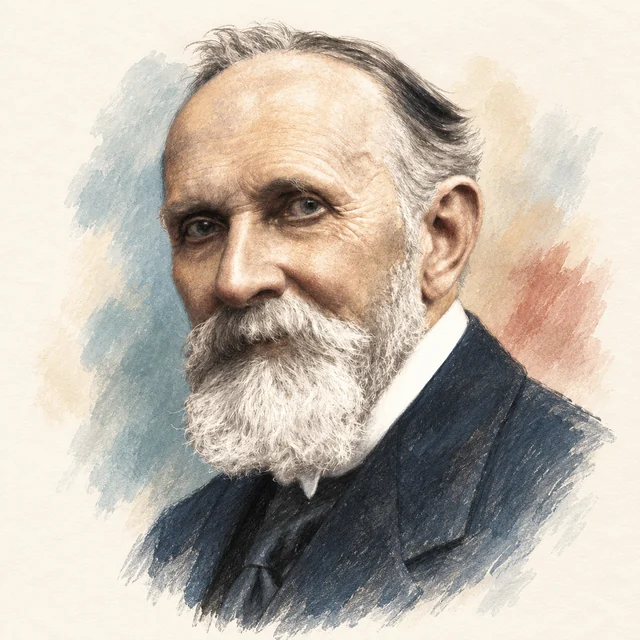
Spitteler was born in Liestal, Switzerland. He first studied law and then theology, but chose literary work rather than a career as a pastor. In the 1870s he worked as a tutor abroad before returning to Switzerland. Teaching and journalism supported his writing for years; financial independence later allowed him to concentrate more fully on literature in Lucerne. Prometheus und Epimetheus appeared in 1881 under a pseudonym. His verse epic Olympian Spring, originally Olympischer Frühling, first appeared in parts between 1900 and 1905. It reworked figures from Greek mythology within an expansive imaginative world concerned with desire, conflict, necessity and human experience. The novel Imago appeared in 1906, as recorded by the Swiss National Library, but the Nobel award specifically singled out the epic rather than that novel. Spitteler wrote in German and was resident in Switzerland at the award. In 1914 his speech Our Swiss Standpoint addressed Switzerland’s position during the First World War. The 1919 Literature Prize was reserved and announced on 11 November 1920. Illness prevented him from attending the presentation the following month. He died in Lucerne in 1924. The source material used here includes the Nobel accounts, a national-library biography and selected archive catalog metadata; it does not include a complete reading of the epic or its manuscripts.
The contribution
Spitteler received the full Literature Prize in special appreciation of Olympian Spring. The recognised achievement was a particular verse epic: an original literary reworking of myth with large-scale narrative and poetic form.
The idea in plain language
A familiar mythology can supply names and expectations, yet a poet can remake it into a different imaginative world. In Olympian Spring, Spitteler drew on Olympian gods while combining fantastic events, naturalistic detail and questions about individual desire and the constraints of existence. The result is a literary creation rather than a handbook to ancient Greek religion.
Read the full award story ↗

