c.curionodeThe Nobel Archive

1919 · Literature

An imagined epic asks questions about human life

Spitteler’s Olympian Spring reworked Greek myth in an expansive verse epic. The 1919 Literature Prize specifically recognised this work and was awarded in 1920.

Olympian SpringVerse epicMyth
1919Literature

Visual guide

The prize, pictured

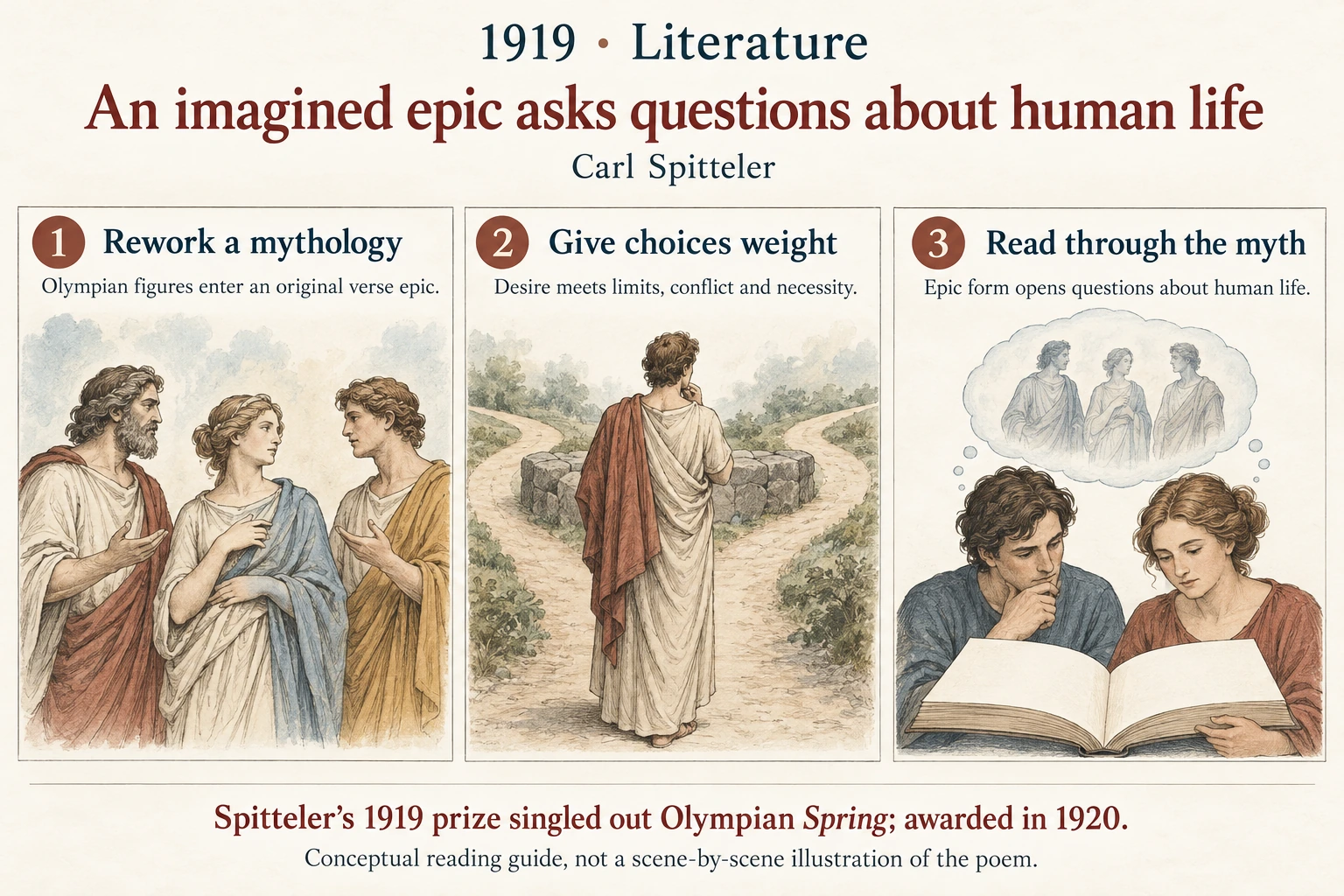
Infographic explaining An imagined epic asks questions about human life
Original AI-generated infographic. A conceptual overview; the explanations and sources below provide context.
Read the poster text

Spitteler’s 1919 prize singled out Olympian Spring; awarded in 1920.

  1. Rework a mythology

    Olympian figures enter an original verse epic.

  2. Give choices weight

    Desire meets limits, conflict and necessity.

  3. Read through the myth

    Epic form opens questions about human life.

Conceptual reading guide, not a scene-by-scene illustration of the poem.

01 · The contribution

The idea, in everyday language

A familiar mythology can supply names and expectations, yet a poet can remake it into a different imaginative world. In Olympian Spring, Spitteler drew on Olympian gods while combining fantastic events, naturalistic detail and questions about individual desire and the constraints of existence. The result is a literary creation rather than a handbook to ancient Greek religion.

The first version appeared in parts between 1900 and 1905. Large-scale narrative and poetic form gave the work a scope different from his later novel Imago. The Nobel citation singled out the epic, rather than treating every work in his career as the same achievement. The 1919 prize was reserved and announced on 11 November 1920; illness prevented him from attending the December presentation.

Why it matters

The epic makes myth a vehicle for sustained poetic reflection on ambition, conflict and human experience. Its scale, imaginative freedom and treatment of inherited material explain the kind of literary achievement the prize recognised. A short guide can identify those features without pretending to replace the poem or settle its interpretation.

02 · The people

Who brought the idea to life?

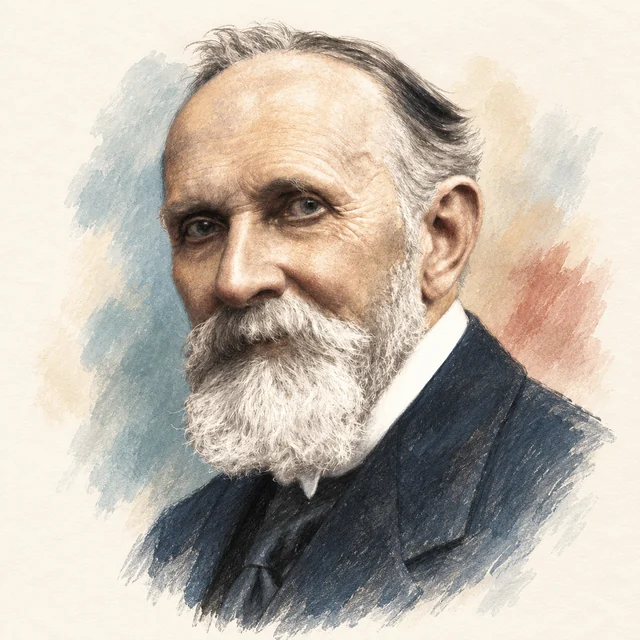
Illustrated portrait of Carl Spitteler

Carl Spitteler

Prize share · 1

Spitteler received the full Literature Prize in special appreciation of Olympian Spring. The recognised achievement was a particular verse epic: an original literary reworking of myth with large-scale narrative and poetic form.

Read the biography ↗

03 · Years in the making

The path here

  1. 1881

    Prometheus und Epimetheus appears under a pseudonym.

  2. 1900–1905

    The first version of Olympian Spring appears in parts.

  3. 1906

    Imago appears, according to the Swiss National Library.

  4. 1914

    Spitteler gives the speech Our Swiss Standpoint.

  5. 1920

    The reserved 1919 Literature Prize is announced in November.

04 · Read further

From the original sources

Original explanations by Curionode, based on the official records below. Biographical details and affiliations refer to the award year.

  1. Official award summary nobelprize.org
  2. Award ceremony speech nobelprize.org
  3. Swiss National Library: Carl Spitteler nb.admin.ch
  4. Swiss Literary Archives: Spitteler collection metadata ead.nb.admin.ch

More in Literature

Browse this subject ↗