01 · The contribution
The idea, in everyday language
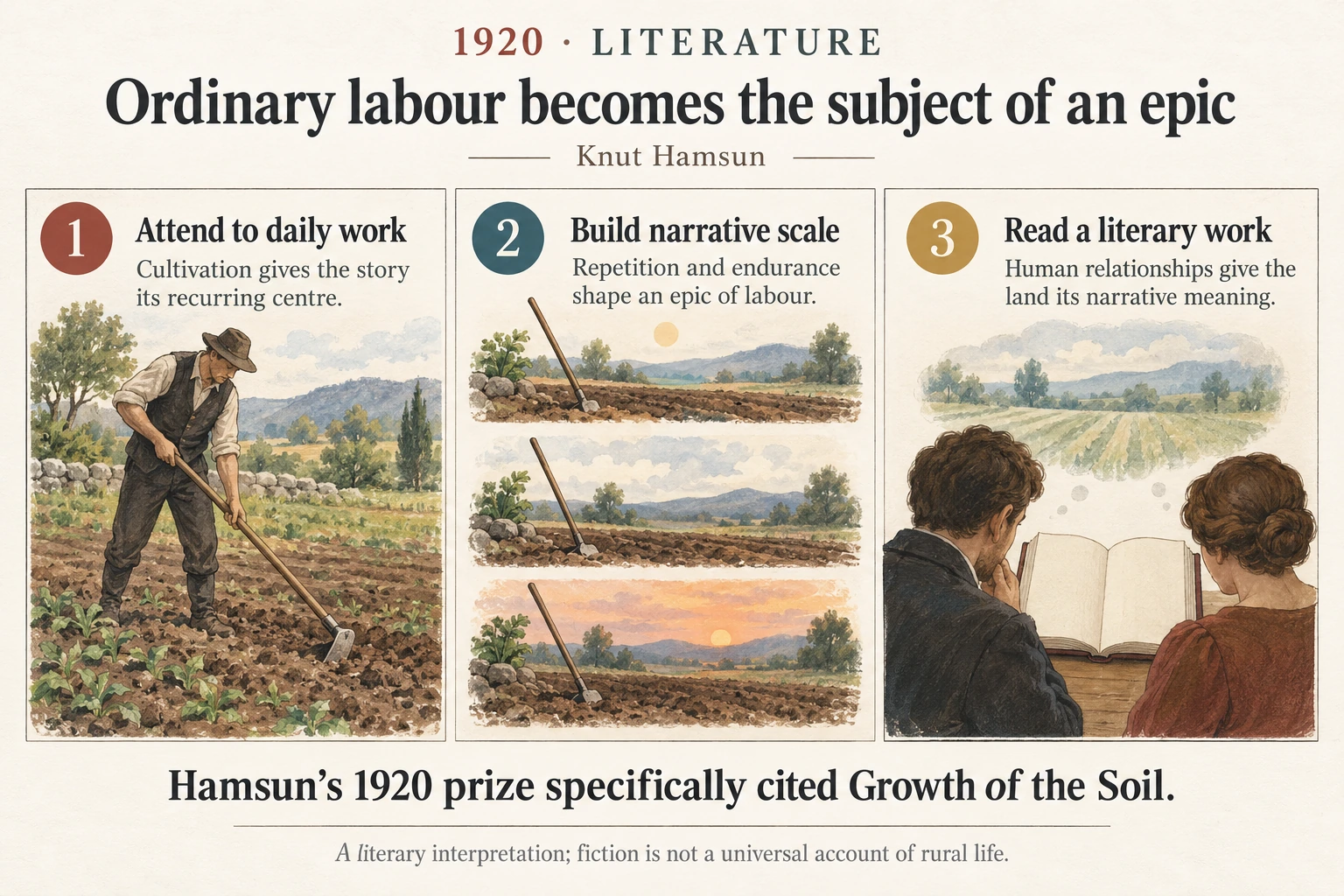
A story can find its scale in repeated work rather than a single spectacular event. In Growth of the Soil, the labour of cultivating land and establishing a rural life becomes the centre of an extended narrative. Characters remain fallible people, while the rhythm of work gives the book its epic ambition.
The Academy’s 1920 presentation stressed the novel’s plot, style, characters and treatment of labour. This was a literary judgement about a particular work, not proof that farming provides one solution to modern life. Hamsun’s earlier Hunger and Pan explored different kinds of individual experience; the specific citation should not flatten that varied career into a single rural theme.
Why it matters
The novel made ordinary physical labour and relationships with the land into a major literary subject. Its significance lies in the shaping of experience through language and narrative, rather than in being an agricultural manual or a universal account of rural life.