A life in context
The person behind the prize
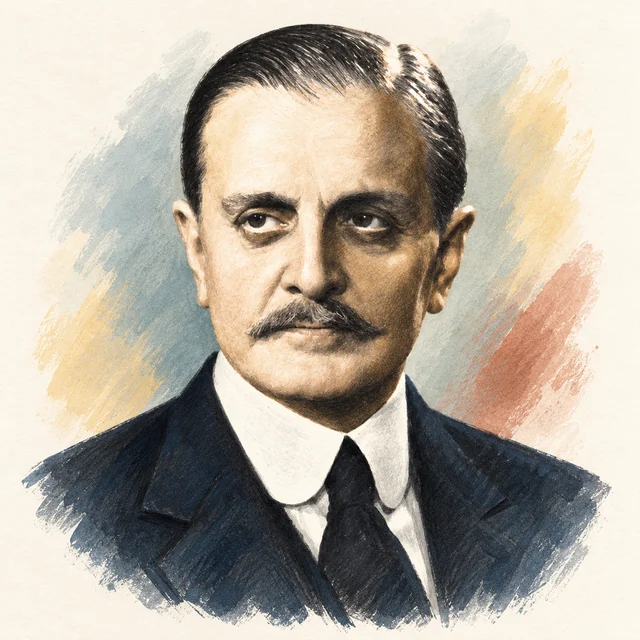
Saavedra Lamas earned a law doctorate at Buenos Aires in 1903 and combined university teaching with public service. He entered parliament in 1908 and became minister of justice and education in 1915. As foreign minister from 1932 to 1938, he promoted international legal rules against aggressive war and helped restore Argentina’s active participation in the League of Nations in 1933. The Anti-War Treaty associated with his name was signed in Rio de Janeiro that year. During the Chaco War between Bolivia and Paraguay, he chaired mediation involving Argentina, Brazil, Chile, Peru, the United States and Uruguay. The June 1935 agreements stopped hostilities; the final peace treaty followed in 1938. In 1936 he presided over the League Assembly and received the Peace Prize, but official duties prevented him from attending the Oslo ceremony. His role depended on other mediators and the decisions of the belligerents. He later served as rector of the University of Buenos Aires.
The contribution
Saavedra Lamas received the full Peace Prize for his work to end the Chaco conflict and for promoting the Anti-War Treaty. The recognition was personal; neither the six mediating states nor a peace conference became laureates.
The idea in plain language
Bolivia and Paraguay fought over the Chaco from 1932. A declaration against war could establish a principle without itself stopping a battlefield. As Argentina’s foreign minister, Saavedra Lamas promoted the 1933 Anti-War Treaty of Non-Aggression and Conciliation. It condemned aggressive war and territorial changes imposed by force, and set out peaceful procedures for disputes. His diplomacy also helped restore Argentina’s active participation in the League of Nations in 1933, after its long absence from the Assembly.
Read the full award story ↗

