A life in context
The person behind the prize
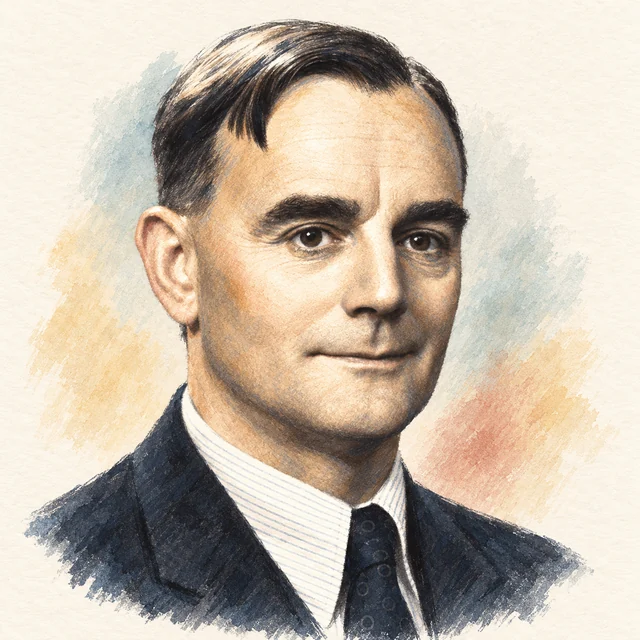
Powell studied natural sciences at Cambridge and completed his doctorate in 1927, working at the Cavendish Laboratory with C. T. R. Wilson and Rutherford. He then joined A. M. Tyndall’s laboratory at Bristol. Research on ions and nuclear processes led him to photographic emulsions as a way to record charged-particle tracks. He worked with manufacturers and colleagues to improve their sensitivity and make the measurements reliable. In 1947 the Bristol group, including César Lattes, Hugh Muirhead and Giuseppe Occhialini, reported evidence distinguishing pions from the particles now called muons. Women who searched the emulsions under microscopes also contributed essential work. Powell became Melville Wills Professor in 1948, and Bristol was his affiliation for the full 1950 Physics Prize. Later balloon expeditions and his 1959 book belong to the subsequent development of the method. The award recognised a powerful research technique and discoveries, rather than the invention of photography itself.
The contribution
Powell developed reliable photographic methods for nuclear research and made meson discoveries with the Bristol team. He received the full Physics Prize; the discovery papers also credited Lattes, Muirhead and Occhialini.
The idea in plain language
How can an extremely small, short-lived particle be studied after it has passed? A charged particle can leave an ionisation trail in a photographic emulsion. Development reveals affected grains, and a microscope makes the track available for close examination. Powell improved the sensitivity and reliability of this older principle with colleagues and emulsion manufacturers.
Read the full award story ↗

