A life in context
The person behind the prize
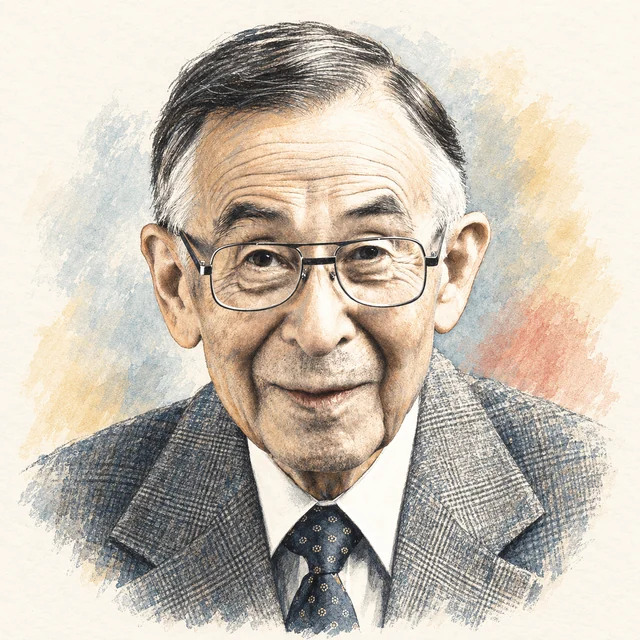
Pedersen was born in Korea to a Norwegian father and Japanese mother and attended school in Japan. He studied chemical engineering at Dayton and earned an organic-chemistry master’s degree at MIT. He chose industrial research rather than doctoral study, joining Du Pont in 1927. Work on antioxidants and metal coordination led to an unexpected crystalline by-product during a project begun in 1960. Investigating it opened crown-ether chemistry. His major papers appeared in 1967, near the end of a 42-year Du Pont career. He retired in 1969; Du Pont remained his award affiliation.
The contribution
Pedersen discovered crown ethers: ring-shaped molecules with oxygen atoms that can coordinate metal cations in a central cavity. The unexpected product dibenzo-18-crown-6 led to systematic synthesis and binding studies. This was a starting point for selective molecular hosts, not a ring that binds every metal equally. He received one third of the Chemistry Prize alongside Cram and Lehn.
The idea in plain language
Pedersen’s crown ethers showed how a ring of donor atoms could coordinate a metal cation in a cavity. An unexpected crystalline by-product led to deliberate synthesis and experiments. His major papers appeared in 1967. The fit and interactions differed with the guest ion and conditions.
Read the full award story ↗