01 · The discovery
The idea, in everyday language
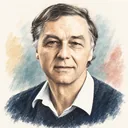
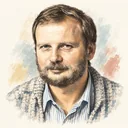
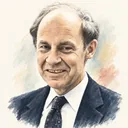
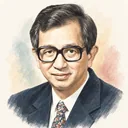
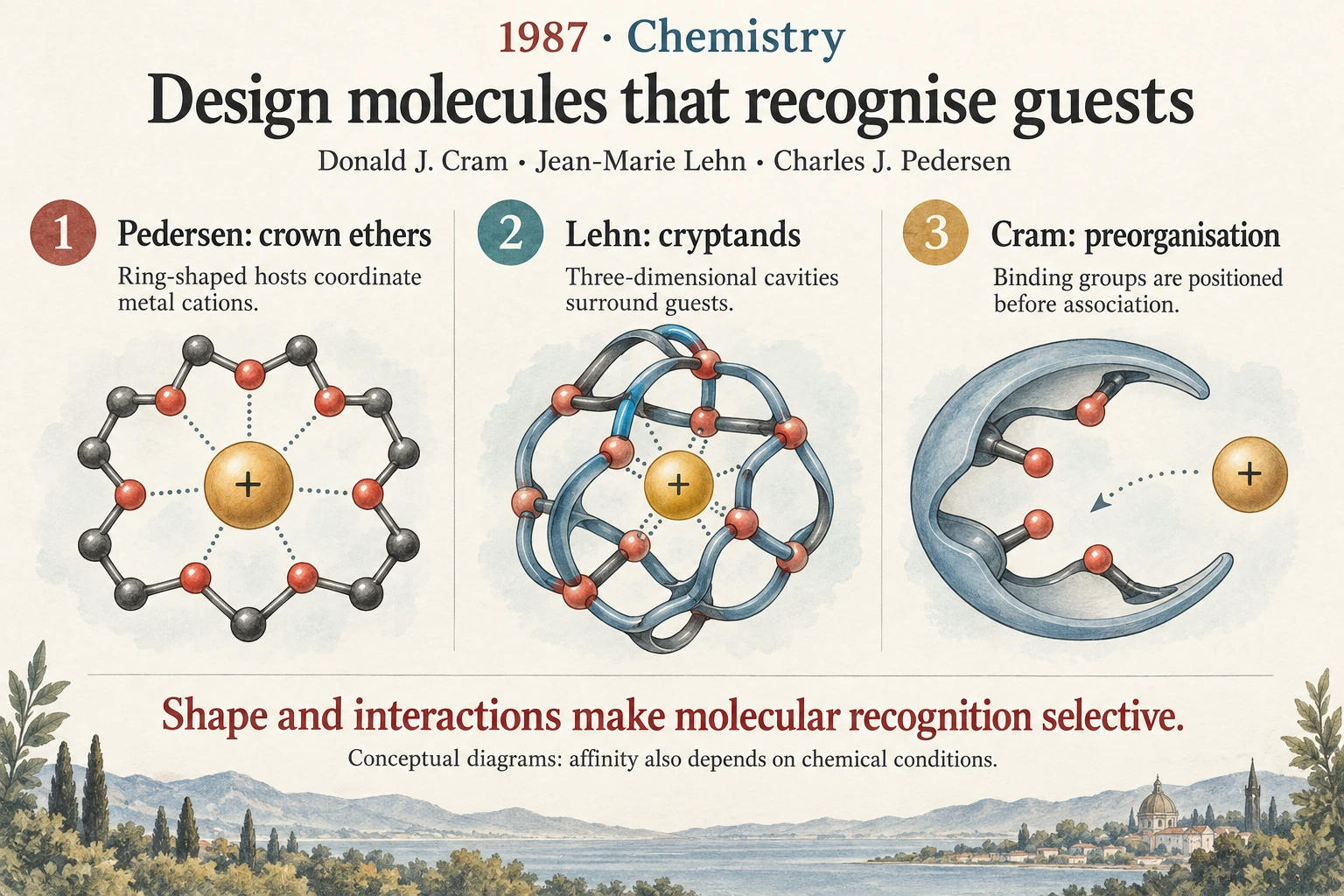
Pedersen’s crown ethers showed how a ring of donor atoms could coordinate a metal cation in a cavity. An unexpected crystalline by-product led to deliberate synthesis and experiments. His major papers appeared in 1967. The fit and interactions differed with the guest ion and conditions.
Lehn extended host design into three-dimensional cryptands, with work published in 1969. Cram studied preorganisation: positioning a host’s binding groups before association so less rearrangement is required. Together these approaches established ways to design and understand selective molecular recognition and supramolecular assemblies.
Why it matters
The work linked synthesis with binding experiments and helped establish supramolecular chemistry. Selective hosts became tools for studying ions, transport and organised molecular systems. Pedersen, Lehn and Cram each received one third of the Chemistry Prize for molecules with structure-specific interactions of high selectivity.