A life in context
The person behind the prize
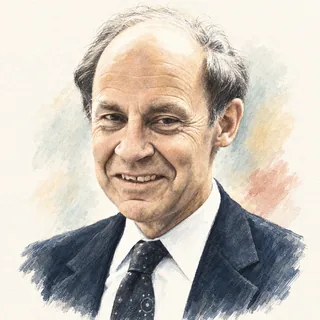
Polanyi was born in Berlin to Michael and Magda Polanyi; his father was a physical chemist and philosopher. The family moved to England in 1933. Studies at Manchester led to a doctorate in 1952, followed by research in Ottawa and Princeton. He joined Toronto as a lecturer in 1956 and became a professor in 1962. His experiments examined the energy carried by newly formed molecules. He also contributed to discussions of science policy, fundamental research and arms control.
The contribution
Polanyi used infrared chemiluminescence to investigate chemical reactions. Excited products emit infrared radiation as their internal energy changes; spectra reveal vibrational and rotational energy distributions. This complemented crossed-beam measurements by probing how reaction energy appears inside products. The method observes emitted radiation, rather than heating reactants with an external infrared beam. He received one third of the Chemistry Prize.
The idea in plain language
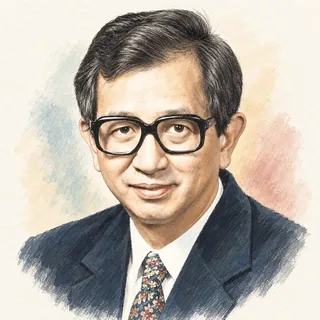
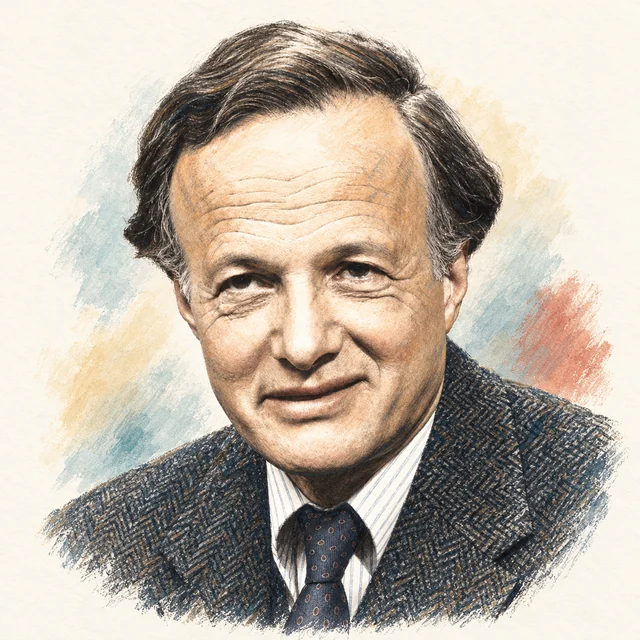
A bulk reaction combines enormous numbers of collisions, concealing their individual dynamics. Herschbach developed experiments in which directed molecular beams meet at low density. Lee’s versatile instruments extended detection to many reactions, measuring product scattering and energy under controlled conditions. Neutral products can be ionised after collision for mass analysis.
Read the full award story ↗