A life in context
The person behind the prize
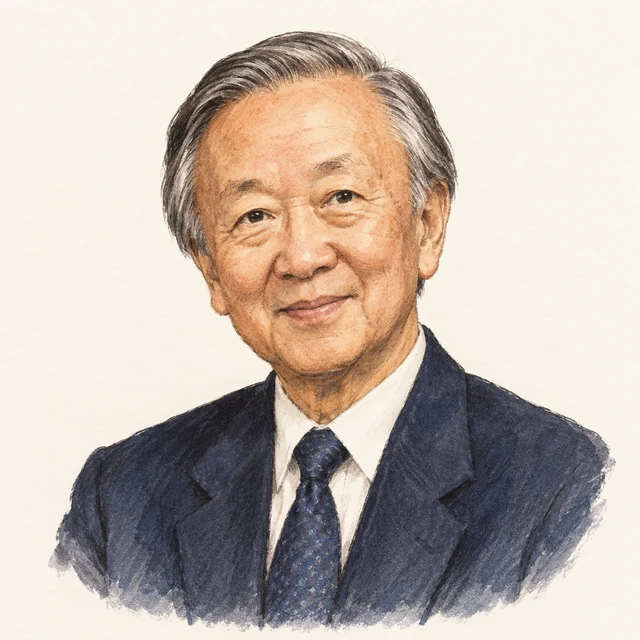
Kao was born in Shanghai and moved with his family to Hong Kong in 1948. He trained in electrical engineering and earned his doctorate in London in 1965 while working at Standard Telecommunication Laboratories in Harlow. He investigated whether thin glass fibres could carry information over useful distances. His career also included leadership at the Chinese University of Hong Kong, connecting industrial research with university life.
The contribution
Working with George Hockham, Kao showed that the severe losses in existing glass fibres were not an unavoidable barrier to communication. Much purer glass could make long-distance optical transmission practical. His 1966 analysis helped guide later materials research, including low-loss fibre made by a Corning team in 1970. He did not invent every part of fibre optics or personally manufacture the whole communication network.
The idea in plain language
A glass fibre can guide light, but early fibres lost too much of it to carry useful signals over long distances. Kao, working with George Hockham, showed that much of the obstacle came from impurities in the glass. His analysis pointed toward exceptionally pure material and helped turn optical communication into a practical research target. Making low-loss fibres, lasers, amplifiers and complete networks required many further contributors.
Read the full award story ↗