A life in context
The person behind the prize
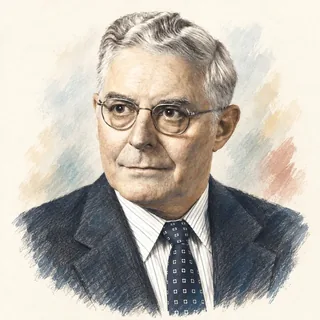
Anfinsen graduated from Swarthmore in 1937, studied organic chemistry at Pennsylvania and completed a Harvard biochemistry doctorate in 1943. Training in Copenhagen and Stockholm broadened his research experience. In 1950 he moved to the National Institutes of Health, apart from a brief later return to Harvard. Work with colleagues including Sela and White explored how protein structure relates to function. Experiments on ribonuclease showed that disrupted chains could recover native structure and activity under appropriate conditions. The amino-acid sequence carried information needed for folding, without another genetic template for the final shape. His group also studied an enzyme that accelerated disulfide rearrangement during refolding. Information in the sequence and assistance with reaching the folded state are compatible. The prize recognised this connection between sequence and active conformation.
The contribution
Anfinsen connected ribonuclease’s amino-acid sequence with its biologically active folded form. He received half the Chemistry Prize.
The idea in plain language
Anfinsen and colleagues disrupted ribonuclease’s folded structure and disulfide bonds, then studied recovery under appropriate conditions. The enzyme could regain its native form and activity. The sequence contained information needed for the active conformation, without a separate genetic template specifying its final shape. Assistance with folding can still affect how efficiently that state is reached.
Read the full award story ↗