A life in context
The person behind the prize
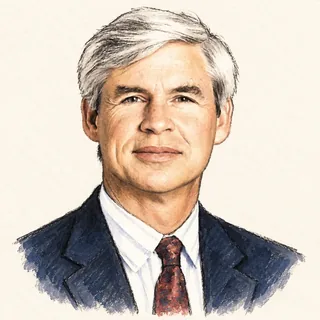
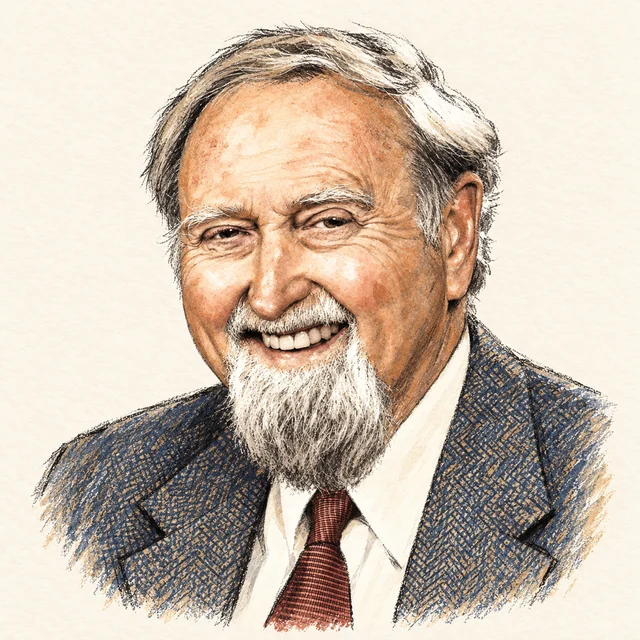
Granger studied mathematics and economics at Nottingham and completed his statistics doctorate in 1959 with work on nonstationary time series. He joined the University of California, San Diego in 1974. His research repeatedly examined how apparently convincing patterns in economic data can mislead, and how methods should reflect the processes that generated the observations rather than merely fitting a convenient line.
The contribution
Granger developed the idea of cointegration: individually nonstationary series may have a particular linear combination that is stationary. This permits analysis of long-run relationships while allowing short-run departures. With Engle he developed influential testing and estimation methods published in 1987. Cointegration goes beyond noticing that two curves rise together, and it does not by itself establish that one variable causes another.
The idea in plain language
Economic observations arrive in time order, and their statistical behaviour is rarely uniform. A financial series may alternate between calm and turbulent periods. Another series may drift so that a shock changes its level for a long time. Applying methods that assume stable variation and a fixed mean can produce misleading confidence or apparent relationships between unrelated variables.
Read the full award story ↗