A life in context
The person behind the prize
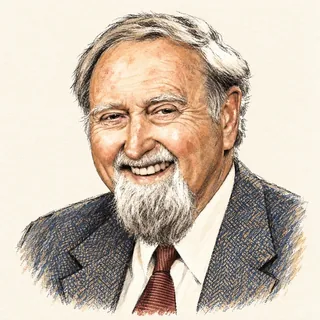
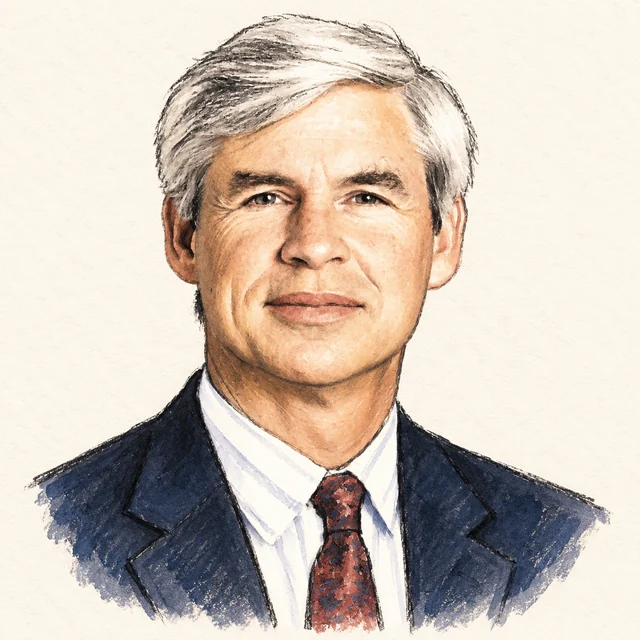
Engle initially pursued physics at Cornell before switching to economics, completing his doctorate in 1969. He taught at MIT and later at the University of California, San Diego, where collaboration with time-series researchers shaped his work. At the time of the prize he was based at New York University. His research asked how statistical models can represent uncertainty that changes from one period to the next.
The contribution
In 1982 Engle introduced ARCH, a framework in which the conditional variance of a model’s errors depends on earlier squared errors. Large surprises can therefore be followed by periods of greater predicted variability. The first application concerned inflation, and the approach became widely useful in financial risk analysis. Engle also collaborated with Granger on cointegration methods. Modelling volatility estimates the scale of uncertainty, not a guaranteed direction for tomorrow’s prices.
The idea in plain language
Economic observations arrive in time order, and their statistical behaviour is rarely uniform. A financial series may alternate between calm and turbulent periods. Another series may drift so that a shock changes its level for a long time. Applying methods that assume stable variation and a fixed mean can produce misleading confidence or apparent relationships between unrelated variables.
Read the full award story ↗